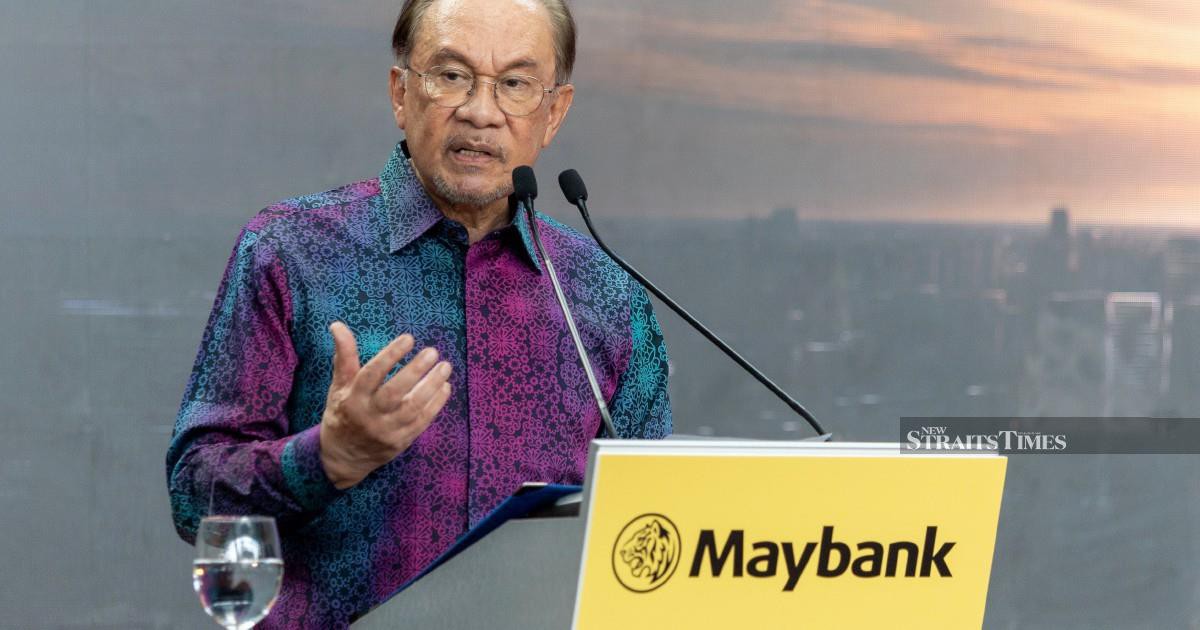
Prime Minister Datuk Seri Anwar Ibrahim has publicly recognised Maybank's emergence as a major player within Asia's competitive banking landscape, marking a significant endorsement of the institution's strategic direction and operational achievements. The commendation reflects broader confidence in Malaysia's financial sector and its capacity to compete effectively on the international stage.
Maybank's transformation from a domestic Malaysian lender into a regional financial heavyweight represents one of the country's most notable corporate success stories over the past two decades. The institution has expanded substantially across Southeast Asia and beyond, establishing itself as a trusted name in multiple markets and building a reputation for sophisticated financial services alongside traditional banking operations.
This recognition from the nation's top political leader carries considerable weight, signalling governmental support for the banking sector's growth trajectory and international aspirations. Anwar's comments underscore the administration's commitment to positioning Malaysia as a financial hub within the Asian region, a goal that aligns with the country's broader economic diversification strategy beyond traditional sectors like manufacturing and commodities.
Maybank's regional expansion has been characterised by strategic acquisitions, organic growth in key markets, and the development of specialised financial products tailored to evolving customer needs. The bank has invested heavily in digital banking infrastructure, recognising that technological advancement is fundamental to maintaining competitive advantage in modern financial services. These investments have enabled Maybank to serve increasingly sophisticated client bases across different territories.
The bank's presence now extends across multiple ASEAN nations as well as China, India, and other significant Asian economies, creating a network effect that benefits customers seeking regional or cross-border financial solutions. This geographic diversification has reduced Maybank's dependence on the Malaysian market alone, even as it remains deeply rooted in supporting the country's financial ecosystem and corporate champions.
For Malaysia, having a globally competitive financial institution anchored in Kuala Lumpur carries strategic implications beyond mere corporate pride. It attracts talent, demonstrates the viability of Malaysian companies scaling internationally, and contributes meaningfully to the country's GDP and foreign exchange earnings through offshore operations and cross-border transactions. The banking sector itself is a significant employer and generator of tax revenue.
Regional context matters here. Southeast Asia's financial sector remains underbanked relative to developed markets, and rapid economic growth across the region is driving increasing demand for sophisticated banking services. Maybank's success in meeting this demand positions it as a beneficiary of long-term regional trends, while also creating competitive pressure on other institutions to innovate and expand their own offerings.
The Prime Minister's public recognition of Maybank also reflects a wider understanding within government circles that Malaysia's competitive advantage increasingly lies in services, particularly financial services, rather than lower-value manufacturing. As regional labour costs rise and competition from other manufacturing hubs intensifies, Malaysia must compete increasingly on the basis of expertise, innovation, and institutional strength in sectors like banking, wealth management, and digital finance.
Maybank's digital banking initiatives deserve particular mention as critical to its regional success. The bank has invested substantially in fintech capabilities, mobile banking platforms, and digital payment systems that appeal to younger, more tech-savvy customer bases across the region. These investments position the institution well for the coming decade as financial services become increasingly digital and borderless.
From an investor perspective, Maybank's trajectory offers reassurance about the long-term prospects of Malaysian financial institutions and the broader stability of Malaysia's corporate landscape. International investors seeking exposure to Southeast Asian financial services often view Maybank as a quality proxy for the region, and the bank's credibility directly influences investor confidence in other Malaysian enterprises.
Looking forward, challenges remain. Competition from regional competitors, digital disruption from fintech startups, and evolving regulatory frameworks across different jurisdictions all present ongoing tests for Maybank's business model. However, the bank's established track record, substantial capital reserves, and experienced management team suggest it is reasonably well-positioned to navigate these headwinds.
Anwar's commendation should be understood partly as an acknowledgement that Malaysian corporations can achieve world-class status and compete successfully in challenging international markets. This message has broader implications for investor confidence and for Malaysia's international positioning. It reinforces the narrative that the country possesses institutional capacity and human talent capable of executing ambitious corporate strategies at regional scale.

