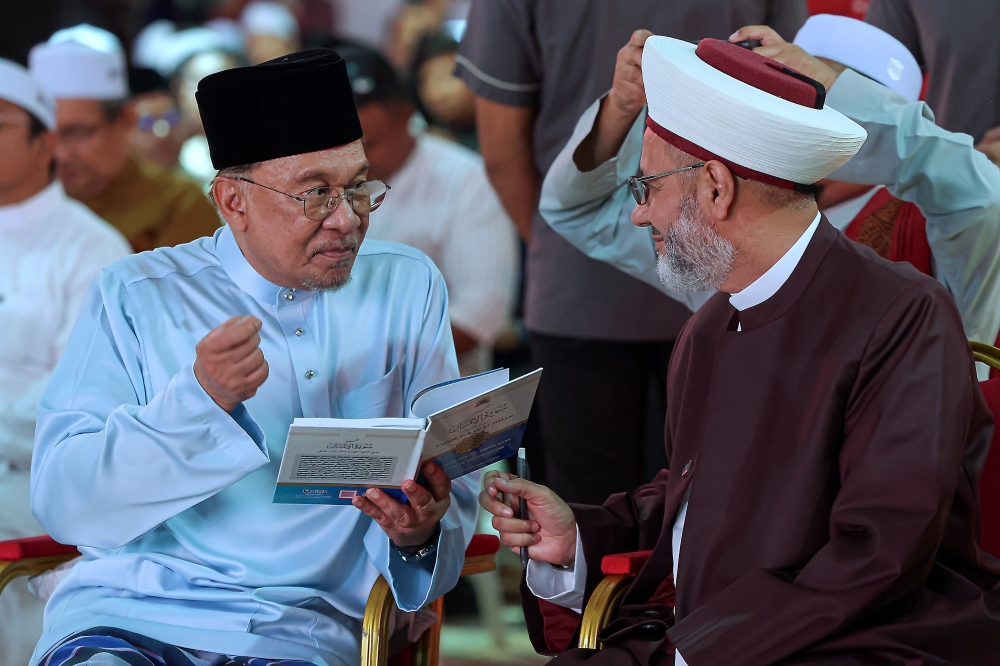
Prime Minister Datuk Seri Anwar Ibrahim has expressed strong admiration for Ahmed Al-Tayyeb, the Grand Imam of Al-Azhar in Egypt, positioning him as one of contemporary Islam's most important advocates for balanced and progressive religious thought. The commendation underscores Malaysia's alignment with voices within the Islamic world that emphasise tolerance, dialogue, and coexistence across faith boundaries—a position that resonates with the country's own constitutional commitment to religious pluralism.
Al-Azhar, founded in the tenth century, stands as one of the most influential Islamic educational institutions globally, wielding considerable moral authority among Sunni Muslim communities spanning the Middle East, North Africa, and beyond. The Grand Imam's role as head of this venerable institution places him at the intersection of theological scholarship and geopolitical influence, making his statements on religious matters and international relations significant within Muslim-majority nations and diaspora communities worldwide. Anwar's public recognition of Al-Tayyeb reflects Malaysia's broader strategic interest in strengthening ties with authoritative Islamic voices that champion moderation over sectarian division.
The Malaysian Prime Minister's remarks align with Al-Tayyeb's documented track record of promoting interfaith engagement and condemning religious extremism. The Grand Imam has consistently articulated positions that distinguish between core Islamic teachings and the interpretations adopted by radical movements, earning respect from international bodies concerned with terrorism prevention and religious reconciliation. His advocacy for dialogue between Islam and other world religions—including Christianity, Judaism, and Buddhism—has been documented through numerous high-profile meetings and joint statements issued over the past two decades.
For Malaysia specifically, this recognition carries particular resonance given the nation's own navigation of religious diversity within a Muslim-majority framework. The country's Federal Constitution establishes Islam as the religion of the federation while guaranteeing freedom of worship to citizens of other faiths, a delicate balance that requires continuous articulation by national leaders. By highlighting Al-Tayyeb's commitment to moderation, Anwar implicitly reinforces Malaysia's domestic positioning and provides intellectual scaffolding for the government's approach to managing religious tensions and communal harmony.
The commendation also reflects Malaysia's diplomatic strategy in the Islamic world, where competing visions of Islam's role in governance and society persist. Saudi Arabia's influence through Wahhabist interpretations and Iran's Shia-centred approach have long shaped regional Islamic discourse, while Al-Azhar represents a distinct Egyptian and Arab tradition emphasising institutional scholarship and gradual reform. By endorsing the Grand Imam's moderate stance, Malaysia signals its preference for scholarly, institutionalised religious authority over revolutionary or fundamentalist approaches—a position increasingly important as Southeast Asian nations grapple with transnational jihadi movements.
Al-Tayyeb's tenure as Grand Imam, extending over more than a decade, has witnessed his navigation of complex geopolitical challenges within Egypt and across the Muslim world. He has managed to maintain Al-Azhar's independence while working within Egypt's political system, a balancing act that demonstrates the institution's adaptive capacity and relevance in contemporary contexts. His public statements on terrorism, sectarianism, and religious reform have earned commendation from Western governments whilst retaining credibility among traditionalist Islamic scholars—a feat not easily accomplished in today's polarised environment.
The broader significance of Anwar's endorsement extends to the international community's ongoing efforts to counter violent extremism through ideological messaging. The emergence of groups like the Islamic State and their interpretative claims to represent authentic Islam necessitated credible counter-narratives from within the Islamic tradition itself. Religious authorities like Al-Tayyeb who possess institutional legitimacy and theological credentials can articulate such counter-narratives with authority that external actors cannot replicate. Malaysia's association with these voices strengthens its own standing as a Muslim-majority nation committed to progressive governance.
Southeast Asia faces particular challenges in this regard, with persistent threats from regional terrorist organisations claiming Islamic motivation. By elevating the profile of moderate Islamic scholarship and institutional authority, Malaysian leadership demonstrates commitment to ideological struggle against extremism—not merely security operations. This multi-layered approach recognises that durable counter-terrorism requires winning hearts and minds within Muslim communities, demonstrating that Islamic faith and modern democratic governance are compatible rather than antagonistic.
The timing of such public statements also merits consideration within Malaysia's domestic political context. The nation has witnessed periodic surges in religious conservatism and debates over the pace and direction of Islamic reform. Anwar's recognition of Al-Tayyeb provides intellectual support for those advocating measured, institutionalised approaches to religious development over sudden or revolutionary change. It signals that Malaysia's Islamic vision draws from broader scholarly traditions rather than insular or local interpretations alone.
Looking forward, Malaysia's engagement with Al-Azhar and similar institutions may deepen through educational exchanges, joint research initiatives, and coordinated advocacy within international forums addressing religious affairs. The relationship between Malaysian Islamic scholars and Al-Azhar academics has historically been productive, with many Malaysian Islamic intellectuals trained within Egypt's educational system. Strengthening these institutional ties serves Malaysia's long-term interests in maintaining theological diversity and scholarly depth within its Islamic establishment.
The commendation ultimately reflects a sophisticated understanding of religious influence in contemporary global affairs. While military and economic power remain decisive in many domains, soft power rooted in religious authority and intellectual credibility shapes narratives and influences opinion among billions of believers worldwide. By aligning Malaysia with moderate Islamic scholarship represented by Al-Tayyeb, Anwar positions the nation as a thoughtful participant in global conversations about Islam's future—conversations that will profoundly affect Southeast Asia's stability and prosperity in coming decades.

