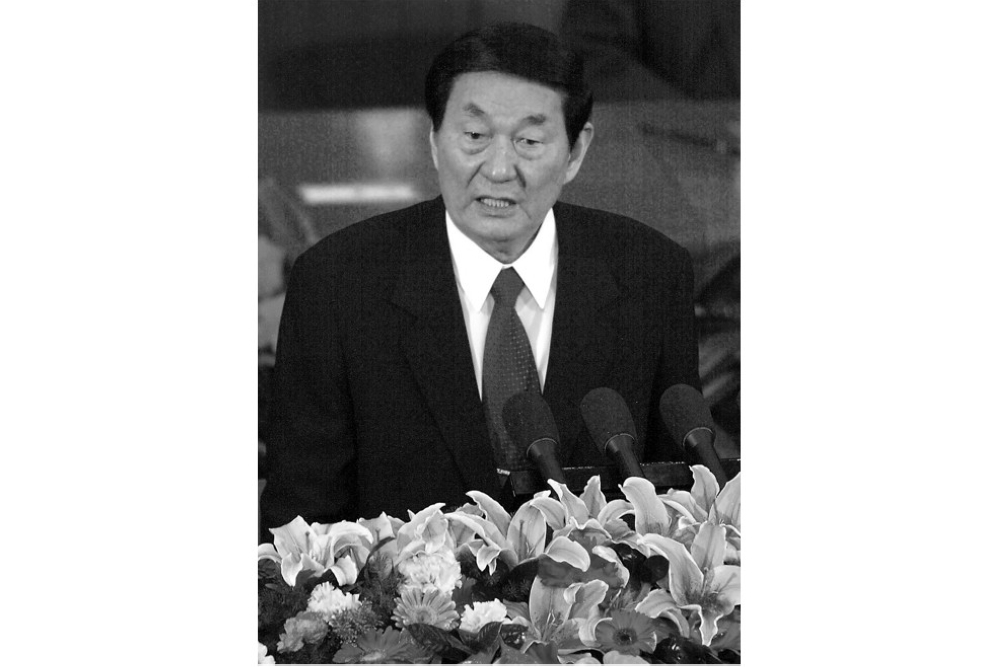
Prime Minister Datuk Seri Anwar Ibrahim has extended his condolences to the family of Zhu Rongji, the influential former Premier of China, publicly recognising the significant role the late statesman played in shaping Malaysia's relationship with Beijing. The tribute underscores the enduring bonds between Malaysian leadership and senior figures within China's political establishment, connections that have proven instrumental in advancing commercial, diplomatic, and strategic interests across the South China Sea region.
Zhu Rongji, who served as Premier from 1998 to 2003 during a transformative period of Chinese economic liberalisation, was instrumental in repositioning China's engagement with Southeast Asia. His tenure coincided with crucial phases of Malaysia-China bilateral development, a period when both nations were recalibrating their economic policies and seeking expanded partnerships beyond traditional frameworks. Anwar's characterisation of Zhu as a "good friend" reflects a deeper historical continuity in Malaysian diplomacy that transcends individual administrations and party affiliations.
The former Premier's legacy extends far beyond ceremonial state visits or routine trade agreements. Zhu Rongji championed pragmatic economic policies that opened Chinese markets to foreign investment while simultaneously encouraging Chinese enterprises to venture outward. For Malaysia, this approach created unprecedented opportunities for cooperation in manufacturing, infrastructure, and resource sectors. His role in guiding China through its accession to the World Trade Organisation in 2001 also had profound implications for the Malaysian economy, as it expanded market access for Malaysian exports and facilitated deeper integration within regional supply chains.
Under Zhu's stewardship, China embarked on ambitious infrastructure programmes that would eventually reshape Asia's economic geography. These initiatives prefigured the Belt and Road Initiative launched in 2013, an undertaking that has fundamentally altered Malaysia's development trajectory through investments in ports, railways, and industrial parks. The foundations Zhu helped establish in bilateral relations created the diplomatic and institutional framework necessary for such major undertakings to proceed smoothly in subsequent decades.
Anwar's public acknowledgment of Zhu's contributions carries political significance beyond simple respect for a departed elder statesman. It signals Malaysia's commitment to maintaining warm, stable relations with China regardless of domestic political changes or regional tensions. This continuity is particularly important given Malaysia's geographical position and economic dependencies, as well as its role as a key node in Southeast Asian geopolitics. The Prime Minister's words reinforce that successive Malaysian governments, regardless of their composition, view engagement with China as strategically indispensable.
The relationship between Malaysia and China has deepened considerably since Zhu's time in office, with contemporary ties encompassing defence cooperation, digital economy initiatives, and educational exchanges. However, the groundwork for this comprehensive engagement was laid during the 1998-2003 period when Zhu occupied the premiership. His willingness to engage with Southeast Asian nations on terms that respected their sovereignty while offering tangible economic benefits established a template that subsequent Chinese leaders have largely followed, albeit with varying degrees of success.
For Malaysian policymakers navigating the complexities of great power competition in the region, Zhu Rongji's legacy offers important lessons about the possibilities of productive engagement between nations of vastly different sizes and systems. His approach emphasised mutual benefit over zero-sum competition, a philosophy that Malaysian leaders continue to promote as they balance relationships with multiple international partners including the United States, Japan, and regional neighbours.
The passing of Zhu Rongji also marks a symbolic moment for reflection on how China's senior leadership generation has evolved. Many figures who shaped China's emergence as an economic power during the 1990s and early 2000s are now advancing in years or have already passed. This transition prompts questions about continuity and change in Chinese policy toward Southeast Asia, particularly given evolving geopolitical circumstances and the assertiveness China has demonstrated in regional territorial disputes.
Anwar's tributes demonstrate that despite occasional frictions in Malaysia-China relations—whether over trade imbalances, the South China Sea, or specific infrastructure projects—the fundamental commitment to productive engagement remains strong at the highest levels of Malaysian government. Zhu Rongji's role in establishing personal relationships and institutional mechanisms for bilateral dialogue created resilience within the partnership that has weathered various pressures and complications.
The broader implication of honouring Zhu's memory lies in recognising how individual leaders, particularly those occupying positions of significant power during transformative periods, can leave indelible marks on international relations. For Malaysia and China, the past two decades have demonstrated that the investments Zhu made in bilateral relations—both literally through economic projects and figuratively through cultivation of understanding—continue yielding dividends. As Malaysia charts its course through an increasingly competitive regional environment, the diplomatic and economic foundations established during his premiership remain relevant reference points for policymakers seeking to advance national interests while maintaining stability.

