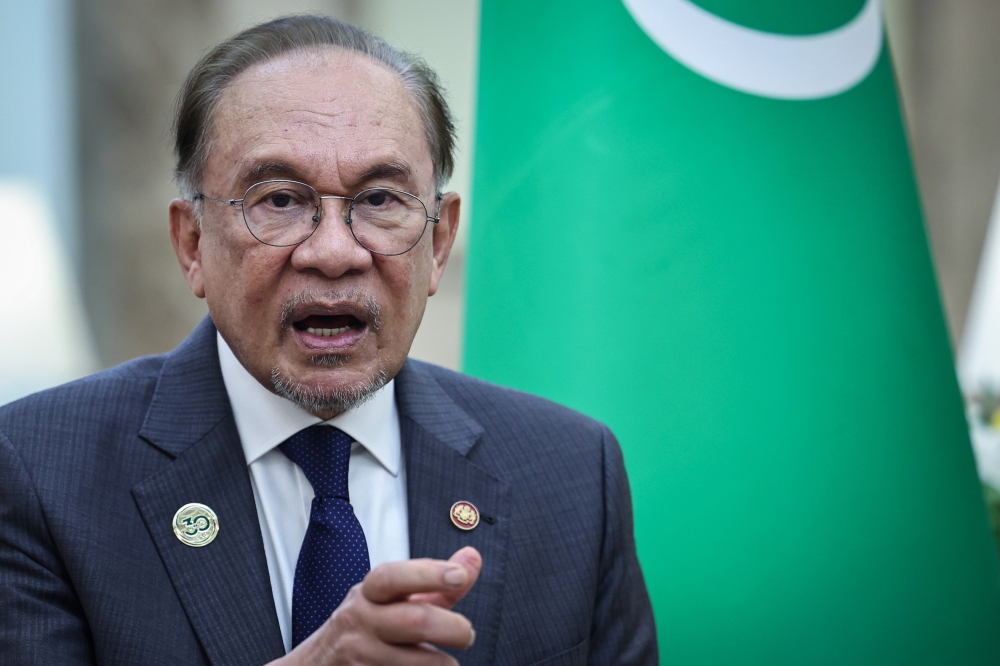
Prime Minister Datuk Seri Anwar Ibrahim extended his deepest condolences on Monday following the death of John L. Esposito, one of the most influential scholars of Islamic studies in the modern era. Anwar described Esposito as a steadfast champion of interfaith dialogue and a genuine ally to Muslim communities worldwide, recognizing his substantial contributions to bridging cultural and religious divides at a time when such understanding remains critically important.
Esposito, who spent decades at Georgetown University's Prince Alwaleed Bin Talal Center for Muslim-Christian Understanding, became a towering intellectual figure through his prolific scholarship and unwavering commitment to presenting Islam and Muslims in their proper context to Western audiences. His academic work challenged prevailing stereotypes and misconceptions, offering rigorous analysis that emphasized the diversity of Islamic thought and practice across different regions and time periods. For policymakers and religious leaders across Southeast Asia, his research provided essential frameworks for understanding contemporary Islamic movements and their evolution.
The American scholar's influence extended far beyond university classrooms. Through numerous books, lectures, and media appearances spanning over forty years, Esposito shaped how millions of people understood Islam during formative periods of global history. His willingness to engage with Muslim-majority nations and leaders on substantive intellectual grounds earned him respect across the Islamic world, even as his nuanced approach occasionally drew criticism from those seeking more polemical stances on either side of religious or political divides.
For Malaysia specifically, Esposito's scholarly lens held particular relevance. His work examining the relationship between Islam and democracy, Islam and modernization, and the role of Islamic movements in plural societies provided Malaysian policymakers and intellectuals with credible academic resources during debates about the nation's own trajectory. His scholarship validated discussions about Islamic governance and reform that transcended crude binaries of tradition versus progress, offering instead sophisticated analytical frameworks that acknowledged legitimate theological and political diversity within Muslim-majority contexts.
Anwar's tribute underscores the personal bonds that developed between Malaysian leadership and international Islamic scholars during critical decades. Esposito represented a category of Western intellectual who rejected orientalist frameworks and brought genuine scholarly rigor to Islamic studies, an approach that facilitated productive dialogue with Muslim leaders. His Georgetown position, funded by Saudi benefactors, symbolized the possibility of institutional spaces dedicated to fostering understanding rather than perpetuating stereotypes.
The scholar's passing marks a significant loss for the field of Islamic studies at a moment when informed, bridge-building scholarship remains urgently needed. Rising geopolitical tensions, religious polarization in multiple contexts, and the proliferation of simplistic narratives about Islam and Muslims create ongoing demand for the kind of careful, evidence-based analysis that Esposito exemplified. His death removes from the global conversation a voice that consistently privileged nuance, historical depth, and respect for Muslim agency and diversity.
For Southeast Asian scholars and policymakers, Esposito's work on Islamic movements and governance in developing nations held particular resonance. He examined how Islamic political parties and organizations functioned within democratic and authoritarian systems, how Islamic law interacted with modern state structures, and how Islamic identity evolved amid globalization. These analyses provided Malaysian intellectuals with comparative perspectives that enriched local discussions without imposing external templates.
The Prime Minister's statement reflects broader recognition across Muslim-majority nations of Esposito's singular contribution to Muslim-Western relations. Unlike scholars who maintained critical distance or adopted explicitly polemical positions, Esposito chose engagement rooted in empathy and intellectual honesty. He documented how ordinary Muslims interpreted their faith, how Islamic movements responded to modernization pressures, and how Muslim-majority societies balanced tradition with contemporary challenges. This approach generated trust among Muslim audiences even when his conclusions proved uncomfortable.
Esposito's legacy extends to his institutional role in training successive generations of scholars and policymakers at Georgetown. The center he helped establish became a destination for Muslim intellectuals seeking dialogue with Western academia, creating networks that influenced both Islamic scholarship and American foreign policy discussions. His students dispersed globally, carrying forward his commitment to rigorous, respectful engagement across religious boundaries.
Anwar's tribute signals Malaysia's continued investment in the kind of scholarly dialogue that Esposito pioneered. As the nation navigates complex questions about Islam's role in contemporary society, the availability of sophisticated intellectual frameworks becomes increasingly valuable. Esposito's work, now part of the permanent scholarly record, will continue informing these discussions even as his physical presence is gone.
The scholar's death invites reflection on the precarious state of bridge-building institutions and voices in contemporary global politics. Polarization advances when such intermediate figures disappear, leaving space for more extreme interpretations on all sides. Anwar's acknowledgment of Esposito's friendship and contributions implicitly recognizes how rare and precious such scholarly partnerships have become.

