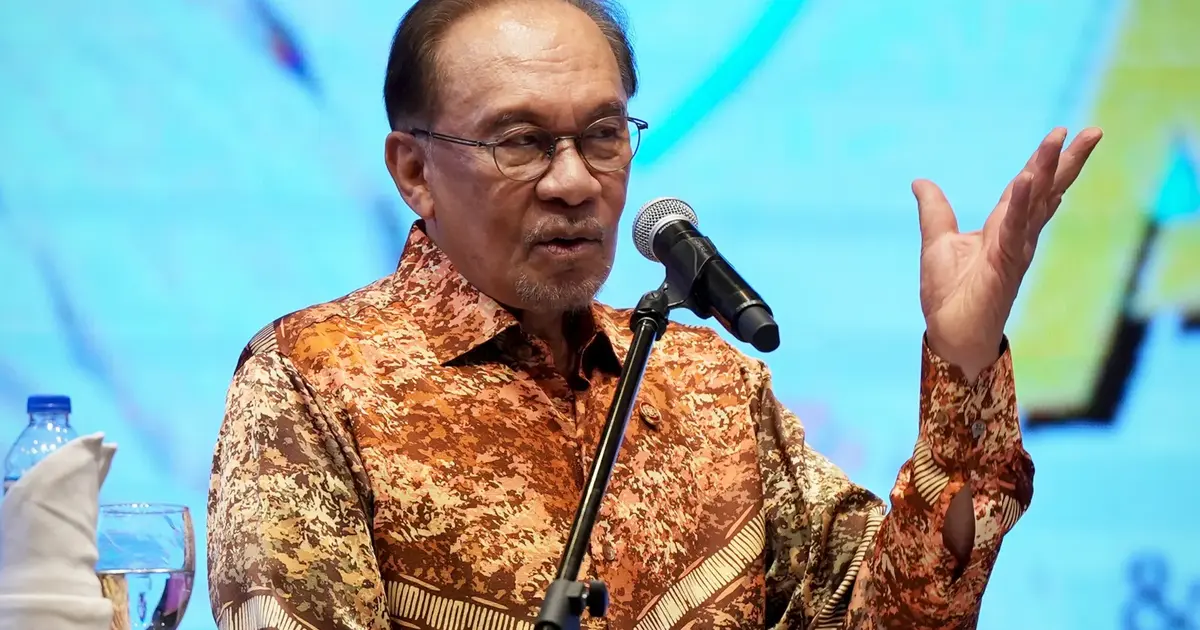
Prime Minister Anwar Ibrahim has directed authorities to launch a formal investigation into potential financial irregularities uncovered at a subsidiary company under Khazanah, Malaysia's sovereign wealth fund. The directive marks another chapter in the administration's wider anti-corruption push and signals heightened scrutiny of state-linked enterprises and their governance practices.
According to Anwar, the subsidiary in question was incorporated in 2012, placing it well within the purview of institutions now facing renewed oversight. The concerns emerged only recently, following a comprehensive internal audit that Khazanah undertook to examine the company's operational history and financial management over the past decade. This retroactive examination suggests that potential irregularities remained undetected during routine supervision, raising questions about the adequacy of accountability mechanisms within state-owned entities.
The decision to initiate a formal probe reflects the government's stated commitment to financial transparency and institutional integrity across Malaysia's state sector. Khazanah, which oversees a diversified portfolio of strategic assets and investments worth billions of ringgit, operates at the intersection of commerce and public interest. Any breach of governance standards at its subsidiaries carries implications beyond individual corporate malfeasance, potentially affecting public trust in sovereign wealth management and the deployment of national resources.
For Malaysian investors and regional observers, the announcement underscores an important shift in oversight culture. Previous administrations faced persistent criticism over lax monitoring of state-linked entities, with numerous scandals involving mismanagement and unauthorised spending eventually surfacing through independent investigations or international scrutiny. Anwar's proactive initiation of this inquiry—rather than reactive response to external exposure—suggests an attempt to embed accountability as a preventive mechanism rather than a remedial one.
The specificity of focusing on a 2012-established entity is noteworthy. This timing places the company squarely within a period when Malaysia's governance landscape was undergoing significant transformation, yet before several major institutional reforms took root. Subsidiaries created during that era may have operated under older compliance frameworks or inherited practices from earlier regimes that lacked contemporary safeguards. Khazanah's recent decision to conduct historical operational reviews likely reflects updated international best practices and alignment with ASEAN-wide standards for sovereign wealth fund management.
The investigation's scope remains unclear, but typical inquiries of this nature examine transaction authorisation, financial reporting accuracy, asset management, conflict-of-interest protocols, and procurement practices. The involvement of Anwar directly signals that findings could carry political weight and influence broader institutional reforms. His intervention also suggests that the irregularities, whatever their precise nature, crossed a threshold warranting executive-level attention rather than remaining confined to corporate remedies.
For Southeast Asian comparisons, Malaysia's approach increasingly aligns with how peer nations address governance lapses in state entities. Singapore's Temasek and Indonesia's sovereign wealth frameworks have similarly institutionalised independent audits and public accountability mechanisms. This convergence reflects regional recognition that transparent state capitalism attracts international investment and strengthens institutional credibility in global markets.
The timing is also politically significant. As Malaysia navigates complex economic headwinds and competition for regional investment, maintaining institutional reputation becomes crucial. Foreign investors increasingly factor governance quality and corruption risk into their site selection and portfolio decisions. A transparent investigation into domestic irregularities, paradoxically, can enhance rather than damage Malaysia's international standing by demonstrating willingness to address problems systematically.
Khazanah's own handling of the discovery—initiating an internal review that exposed the problems—suggests internal systems may be functioning adequately, though belatedly. The fund manages critical national assets including stakes in major financial institutions, technology companies, and infrastructure projects. Any governance weakness within its structure potentially cascades across its entire investment portfolio and beneficiary companies.
The financial sector in Malaysia will likely monitor this investigation closely. Banking regulators, the Securities Commission, and institutional investors increasingly view governance track records as material risk factors. How thoroughly and transparently the authorities pursue this case will signal whether Malaysia's anti-corruption messaging translates into genuine institutional change or represents performative governance.
Broader implications extend to Malaysia's standing within international financial communities. The World Bank, International Monetary Fund, and ASEAN financial forums all assess member economies partly on governance metrics. Proactive investigations into state entity irregularities count positively in those assessments, particularly when findings lead to concrete remedial action rather than remaining buried in classified reports.
The investigation also carries implications for competing state-linked entities and private companies operating in Malaysia. If the probe identifies systemic weaknesses in financial controls or oversight mechanisms, expect cascading reviews across other Khazanah subsidiaries and potentially state investment vehicles. This ripple effect could strengthen governance standards Malaysia-wide, though implementation costs and operational disruptions will likely trigger pushback from affected entities.
Ultimately, Anwar's direction represents a test case for Malaysian institutional accountability. The resolution and transparency of this investigation will shape perceptions of whether the government's anti-corruption agenda represents genuine systemic change or tactical positioning. Stakeholders across finance, governance, and international business communities will scrutinise both the findings and the actions taken in response.

