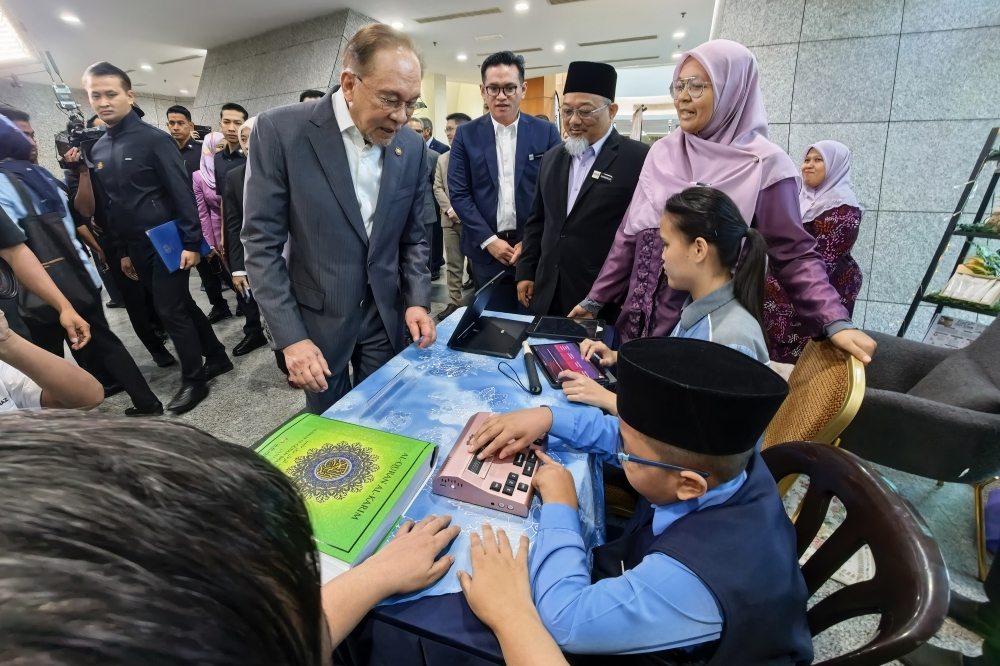
Prime Minister Datuk Seri Anwar Ibrahim has moved to reassure Malaysians that linguistic plurality need not compromise the constitutional primacy of Bahasa Melayu, positioning multilingualism as a practical asset rather than a cultural threat. Speaking in Putrajaya on July 28, the premier articulated a vision where proficiency in multiple languages and steadfast commitment to the national language coexist harmoniously, addressing long-standing sensitivities around language policy that frequently surface in public discourse.
Anwar's remarks come at a time when Malaysia continues navigating complex questions about language education and cultural identity. The tension between preserving Bahasa Melayu's central role and enabling citizens to engage globally through English, Mandarin, and other languages has periodically triggered debates among educators, policymakers, and civil society. By explicitly stating that mastering additional languages does not erode Bahasa Melayu's status, the Prime Minister sought to create intellectual space for a more pragmatic approach to language development without appearing to diminish national symbols.
The constitutional framework guarantees Bahasa Melayu as the official language, a provision enshrined in Article 152 of the Malaysian Constitution. This legal foundation ensures that regardless of how many languages individuals or communities adopt, the national language's institutional position remains immutable. Anwar's intervention implicitly leverages this constitutional bedrock to argue that learning others tongues operates on an entirely different plane from formal language policy. His position suggests that contemporary Malaysia can afford both: rigorous maintenance of Bahasa Melayu in governance, education, and public life while encouraging citizens to develop competence in languages that facilitate regional and global commerce, diplomacy, and intellectual exchange.
For Malaysian policymakers and education specialists, such statements carry practical significance. Schools nationwide grapple with curriculum design that must simultaneously strengthen Bahasa Melayu literacy while equipping students with English proficiency and increasingly, Mandarin or other languages. Anwar's framing potentially eases tensions between these objectives by presenting them as complementary rather than competing priorities. Teachers and curriculum developers can draw on such pronouncements when justifying multilingual education without fear of being perceived as diluting national language standards.
The regional context amplifies the relevance of Anwar's position. Across Southeast Asia, nations face analogous challenges as economic integration and digital transformation demand broader linguistic repertoires. Singapore's multicultural model, which maintains English as a working language while communities speak Mandarin, Malay, and Tamil at home, offers a nearby precedent. Thailand, Indonesia, and Vietnam similarly juggle national language preservation with English acquisition. Malaysia's approach, articulated by its Prime Minister, therefore carries implications extending beyond domestic policy into how ASEAN members conceptualise language in an interconnected region.
Critically, Anwar's remarks acknowledge the practical reality of contemporary employment markets. Proficiency in English increasingly determines access to white-collar opportunities, while Mandarin fluency opens doors in business, technology, and academic sectors where China's influence grows. Young Malaysians pursuing degrees or careers abroad encounter linguistic barriers without strong English capabilities. Simultaneously, those seeking to work within Malaysia's civil service, practice law, or engage in media must command Bahasa Melayu. The Prime Minister's endorsement of multilingualism reflects this economic imperative while maintaining political support among constituencies protective of national language status.
Yet subtle tensions persist beneath Anwar's conciliatory framework. Historically, debates over language in Malaysia have carried weight beyond linguistics, touching on ethnic identity, religious affiliation, and power distribution among communities. Bahasa Melayu's official status symbolises Malay-Muslim demographic and constitutional primacy, while English historically represented colonial legacy and continues association with Western dominance. Mandarin signals Chinese commercial networks and cultural continuity. When political leaders pronounce on language, they communicate about more than vocabulary and grammar; statements implicitly address communal anxieties about representation and belonging. Anwar's emphasis that multilingualism poses no threat therefore performs important reassurance work for constituencies that view Bahasa Melayu as integral to national identity.
Educational implementation of Anwar's philosophy requires sustained commitment and resources. Developing teachers competent in multiple languages, producing quality curricula, and assessing multilingual competence demands investment. Malaysian schools have historically struggled with English proficiency outcomes; adding other languages without addressing foundational capacity risks diluting all languages. The Prime Minister's statement provides political cover for education policy but translates into tangible improvement only with serious institutional backing and teacher development.
Looking forward, Anwar's position sets an intellectual direction that future governments and policymakers can reference. By decoupling language acquisition from language status, he creates space for pragmatism without sacrificing principles. This approach acknowledges that Malaysians can be simultaneously deeply rooted in Bahasa Melayu and fluent in English, Mandarin, or other languages without experiencing these competencies as contradictory. Whether schools and civil society embrace this vision comprehensively remains to be seen, but the Prime Minister's endorsement provides institutional permission for a more flexible, realistic approach to language development suited to Malaysia's economic and social context.

