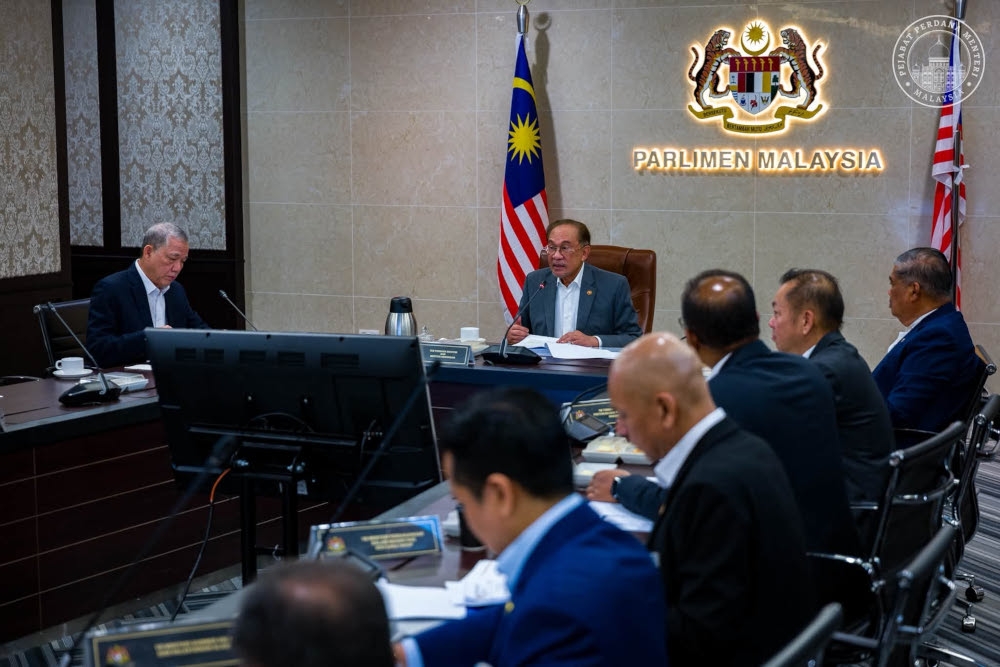
Prime Minister Datuk Seri Anwar Ibrahim has issued urgent directives to fortify Malaysia's food security infrastructure as meteorological forecasts warn of an intensifying El Niño weather system poised to destabilise agricultural production across Southeast Asia. The premier's intervention reflects growing alarm within government circles regarding the broader implications of this recurring climate phenomenon, which threatens to drive up consumer prices, strain rural livelihoods, and potentially expose vulnerabilities in the nation's domestic food chain during a period of already-elevated global commodity volatility.
The Ministry of Agriculture and Food Security has been tasked with orchestrating a comprehensive response spanning immediate emergency measures and longer-term resilience building. This directive signals recognition that Malaysia, despite its tropical climate advantages, remains exposed to El Niño disruptions that cascade through regional food networks. The phenomenon's effects extend beyond Malaysia's borders, as supply chain interconnections with neighbouring countries mean that agricultural stress in Thailand, Vietnam, or Indonesia directly impacts Malaysian consumers through imports and commodity pricing mechanisms that ripple through markets within weeks.
El Niño episodes are characterised by warmer-than-normal ocean temperatures in the equatorial Pacific, fundamentally altering global wind and rainfall patterns. During these periods, Southeast Asia typically experiences pronounced drought conditions, reduced irrigation availability, and compromised crop yields across staple commodities including rice, vegetables, and aquaculture products. Malaysia's position as both a domestic food producer and significant importer means that regional shortages simultaneously reduce domestic harvests while elevating prices for imported substitutes—a dual squeeze on household food expenditure that disproportionately affects lower-income populations.
The government's response mechanism appears structured around three strategic pillars. First, immediate stockpiling initiatives aim to establish strategic reserves of essential commodities, reducing dependence on real-time market supply during periods of regional scarcity. Second, agricultural ministry officials are expected to coordinate with farmers on crop diversification and irrigation efficiency improvements, allowing producers to maintain output despite anticipated water stress. Third, engagement with regional trade partners seeks to secure preferential supply arrangements and coordinate responses to prevent panic buying or export restrictions that might compound price inflation.
Malaysia's vulnerability to El Niño-induced food insecurity reflects structural realities of the modern agri-food system. The country produces approximately 70 per cent of its rice requirement domestically but depends on imports for substantial portions of other food categories. Neighbouring Thailand and Vietnam collectively supply roughly 40 per cent of Malaysia's rice imports, making any significant drought in those nations immediately consequential for Malaysian consumers. Previous El Niño events have demonstrated this pattern: the 2015-2016 episode caused regional rice prices to surge 30 per cent above baseline levels, straining government subsidisation programmes and household budgets simultaneously.
The agricultural sector itself faces acute challenges that El Niño will exacerbate. Rural depopulation continues as younger generations migrate to urban centres, reducing the farming workforce at precisely the moment when enhanced adaptive measures become necessary. Irrigation infrastructure, particularly in peninsular Malaysia's eastern and northern states, operates at capacity during normal years and lacks redundancy to accommodate drought conditions. Groundwater depletion in agricultural regions means that surface water scarcity cannot easily be overcome through deeper wells, leaving farmers vulnerable to exactly the conditions El Niño produces.
Regional coordination becomes essential because El Niño's effects manifest across national boundaries. The ASEAN framework for agricultural cooperation and food security dialogue will likely feature Malaysian engagement, with officials pushing for agreements on export policies and emergency supply mechanisms. Indonesia's agricultural challenges during El Niño years often trigger government export restrictions on palm oil and other commodities, which reverberates through Malaysian food-processing industries dependent on those feedstocks. Thailand's rice production shortfalls can eliminate a critical import source precisely when domestic supplies tighten.
Prime Minister Anwar's emphasis on urgency suggests policymakers have modelled scenarios indicating substantial risk. Climate monitoring agencies assess that current ocean temperature patterns and atmospheric conditions point toward a moderately strong El Niño developing through the latter half of 2023, potentially persisting into 2024. Historical precedent indicates that such episodes typically suppress regional rainfall by 20-40 per cent during critical growing seasons, translating to yield reductions that cascade through supply chains.
The political dimension of food security cannot be overlooked. Malaysian households remain sensitive to food price inflation, particularly staples including rice, vegetables, and cooking oil. Government price controls and subsidy mechanisms face fiscal constraints, meaning that sustained commodity inflation becomes politically untenable without either expanded subsidies—straining public finances—or allowing price passthrough, which triggers inflation and erodes household purchasing power. Proactive messaging around El Niño preparations may serve to preempt public concern while signalling government competence in managing systemic risks.
Agricultural experts suggest that Malaysia's long-term adaptation requires structural investments beyond immediate emergency response. Climate-smart agriculture practices, including improved water retention, crop rotation, and stress-resistant varieties, offer pathways toward reduced El Niño vulnerability. However, such transitions require sustained investment in farmer training, improved market linkages, and potentially restructured subsidy frameworks that reward productivity and resilience rather than simply maintaining acreage under cultivation. The current directive, while necessary, addresses symptoms more directly than causes.
International commodity markets will likely amplify any regional production stress. Global food prices already reflect supply concerns across major producing regions, and any South Asian drought would compress supplies at precisely the moment Malaysian import demand might surge. Currency fluctuations, energy costs affecting agricultural inputs and transport, and geopolitical factors influencing trade flows add complexity beyond the meteorological challenge alone.
Government agencies now face the practical challenge of translating Anwar Ibrahim's directive into operational measures within compressed timeframes. Coordination between federal and state authorities becomes critical, as agriculture remains partially a state-level responsibility in Malaysia's federal structure. The Ministry of Agriculture and Food Security must engage with farmer cooperatives, private agricultural enterprises, importers, and retailers to align responses across the entire food system. Success requires balancing immediate supply security against price stability and maintaining farmer incomes—objectives that occasionally tension against each other.

