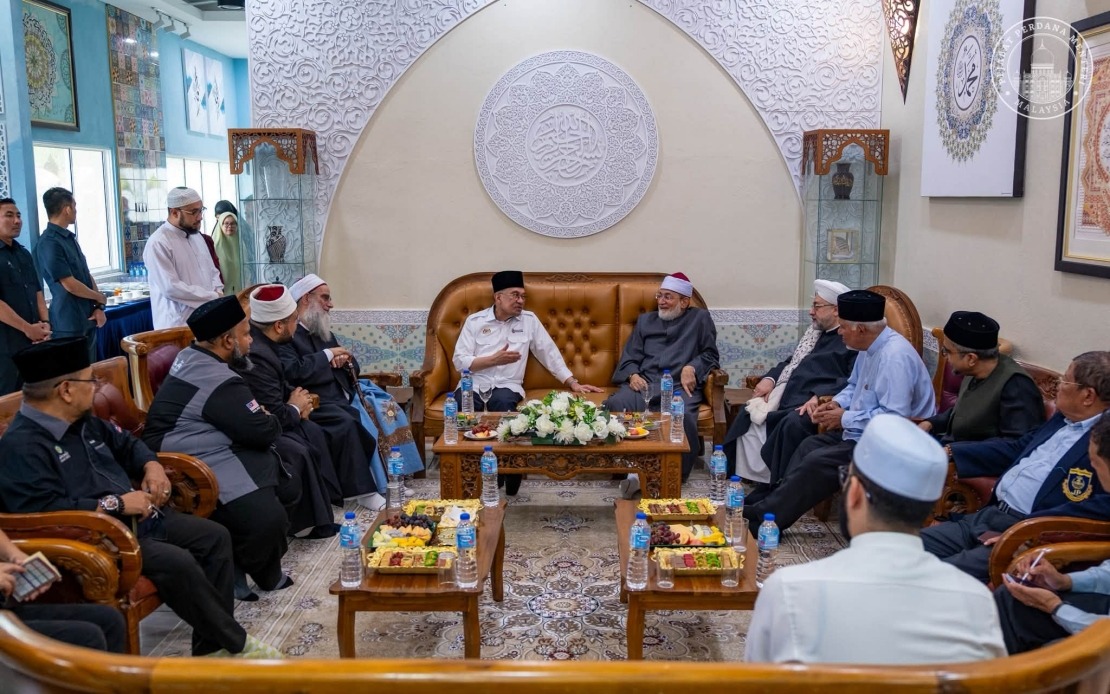
Prime Minister Datuk Seri Anwar Ibrahim made time in his schedule to meet with three distinguished Islamic scholars who are currently visiting Malaysia. The encounters underscore the government's engagement with respected Islamic figures and their potential role in shaping religious discourse within the nation. The three visitors—Egyptian hadith scholar Al-Fadhil Al-Allamah Al-Muhaddith Syeikh Dr Mustafa al-Nadwi Al-Hasani, internationally recognised Quranic reciter Al-Fadhil Al-Allamah Al-Muqri' Syeikh Dr Ahmad Isa Al-Ma'sarawy, and Al-Fadhil Al-Syeikh Maulana Al-Sayyid Afeefuddin Al-Jailani, who serves as grand custodian of the waqf, mosque and maqam of Syeikh Abdul Qadir Al-Jailani—represent significant intellectual and spiritual authority within Islamic communities across the Middle East and beyond.
During the visits, the Prime Minister engaged in discussions intended to explore their expertise and perspectives on Islamic scholarship and practice. Anwar emphasised the importance of such connections by sharing details of the meetings through his social media platforms, framing the encounters as meaningful interludes within an otherwise demanding schedule of governmental responsibilities. The decision to publicly document these engagements reveals the administration's deliberate positioning of Islamic scholarly engagement as a priority within its broader policy framework.
Anwar expressed gratitude for the scholars' willingness to contribute to Malaysia's Islamic knowledge base during their stay in the country. His statements highlighted appreciation for their commitment to disseminating religious teachings and wisdom to Malaysian audiences. The Prime Minister characterised the visits as opportunities to seek their counsel and prayers, suggesting that senior government leadership views interaction with eminent Islamic intellectuals as valuable for guidance on matters likely spanning both spiritual and policy considerations.
The venue chosen for these meetings—Nasyrul Quran—carries symbolic significance as an institution dedicated to Quranic studies and dissemination. This selection demonstrates intentional curation of the setting to reinforce the scholarly and spiritual dimensions of the gatherings. For Malaysian observers, the location choice signals government support for institutions engaged in Islamic education and research.
In his remarks shared publicly, Anwar articulated a vision linking the scholars' presence to broader national aspirations. He framed the visits as contributing to a knowledge-enriched society characterised by virtue, harmony and deeper religious understanding. This messaging suggests the government views international Islamic scholarly engagement as instrumental in cultivating particular values and social characteristics among the Malaysian population. The emphasis on harmony sits particularly within Malaysia's multicultural context, where religious education and interfaith understanding remain sensitive and strategically important areas.
The involvement of scholars with distinct specialisations—hadith interpretation, Quranic recitation and waqf administration—indicates deliberate selection targeting different dimensions of Islamic knowledge and practice. This breadth suggests the Prime Minister's office sought to benefit from multiple expertise areas, from textual scholarship to institutional Islamic governance. For regional observers, such engagement reflects Malaysia's position within broader Islamic intellectual networks stretching from Southeast Asia to the Arab world.
The timing and publicity of these meetings occur within Malaysia's ongoing navigation of complex religious terrain. The nation continues balancing Islamic institutional authority with secular governance structures, while managing diverse religious communities. Government engagement with prominent Islamic scholars can be understood partly as an effort to maintain credibility and connection with constituencies for whom Islamic legitimacy carries considerable weight.
Anwar's personal involvement in these encounters, rather than delegating such meetings to subordinates, underscores their perceived importance within his administration's strategic priorities. This direct engagement signals that Islamic scholarship and international religious figures occupy meaningful space within the Prime Minister's governance framework. For regional governments similarly managing relationships between Islamic institutions and state authority, Malaysia's approach offers observable patterns of engagement.
The scholars' acceptance of invitations to visit and meet with Malaysia's political leadership reflects broader patterns of engagement between Middle Eastern Islamic intellectuals and Southeast Asian Muslim-majority governments. Such exchanges facilitate knowledge transfer while simultaneously conferring legitimacy on both parties—international scholars gain platform and influence, while receiving governments enhance their Islamic credentials among religiously conscious populations.
Moving forward, the impact of these meetings may materialise through various channels: public lectures or teaching sessions the scholars conduct during their stay, policy recommendations they might offer regarding Islamic education or institutional development, or symbolic outcomes related to Islamic-international cooperation. Malaysian media and public discourse will likely monitor whether these encounters translate into concrete institutional initiatives or policy adjustments. The meetings also set precedent for continued engagement with prominent Islamic figures, potentially establishing a pattern of regular scholarly visitations and consultations.
For the broader Southeast Asian region, Malaysia's demonstrated commitment to hosting and consulting with internationally respected Islamic scholars reflects its aspirations to remain a significant player in Islamic intellectual and institutional spheres. Such engagement helps position Malaysia as a venue for Islamic scholarship and dialogue, enhancing its soft power within Muslim-majority nations and diasporic Islamic communities globally. The visit ultimately illustrates how contemporary Muslim-majority governments strategically deploy international religious partnerships as components of domestic legitimacy and regional influence.

