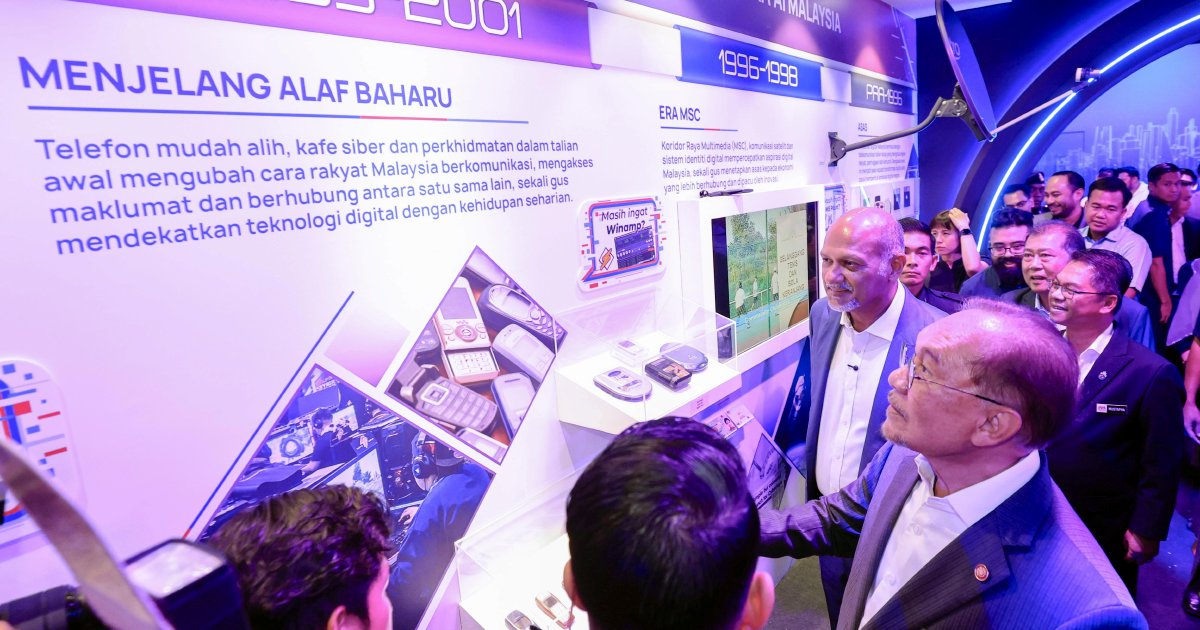
Prime Minister Datuk Seri Anwar Ibrahim has sounded an important cautionary note about Malaysia's ambitions to establish itself as a regional artificial intelligence hub, stressing that technological advancement must be inclusive or risk deepening existing social and economic disparities. Speaking in Cyberjaya, the heart of Malaysia's digital infrastructure corridor, Anwar emphasised that the nation's trajectory toward becoming an AI-centric economy cannot come at the cost of leaving behind citizens who lack adequate access to modern technology and digital literacy.
The warning reflects a growing global concern about inequality in the artificial intelligence age. While developed nations and affluent populations increasingly harness AI for productivity gains, healthcare innovations, and economic advancement, developing economies and marginalised communities risk being left behind, creating a technological aristocracy. For Malaysia, a middle-income nation with significant urban-rural disparities and varying levels of digital infrastructure, this concern holds particular relevance. The transition toward an AI-driven economy promises substantial benefits but requires deliberate policy choices to ensure those advantages are broadly distributed.
Anwar's remarks underscore a fundamental tension in Malaysia's digital transformation strategy. The country has invested heavily in cultivating talent, attracting international tech companies, and building digital infrastructure in urban centres like the Klang Valley and Penang. These efforts have positioned Malaysia as a credible destination for regional tech investment and innovation hubs. However, these gains have been geographically concentrated, with rural areas, less developed states, and lower-income populations experiencing slower technological adoption and benefiting less from the digital economy's wealth creation.
The AI revolution amplifies this disparity in ways distinct from previous technological transitions. Unlike earlier digital tools that primarily enhanced existing work, artificial intelligence has the potential to fundamentally restructure labour markets, automate entire sectors, and concentrate wealth among those who control AI systems. Without proactive intervention, Malaysia could witness a scenario where AI enriches educated urban professionals and business owners while displacing workers in routine sectors without providing pathways to reskill and transition into higher-value occupations.
Digital literacy emerges as a critical component of inclusive AI development. Communities with poor digital literacy—often overlapping with lower-income households and older demographics—face formidable barriers to participating in an AI-augmented economy. Whether as employees learning to work alongside AI systems, as entrepreneurs leveraging AI tools for business, or as citizens navigating AI-driven public services, basic technological competency becomes essential. Malaysia's education and training infrastructure must urgently expand to serve these populations, ensuring that AI skills development programmes reach beyond major cities and prestigious institutions.
The infrastructure dimension cannot be overlooked either. Reliable, affordable broadband connectivity remains unevenly distributed across Malaysia. Rural and remote areas frequently experience poor connection quality, high costs, or complete service gaps. Deploying AI applications—whether in agriculture, healthcare, education, or commerce—requires robust digital infrastructure. Without closing these connectivity gaps, entire regions risk being excluded from AI-driven opportunities, perpetuating and amplifying existing development disparities that plague Malaysia's regional landscape.
Anwar's intervention signals that the government recognises these risks and intends to shape Malaysia's AI pathway with equity considerations embedded from the outset. This represents a mature approach to technological development, acknowledging that unbridled market forces alone will not produce inclusive outcomes. Deliberate policy levers—targeted infrastructure investment, subsidised training programmes, regulatory frameworks protecting workers transitioning through technological disruption, and mechanisms ensuring AI benefits reach small and medium enterprises—become necessary tools for steering development toward shared prosperity.
The challenge extends beyond domestic policy. Malaysia's position as a regional technology player means its AI strategy influences broader Southeast Asian trajectories. Should Malaysia successfully demonstrate that rapid AI adoption can be married with inclusive growth, it could serve as a model for neighbouring economies navigating similar transitions. Conversely, if AI adoption becomes a story of widening inequality, it reinforces a pattern common across the region where technological progress benefits elites while ordinary citizens bear adjustment costs disproportionately.
Implementing inclusive AI development requires collaboration across government, private sector, and civil society. Technology companies, particularly those based in Malaysia or operating regionally, must feel accountability to contribute to equitable outcomes through workforce development initiatives, technology transfer to underserved regions, and business models serving lower-income markets. Educational institutions should adapt curricula to prepare students for an AI-centric future while remaining accessible to all income levels. Government's role encompasses funding, regulation, and coordination but also protecting vulnerable populations during the transition and ensuring public services leverage AI to improve accessibility and quality of life for all citizens.
The timeline for action is pressing. AI development moves swiftly; decisions made now about investment priorities, regulatory frameworks, and institutional capabilities will shape Malaysia's technological landscape for decades. Delaying inclusive AI development until after inequality deepens would prove far more costly and difficult to reverse than building equity considerations into the development process from the beginning. Anwar's warning, therefore, serves as a call for immediate, sustained action to ensure Malaysia's AI future enriches the entire nation rather than concentrating benefits among a privileged few.

