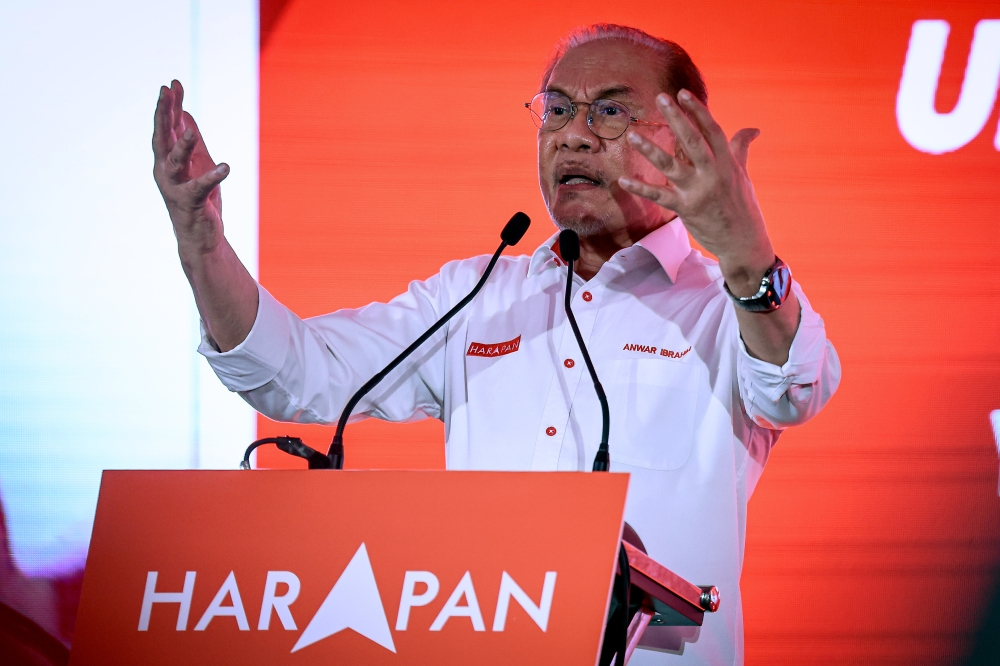
Prime Minister Datuk Seri Anwar Ibrahim has embarked on a high-profile campaign visit to Negeri Sembilan, marking a strategic push by the Pakatan Harapan coalition to mobilise support in the state and demonstrate political strength ahead of the election cycle. The Seremban campaign event represents a deliberate effort to energise the ruling coalition's grassroots machinery and shore up voter confidence in Pakatan's governance record.
Negeri Sembilan holds considerable significance in Malaysia's electoral calculus. The state's nine parliamentary constituencies represent pivotal battlegrounds where control frequently shifts between coalitions, making it essential terrain for Pakatan to defend and expand its presence. Anwar's personal appearance underscores the coalition's recognition that these seats cannot be taken for granted, particularly as opposition parties intensify their own organising efforts across the country.
The Prime Minister's campaign engagement serves multiple strategic objectives beyond simple vote-seeking. By appearing directly before constituents in Negeri Sembilan, Anwar aims to demonstrate accessibility and responsiveness to local concerns—a critical dimension of democratic legitimacy in Malaysian politics. His presence signals that the federal government remains invested in regional development priorities and attentive to grassroots sentiment, a message particularly important in states where Pakatan's support margins may not be insurmountable.
Pakatan Harapan's electoral positioning has undergone significant evolution since the 2022 general election, when the coalition secured the federal government following internal realignments and voter redistribution. However, maintaining that majority in parliament requires consistent reinforcement of support in key constituencies. Negeri Sembilan, with its mixed demographic composition and swing-voter tendency, exemplifies the types of districts where election outcomes often reflect broader national sentiment and economic conditions.
Anwar's campaign activities likely emphasise Pakatan's policy achievements and future development agenda for the state. Infrastructure projects, economic opportunities, and education initiatives typically feature prominently in such engagements, allowing the Prime Minister to connect federal-level decision-making to tangible benefits residents experience. The campaign also provides platforms for addressing community grievances and demonstrating responsiveness to constituent feedback—mechanisms through which political parties build durable voter relationships.
The timing of this Negeri Sembilan campaign reflects broader Pakatan strategies to remain visible and mobilised during the inter-election period. Rather than waiting until a formal election date approaches, the coalition maintains continuous engagement with voters, building organisational capacity and reinforcing partisan identification. This sustained campaigning approach helps mitigate opposition momentum and keeps Pakatan's policy message in public discourse.
Regionally, Pakatan's performance in Negeri Sembilan carries implications for how the coalition is perceived across Southeast Asia and among international observers tracking Malaysia's democratic development. States where the ruling coalition maintains strong representation are often cited as evidence of democratic health and voter confidence in government institutions. Conversely, territorial losses signal weakness that opposition parties exploit to contest national narratives about governance legitimacy.
Anwar's involvement in ground-level campaigning also reinforces his personal brand as a leader willing to engage directly with ordinary Malaysians rather than remaining confined to high-level governance. This populist dimension of his political strategy has proven effective in mobilising younger voters and urban constituencies historically inclined toward Pakatan. His accessibility on the campaign trail contrasts with alternative leadership styles and reinforces the coalition's messaging about democratic participation and inclusive governance.
The coalition's attention to Negeri Sembilan reflects demographic and geographic realities that shape Malaysian electoral competition. The state's combination of rural and semi-urban constituencies requires campaigns that address both agricultural sector concerns and urban service delivery. Pakatan's capacity to articulate coherent messages addressing these divergent priorities will substantially determine its performance in the state's parliamentary contests.
Looking forward, the intensity of Pakatan's campaigning in Negeri Sembilan will likely accelerate as election dates approach. Opposition coalitions—whether Perikatan Nasional, Barisan Nasional, or other configurations—are simultaneously mobilising in these same constituencies, creating competitive pressure on Pakatan to consolidate support and neutralise rival messaging. The electoral outcome in Negeri Sembilan will consequently reflect not merely the coalition's organisational capacity but the effectiveness of its campaign communications against increasingly resourced opposition alternatives.
Anwar's Negeri Sembilan campaign ultimately represents a microcosm of national electoral politics, where personal leadership visibility, policy messaging, and organisational machinery intersect to determine political outcomes. His commitment to ground-level engagement signals that Pakatan views these constituencies as genuinely competitive terrain where superior campaign execution and constituent responsiveness can realistically determine results.

