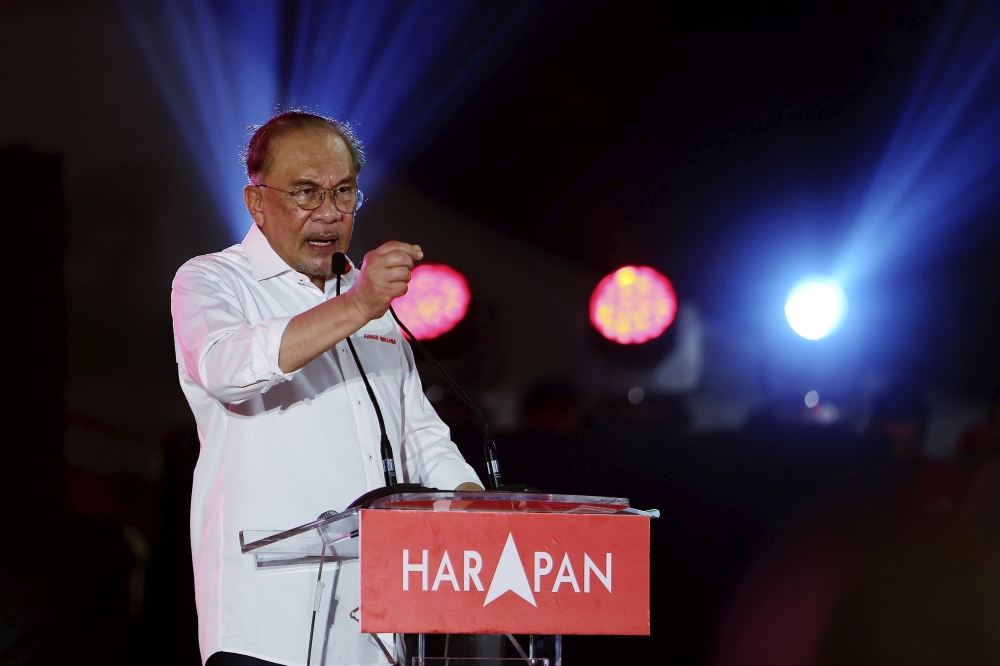
Prime Minister Datuk Seri Anwar Ibrahim is stepping up his political ground game in Negeri Sembilan with an ambitious four-stop campaign tour, marking his opening salvo in a state that remains strategically important to federal coalition politics. The coordinated series of events underscores the administration's determination to strengthen its position ahead of what observers expect to be increasingly competitive electoral contests across Malaysia's central region.
The intensive schedule reflects a deliberate strategy to maintain momentum in a state where political dynamics have shifted considerably over recent years. By personally leading the charge rather than delegating to party lieutenants, Anwar is signalling that Negeri Sembilan warrants his direct attention and investment of political capital. This hands-on approach contrasts with the less visible central leadership during previous electoral periods, suggesting the Prime Minister views this state as a potential swing factor in broader electoral calculations.
Negeri Sembilan's significance in Malaysian politics extends beyond its parliamentary seat count. The state serves as a crucial testing ground for Pakatan Harapan's capacity to consolidate support among both urban and rural constituencies simultaneously. The four events scheduled for the day are designed to reach different demographic segments—from party members and supporters to community leaders and the general electorate—creating multiple touch points for the government's messaging.
The timing of this campaign push carries particular weight given the broader political landscape. With various state and federal elections potentially on the horizon, political parties across the spectrum are intensifying their ground operations. Anwar's decision to personally launch his campaign in Negeri Sembilan sends a clear message to the ruling coalition's base that the government intends to contest vigorously rather than assume incumbency will secure automatic voter support.
For Negeri Sembilan voters, this escalation in campaign activity marks the beginning of what will likely be an extended period of heightened political engagement. The state's residents, who have demonstrated a nuanced approach to voting in recent elections, are now positioned at the centre of renewed national political attention. This shift could enhance the state's leverage in negotiating development allocations and policy commitments from federal authorities.
The campaign initiative also carries significance for understanding the internal health of the ruling coalition. By mounting such a comprehensive tour, Anwar is demonstrating confidence in his government's ability to mobilise resources and sustain campaign momentum. This confidence factor itself becomes part of the political calculus, as voters often evaluate parties partly on their perceived trajectory and organisational capability.
From a regional Southeast Asian perspective, Malaysia's continued emphasis on electoral competition and political campaigning reflects the nation's commitment to democratic processes. Unlike several regional neighbours where electoral space has contracted, Malaysian politicians continue to engage in expansive campaign activities, reinforcing pluralistic political competition as a fundamental feature of governance.
The Negeri Sembilan tour also provides a window into how Anwar's administration plans to communicate its achievements and future vision to voters outside the capital region. The content and messaging deployed across these four events will likely set the tone for how the government positions itself in other key states, making the specific rhetoric and policy announcements from Negeri Sembilan worth close attention from political analysts nationwide.
For business and civil society leaders in Negeri Sembilan, the Prime Minister's visit presents both an opportunity and a signal. Direct access to federal leadership during campaign tours often translates into tangible opportunities for constituency-based advocacy on local concerns—from infrastructure development to business-friendly regulations. The heightened political attention may accelerate consideration of pending development projects or policy revisions affecting the state.
The broader implication of this campaign push extends to how Malaysian politics is evolving in the post-2022 period. With competition between major political blocs remaining intense and electoral outcomes less predictable than in earlier decades, political leaders must now treat even traditionally secure states as requiring active cultivation. This competitive intensity represents a structural shift in Malaysian democracy, one where incumbency alone provides insufficient protection.
Anwar's personal involvement in the Negeri Sembilan tour also reflects changing expectations about prime ministerial leadership in contemporary Malaysia. Voters increasingly expect direct engagement with national leaders rather than mediated interaction through state or party machinery. This personalisation of politics places greater demands on individual leaders to maintain visible presence across multiple constituencies simultaneously.

