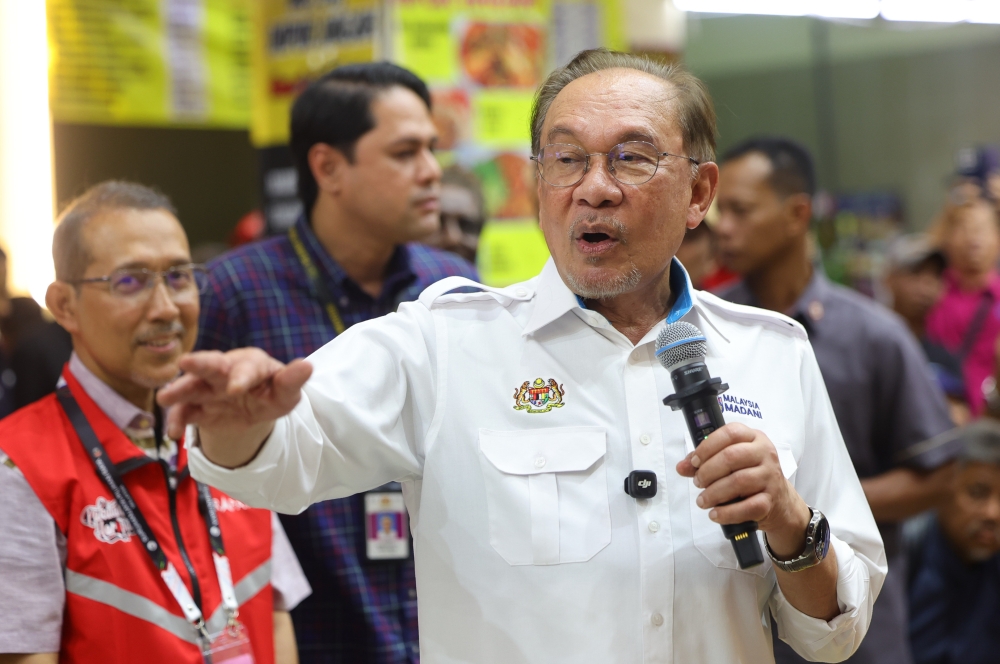
Prime Minister Datuk Seri Anwar Ibrahim has turned his focus to Negeri Sembilan with renewed vigour, cramming multiple campaign appearances into what represents a critical push in the state as election day draws closer. The intensive schedule reflects the government's recognition that the central state remains a closely contested political battleground, with seats that could prove decisive in determining the composition of the next state administration.
Anwar's heightened activity in Negeri Sembilan signals the PKR-led coalition's determination to consolidate support and make inroads in constituencies where the outcome remains uncertain. The state has historically been competitive, with no single political force able to claim overwhelming dominance across all parliamentary and state seats. By concentrating his personal efforts here, the Prime Minister is attempting to leverage his national profile and political machinery to swing uncommitted voters and shore up support among coalition-aligned communities.
The campaign intensification comes at a time when political parties across the spectrum are making their final pitches to voters. In Malaysian electoral politics, the closing weeks of a campaign often prove decisive, as undecided voters make their choices and parties mobilise their ground machinery to maximum effect. Anwar's physical presence in multiple locations across Negeri Sembilan underscores the importance his administration places on the state's outcome and suggests internal polling may indicate the election could be decided by relatively narrow margins in several constituencies.
Negeri Sembilan's political dynamics have shifted considerably over recent years, reflecting broader trends in Malaysian politics. The state encompasses diverse constituencies ranging from urban centres to rural agricultural areas, presenting varied challenges for campaigners. Urban voters often prioritise economic management and cost-of-living concerns, while rural populations focus on development infrastructure and agricultural support. Anwar's varied schedule across different districts suggests a sophisticated approach aimed at tailoring messages to these distinct voter groups.
The opposition remains active in Negeri Sembilan as well, and the competitive nature of the state means neither coalition can take any seat for granted. The concentration of high-level campaigning by the Prime Minister himself indicates that the administration believes winning Negeri Sembilan would deliver significant political capital, both in terms of absolute seat numbers and in terms of the psychological momentum that would accompany success in a keenly contested state. Such momentum can be particularly valuable in shaping media narratives and voter perception in the final days before polling.
Regional implications also factor into the campaign dynamics here. Negeri Sembilan's location adjacent to the Klang Valley and its economic integration with Malaysia's most developed region means that state-level performance can influence perceptions about broader economic governance. Voters in the state are attuned to national economic trends and often view state elections through the lens of national policy effectiveness. Anwar's emphasis on economic stewardship and his personal advocacy for cost-of-living relief measures form central planks of the coalition's Negeri Sembilan messaging.
The packed schedule demonstrates that modern Malaysian campaigning requires not just policy announcements but sustained personal engagement from senior leaders. In an era where media coverage is fragmented and voters increasingly seek direct contact with political figures, Anwar's willingness to undertake an exhausting series of appearances sends a signal about his commitment to the state and his accessibility to voters. This personalisation of campaigning has become increasingly important as traditional mass media's influence on voter behaviour has declined.
For grassroots party machinery, the Prime Minister's presence provides crucial momentum. Local party members gain confidence and motivation when seeing their national leader actively campaigning in their constituencies. This trickle-down effect can enhance the effectiveness of door-to-door campaigns and community engagement efforts undertaken by party volunteers in the final stretch before polling day.
The campaign in Negeri Sembilan also reflects the broader competitive landscape facing Malaysia's ruling coalition. Having assumed office following the 2022 general election, the administration faces the task of proving its governance credentials to voters at state level. Success in Negeri Sembilan would constitute validation of the coalition's approach and provide a strong foundation for subsequent electoral contests. Conversely, failure to perform well would invite questions about the coalition's ability to retain voter confidence and maintain political momentum heading toward the next general election cycle.
Anwar's personal engagement in Negeri Sembilan underscores how state elections in Malaysia, while technically local contests, have become increasingly nationalized affairs where prime ministerial involvement is considered essential for campaign credibility. The intensive schedule he has adopted reflects this reality and demonstrates that even in relatively smaller states, winning coalitions invest significant senior leadership resources to secure victory. The outcome in Negeri Sembilan will provide important signals about the broader political direction of the country.

