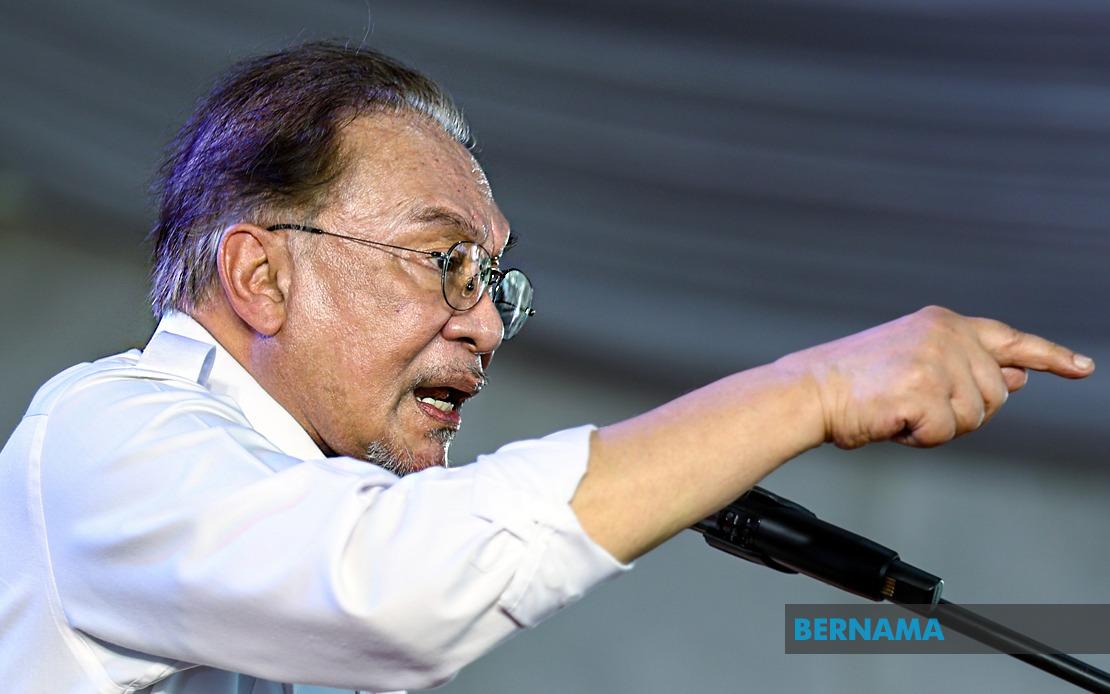
Pakatan Harapan chairman Datuk Seri Anwar Ibrahim is pressing ahead with an aggressive campaign schedule in Johor, conducting a sprawling eight-constituency tour across the state's northern region to consolidate support for the coalition's candidates. The effort underscores PH's determination to maintain campaign momentum in the crucial southern state, where the 16th Johor state election will determine the political direction of Malaysia's most industrialised peninsula region.
Anwar's tour, announced via his Facebook page, takes him through Layang-Layang, Senggarang, Semerah, Bukit Naning, Pemanis, Gambir, Serom, and Palong Timur—all constituencies falling under the Buloh Kasap state legislative assembly division. The comprehensive itinerary, spanning from early morning to late evening, reflects a calculated strategy to reach diverse voter segments across rural, urban, and semi-urban areas within a single concentrated push. This type of targeted geographical offensive is typical of PH's approach during state-level contests, where localised support networks and community engagement often prove decisive.
The campaign day begins at 8:55 am with a breakfast gathering at Warung Pak Din in Kampung Sahri, framed as the 'PMX Santai Sarapan Bersama Masyarakat' programme, allowing Anwar to engage informally with residents over a meal. By 10 am, he shifts to a meet-and-greet in Senggarang, followed at 11 am by a 'Kenduri Rakyat' community feast at Vila Kemboja in Semerah. The schedule then accelerates through midday, with a dedicated 'Temu Anwar' session and volunteer launch in Muar at 12:15 pm. Such varied formats—breakfasts, community meals, meet-and-greets—are designed to create multiple touchpoints with voters and generate grassroots enthusiasm while allowing media coverage of different community engagement angles.
The afternoon portion shifts focus to rural constituencies, with a 'Jelajah Harapan Felda Bersama PMX' programme at Dataran Putra Palong Timur 2 at 3:10 pm, targeting the agricultural heartland where Felda settlers represent a politically significant demographic. This is followed by an evening meet-and-greet with Pemanis residents at Kampung Jawa at 5 pm, demonstrating PH's efforts to maintain presence in areas that have historically been contested ground between the ruling coalition and opposition parties. An 8 pm session in Gambir precedes the day's finale—a 'Jelajah Johor Ke Depan, Undi Harapan' event at Pasaraya Mega in Sungai Mati at 9 pm, which wraps up the day's campaigning with a forward-looking messaging frame.
This intensive tour represents the campaign's second week momentum, following similarly packed programming the previous day involving seven separate engagements. The relentless scheduling reflects the competitive nature of the Johor race and PH's need to maintain high visibility and organisational energy across constituencies where support cannot be taken for granted. Johor remains a significant prize—as Malaysia's economic engine and home to substantial Bumiputera and non-Bumiputera constituencies, the state's election outcome carries implications beyond its borders.
Pakatan Harapan is contesting all 56 state seats in the Johor state assembly, deploying candidates from its three principal component parties in a carefully calibrated distribution. PKR is fielding 20 candidates, Amanah 19, and DAP 17, reflecting both the relative sizes of these parties and strategic decisions about constituency allocation. This near-complete participation signals PH's confidence in its organisational capacity and the coalition's belief that it can mount a credible challenge in traditionally competitive ground. The distribution also demonstrates the balance of influence within the PH alliance, with PKR's preponderance reflecting Anwar's party's dominant role within the coalition structure.
The broader election context involves a significantly crowded field, with a total of 172 candidates registered across all constituencies. This fragmentation of the vote—nearly three candidates per seat on average—creates unpredictable dynamics that could advantage or disadvantage any single coalition depending on vote-splitting patterns. With polling scheduled for July 11 and early voting set for July 7, the compressed campaign timeline amplifies the importance of every day's activities and every candidate's visibility.
For Johor's voters and Malaysian observers monitoring state-level politics, this intensified campaign activity signals that PH intends to fight competitively for the state rather than concede ground to Barisan Nasional or other competitors. The choice of Anwar himself to conduct such extended ground tours also carries symbolic weight—his personal involvement elevates the stakes and demonstrates high-level commitment to the outcome. In Malaysian political tradition, prime ministers and party leaders' campaign presence in a state conventionally indicates that the leadership views the election as strategically important and is willing to invest senior political capital.
The Johor state election arrives at a moment when Malaysia's political landscape remains fluid following recent federal-level developments. A strong PH performance would reinforce the coalition's positioning heading into potential future general elections, while any weakness could embolden opposition narratives about declining support. For regional observers, Johor's outcome carries implications for Southeast Asian political trends, as Malaysia's electoral dynamics continue to reflect broader patterns of coalition-building, voter realignment, and the role of local versus national issues in determining electoral outcomes.
Anwar's exhaustive campaign schedule also reflects the labour-intensive nature of modern Malaysian electoral politics, where digital campaigning supplements but cannot replace ground-level engagement. The breakfast sessions, community feasts, and meet-and-greet formats depend on sustained personal effort and volunteer coordination at scales that demand significant organisational resources. This traditional approach remains particularly effective in Johor's mix of urban and rural constituencies, where personal connections and face-to-face dialogue continue to shape political choices.

