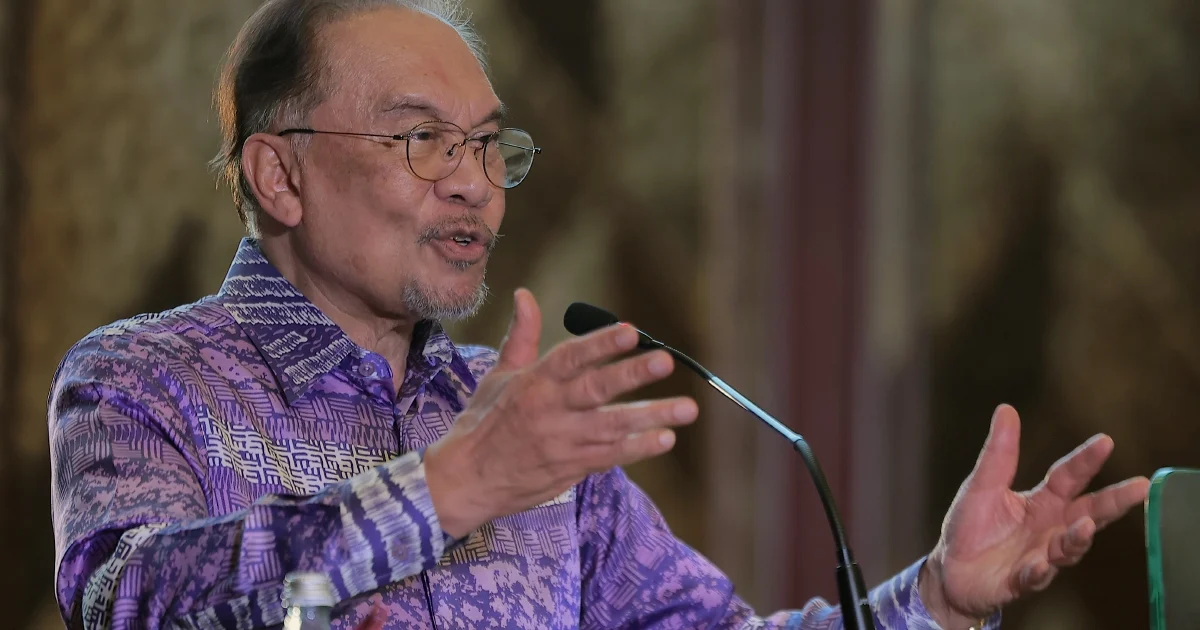
Prime Minister Datuk Seri Anwar Ibrahim will travel to Kazan on a two-day working visit commencing June 17, where he is expected to hold substantive discussions with Rais of the Republic of Tatarstan Rustam Minnikhanov. The diplomatic engagement represents a significant step in Malaysia's ongoing effort to strengthen bilateral relations with Russia whilst simultaneously advancing Asean's collective interests in Moscow, according to Malaysia's envoy to the Russian Federation.
The visit underscores Malaysia's strategic positioning in an increasingly multipolar global landscape, where dialogue with major powers outside traditional Western spheres remains essential for national interests and regional stability. Kazan, the capital of Tatarstan, holds particular importance as a major economic and cultural hub within Russia's Volga region, and serves as host to numerous international forums that bring together leaders and policymakers from across Eurasia and beyond.
During the scheduled engagements in Kazan, bilateral matters central to Malaysia-Russia cooperation are expected to feature prominently. These discussions would likely encompass trade and investment opportunities, defence and security cooperation, as well as people-to-people exchanges that have historically underpinned substantive partnerships between the two nations. The visit also provides an opportunity to address contemporary regional challenges and explore shared positions on international issues of mutual concern.
Beyond the bilateral dimension, Malaysia's presence at such high-level diplomatic gatherings carries implications for Asean's institutional relationship with Russia. As a founding member and current or recent participant in various regional mechanisms, Malaysia often serves as a bridge-builder between Southeast Asia's collective voice and major powers outside the region. Anwar Ibrahim's engagement in Kazan signals that Asean continues to value dialogue and constructive engagement with Russia, particularly as regional organisations seek to maintain balanced relationships across global power structures.
The timing of this visit reflects Malaysia's careful navigation of great power dynamics whilst maintaining its longstanding policy of strategic autonomy and non-alignment. By engaging directly with Russian leadership at the regional level, Malaysia demonstrates that economic pragmatism and diplomatic respect need not be sacrificed even amid broader geopolitical tensions that have strained relationships between Russia and Western nations. This approach resonates with how many Southeast Asian countries view their international obligations and opportunities.
Rustam Minnikhanov, as the head of Tatarstan's regional government, wields significant influence over one of Russia's most developed and economically vibrant regions. Tatarstan's relatively sophisticated economy, technological capabilities, and international business connections make it an attractive partner for Malaysian enterprises seeking to expand their presence in the Russian market. Regional leadership in Tatarstan has historically demonstrated openness to foreign partnerships, including from Asian economies.
Malaysia's diplomatic corps has emphasised that the visit encompasses broader aspirations to enhance Asean-Russia cooperation frameworks. As Southeast Asia faces evolving security challenges, climate change impacts, and economic shifts, engagement with Russia across multiple channels—governmental, parliamentary, business, and cultural—contributes to a more stable and inclusive regional order. The embassy's messaging suggests that this visit forms part of a comprehensive strategy to deepen Moscow's understanding of Asean priorities and strengthen institutional linkages between the two entities.
Trade relations between Malaysia and Russia have experienced fluctuations due to global economic conditions and geopolitical developments, but both nations maintain interest in expanding commercial ties. Agricultural products, palm oil derivatives, petrochemicals, and technology represent potential areas for increased bilateral commerce. The visit provides an occasion to discuss trade facilitation mechanisms, investment protection agreements, and sectoral cooperation that could benefit businesses and consumers in both countries.
From Russia's perspective, Malaysia's visit reflects the country's importance within Asean and its role as a significant Muslim-majority nation with considerable influence in Southeast Asia. Russia has sought to strengthen relationships with key regional players, and Malaysia's strategic location, economic dynamism, and diplomatic weight make it a priority interlocutor. Constructive engagement with Malaysia also supports Russia's broader objective of maintaining diplomatic relevance and partnerships across Asia despite international sanctions and geopolitical tensions.
The working visit format suggests substantive negotiations rather than ceremonial exchanges, indicating serious intent on both sides to progress concrete cooperation initiatives. Such visits typically include meetings with other regional officials, business leaders, and civil society representatives, providing multiple channels for dialogue and relationship-building. The two-day programme allows sufficient time for detailed discussions on complex bilateral and multilateral matters affecting Malaysia's foreign policy objectives.
For Malaysian readers, this engagement underscores how the country's diplomatic machinery continues to diversify and strengthen partnerships globally, particularly with nations that hold strategic significance for regional stability and economic opportunity. Anwar Ibrahim's leadership has emphasised Malaysia's role as a connector between different regions and civilisations, and this visit exemplifies that commitment in practice. The outcome of these discussions may yield announcements on new initiatives, enhanced cooperation frameworks, or specific projects that could benefit Malaysian interests across multiple domains including commerce, security, and cultural exchange.