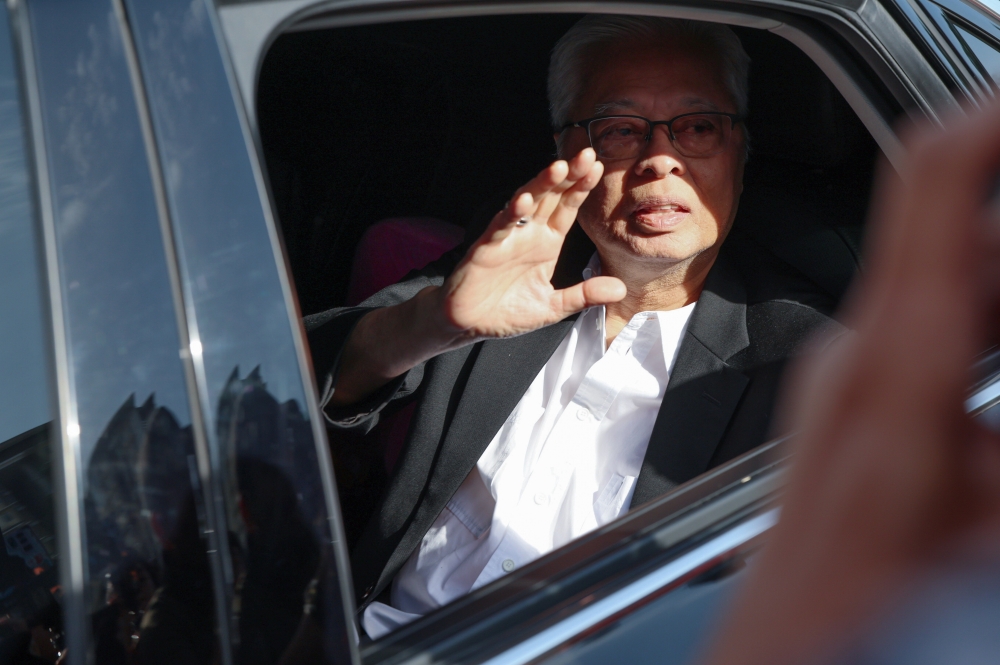
Prime Minister Datuk Seri Anwar Ibrahim made courtesy calls at the National Heart Institute (IJN) in Kuala Lumpur to visit Deputy Prime Minister Datuk Amar Fadillah Yusof and former Prime Minister Datuk Seri Ismail Sabri Yaakob, who are currently receiving medical treatment. The dual visit underscores the personal and political bonds that persist within Malaysia's governing coalition, even as the nation navigates complex domestic policy challenges.
The Prime Minister's decision to personally visit both senior figures signals the coalition's commitment to supporting its key members during periods of health difficulty. Such gestures hold particular significance in Malaysian politics, where personal relationships and solidarity among leadership often translate into broader party unity and coalition stability. The IJN visits reflect not merely formal courtesy but a deliberate expression of the administration's values during vulnerable moments for prominent political figures.
Fadillah Yusof, who holds the critical Deputy Prime Minister position, plays a central role in government operations and party dynamics within the governing coalition. His current hospitalisation at IJN, a leading cardiac care facility, represents a significant development in Malaysian political circles. The visibility of the Prime Minister's support during this period carries weight beyond the immediate personal dimension, reinforcing public confidence that institutional leadership remains cohesive and functional despite the absence of key figures from their regular duties.
Ismail Sabri Yaakob's presence at IJN as a former Prime Minister also carries considerable symbolic importance. His tenure as PM, which ended with the transition to the current administration, positioned him as a major stakeholder in Malaysia's recent political trajectory. Despite the change in government, the courtesy call represents the continuity of respect across different political administrations and underscores Malaysia's traditions of bipartisan courtesy toward senior statesmen during health challenges.
The coalition government in Malaysia comprises multiple parties representing diverse constituencies and interests, requiring constant calibration and consensus-building. Moments like these, when senior leaders require medical attention, test the resilience and unity of such arrangements. By publicly demonstrating concern and solidarity, Anwar reinforces that political transitions do not erase the personal relationships or institutional frameworks that bind the leadership together during critical periods.
The IJN, as Malaysia's premier cardiac and heart-related medical institution, regularly treats senior government figures and dignitaries. The choice of this facility reflects confidence in Malaysia's healthcare infrastructure and its capacity to manage complex cardiac cases at the highest levels of care. The hospital's prominence in treating national figures has made it an institutional fixture in Malaysian political life, where such hospitalisations often intersect with questions about leadership continuity and government stability.
Anwar's visits also carry implications for Malaysia's political trajectory during this period. With both the Deputy PM and a former PM requiring hospitalisation, questions naturally arise about the functioning of government machinery and decision-making processes. However, the public nature of the Prime Minister's visits and his expressions of well-wishes suggest that governance structures remain operational and that there is no vacuum in leadership authority or coalition cohesion.
The broader context of coalition politics in Malaysia means that solidarity among senior leaders serves multiple functions simultaneously. It reassures the public about governmental stability, demonstrates personal grace and humanity among political figures, and reinforces the networks of trust that enable complex multi-party governments to function. In a system where coalition partners sometimes hold divergent policy positions, these moments of personal support help maintain the social capital necessary for compromise and cooperation.
For ordinary Malaysians and international observers monitoring the country's political health, such incidents prompt reflection on institutional resilience and succession planning. How governments respond when senior leaders face health challenges reveals much about their maturity and stability. The Prime Minister's proactive engagement with hospitalised colleagues indicates confidence that both personal relationships and institutional structures can withstand temporary absences of key figures.
As Fadillah Yusof and Ismail Sabri Yaakob undergo treatment at IJN, the nation's attention will remain on their progress and recovery timelines. Their respective roles—one actively governing as Deputy PM, the other as an influential elder statesman—mean their health and return to full duties carry distinct but complementary significance for Malaysia's political landscape. The support visible from the Prime Minister's quarter suggests that both men can expect broad institutional backing as they focus on their recuperation.
Moving forward, the coalition will need to demonstrate that it can maintain policy momentum and governmental effectiveness during periods when senior personnel are unavailable due to health matters. The IJN visits by Anwar represent more than ceremonial courtesy; they constitute an investment in the personal relationships and institutional trust networks that enable Malaysia's complex multi-party government to function across the inevitable disruptions that affect any administration.

