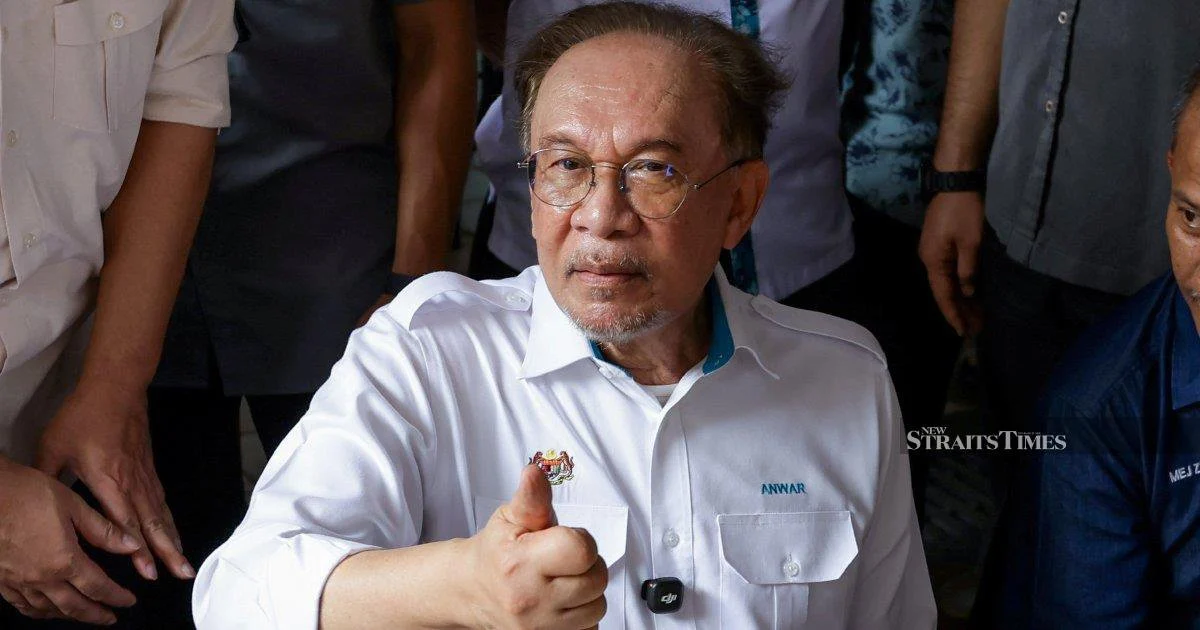
Prime Minister Datuk Seri Anwar Ibrahim has consolidated his position as Malaysia's most favoured political leader, according to the latest independent polling data released by the Merdeka Centre. The survey findings place Anwar Ibrahim ahead of his cabinet colleagues and parliamentary rivals in terms of public approval, reflecting his standing among Malaysian voters following his ascent to the nation's top office.
The Merdeka Centre, one of the country's most respected independent public opinion research organisations, conducts regular surveys to gauge the political preferences and approval ratings of senior leaders. These measurements serve as a barometer for public sentiment across the peninsula and provide insight into how Malaysians view their elected representatives at both national and state levels.
Anwar Ibrahim's commanding position in the popularity rankings underscores the public mandate he appears to enjoy as Prime Minister. His administration has navigated through a complex political landscape marked by coalition-building and competing interests across different state governments and party factions. The approval metrics suggest that his leadership approach has resonated with a substantial segment of the Malaysian electorate despite ongoing debates within government about policy direction and economic management.
In contrast, Deputy Prime Minister Datuk Seri Zahid Hamidi, who also serves as President of the United Malays National Organisation, recorded the lowest approval rating among the surveyed political figures. This positioning reflects the challenging political environment surrounding some senior government ministers and their varying degrees of public acceptance. Zahid's standing has been subject to scrutiny owing to legal proceedings and ongoing questions about his authority within government structures, both of which appear to have influenced public perception.
The survey results carry significant implications for Malaysia's political stability and coalition management. The government operates under a coalition framework spanning multiple parties with differing ideological orientations and support bases. When approval ratings diverge substantially between the Prime Minister and key cabinet colleagues, it creates dynamics that can affect policy implementation and party discipline within the broader coalition.
For the Pakatan Harapan coalition and allied parties, these findings suggest uneven political fortunes among their respective leaders and members. While Anwar Ibrahim's high approval rating strengthens his negotiating position within government and provides political capital for key initiatives, the lower ratings of some associates potentially complicate coalition cohesion. This dynamic has become increasingly relevant as Malaysia approaches the middle phase of the current parliamentary term, with speculation already emerging about leadership trajectories and electoral positioning.
The Merdeka Centre survey typically tracks approval across demographic groups, geographic regions, and voter profiles, providing nuanced understanding of how different communities perceive their political leadership. The aggregated findings suggesting Anwar Ibrahim's pre-eminence likely reflect reasonably consistent approval across most surveyed segments, though variations between urban and rural areas, across different age groups, and among supporters of various parties would offer deeper insight into the texture of public opinion.
Regionally, Malaysia's political dynamics influence and reflect broader Southeast Asian patterns around leadership legitimacy and coalition governance. Other nations in the region grapple with similar questions about multiparty coalitions, divided governance structures, and the challenge of maintaining public confidence across ideologically diverse administrations. Anwar Ibrahim's polling position and his coalition partners' varying approval ratings thus provide a case study in how such structures perform under public scrutiny.
The timing of the survey carries weight given Malaysia's ongoing economic challenges and the government's efforts to manage fiscal pressures while delivering on campaign commitments. Public approval ratings during periods of economic constraint tend to reflect voter assessment of whether leadership is meeting basic expectations around inflation, employment, and living standards. Anwar Ibrahim's strong showing suggests public patience with his administration's approach, at least at the moment of polling.
Looking forward, these approval metrics will likely shape political strategy for both government and opposition camps. The opposition parties will scrutinise areas where government approval appears softest and where they might mobilise alternative messaging. The government coalition will meanwhile seek to leverage Anwar Ibrahim's popularity as a unifying force while working to strengthen the public standing of other leaders. The gap between the Prime Minister's rating and that of Zahid Hamidi could become a focal point for both internal coalition management and external political competition.
The Merdeka Centre's independence and methodological reputation mean these findings carry weight in political circles and among informed observers tracking Malaysia's trajectory. Future surveys will reveal whether Anwar Ibrahim's current position proves durable or subject to fluctuation based on policy outcomes and external events. For now, the data indicates that Malaysia's electorate has delivered a clear verdict on its preference for the Prime Minister relative to other senior political figures.

