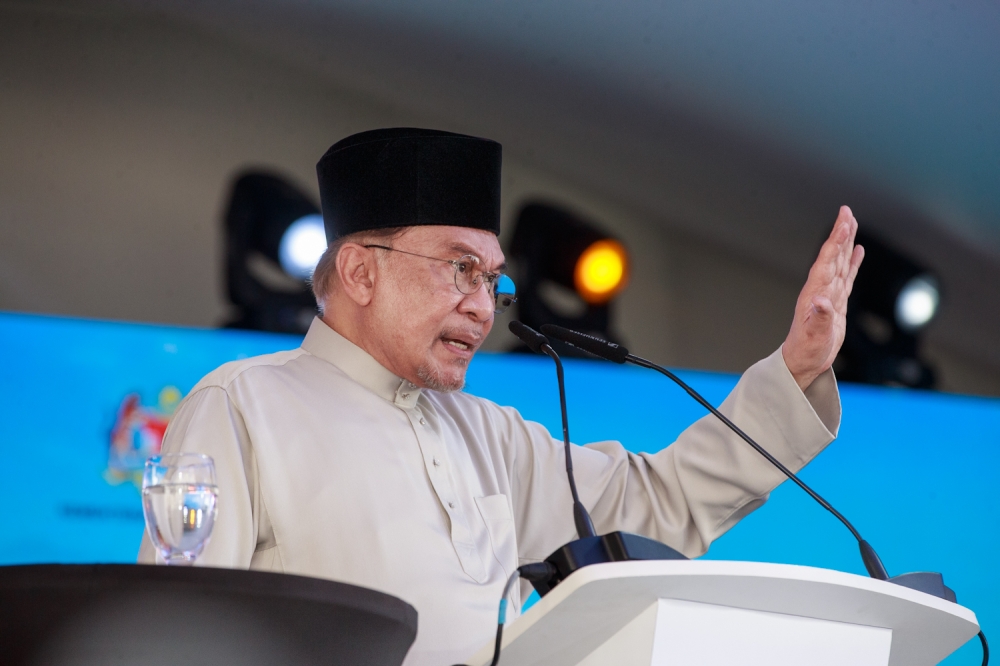
Prime Minister Datuk Seri Anwar Ibrahim has intervened directly in the civil service promotion system, instructing the Chief Secretary to the Government to conduct an urgent review of the mechanisms governing officer advancement. The directive comes in response to mounting frustration within the Malaysian bureaucracy, where career stagnation has become an increasingly acute problem for thousands of civil servants awaiting progression through the ranks.
The government has acknowledged that the current promotion structure has created significant bottlenecks, leaving qualified officers stranded in the same grade for extended periods. Some personnel have reportedly waited as long as eight years for a single promotion, a timeframe that raises serious concerns about morale, retention, and the efficiency of the nation's administrative machinery. Such delays undermine the incentive structure that should encourage merit-based advancement and professional development within government agencies.
This intervention signals the Prime Minister's recognition that the civil service—the backbone of government service delivery across Malaysia—faces structural challenges that demand immediate attention. The promotion logjam affects not only individual officers but also the broader capacity of departments to function optimally. When capable staff cannot progress proportionally to their experience and competence, agencies lose a crucial mechanism for retaining talent and ensuring succession planning at mid and senior levels.
The review ordered by Anwar Ibrahim will likely examine multiple factors contributing to the delays. These include the ratio of available promotion positions relative to eligible candidates, the criteria and weightings used in merit assessment, the timelines for processing applications, and the role of seniority versus performance in advancement decisions. Such a comprehensive audit is necessary to identify where the system has become congested and whether reforms can accelerate movement without compromising fairness or quality.
International experience demonstrates that overly rigid civil service hierarchies breed inefficiency and dissatisfaction. Countries that have modernised their public sector promotion frameworks often see improved performance metrics and greater staff satisfaction once career pathways become more transparent and achievable. Malaysia's government has opportunities to learn from these models while adapting solutions to the local context.
The backdrop to this directive includes broader efforts by the Anwar administration to modernise government operations and enhance public sector productivity. Recruitment freezes, budget constraints, and changes in administrative structures across recent years have all contributed to constrained promotion opportunities. The review must therefore consider not only procedural improvements but also the resource implications of potentially expanding the number of positions available at senior grades.
For officers currently trapped in prolonged career limbo, this intervention represents a potential turning point. The emotional and professional toll of extended stagnation cannot be understated—staff who perceive advancement as blocked tend to disengage or seek opportunities outside government. Malaysia's civil service has already faced brain drain in certain sectors, and removing arbitrary barriers to progression could help reverse this trend.
The timing of the Prime Minister's order also reflects awareness of the political dimensions of civil service morale. A demoralised bureaucracy is less effective at implementing policy, more susceptible to corruption, and ultimately detrimental to public confidence in government institutions. By visibly addressing a long-standing grievance, Anwar Ibrahim demonstrates responsiveness to the practical concerns of public sector workers, a constituency often overlooked in political discourse.
The Chief Secretary will now face the challenge of conducting this review while maintaining operational continuity across government agencies. The exercise requires balancing the legitimate aspirations of mid-career officers with the need to preserve institutional stability and ensure that promotions remain truly merit-based. Data collection across all federal and state-level agencies will be necessary to understand the scope of the problem and identify systemic patterns.
Experts in public administration suggest that successful reform in this area typically involves establishing clearer timelines for promotion cycles, creating more transparent selection criteria, and potentially introducing lateral mobility options for staff whose career paths are blocked vertically. Such measures can improve both the perception and reality of fairness in advancement, which is essential for maintaining institutional morale and effectiveness.
Beyond immediate personnel concerns, this review touches on Malaysia's broader capacity to deliver responsive and efficient public services. A civil service where talented individuals can progress according to their abilities and contributions is more likely to attract and retain the calibre of professionals needed to tackle contemporary governance challenges. The outcome of this review will therefore have implications extending well beyond individual career trajectories to encompass the fundamental capability of Malaysia's government apparatus.
As the Chief Secretary undertakes this examination, stakeholder consultation will be important. Feedback from civil service unions, departmental heads, and officers themselves should inform the process. The goal must be not merely to clear existing backlogs but to establish a sustainable system that prevents future congestion from developing. Only through comprehensive reform can Malaysia ensure that its civil service remains an attractive career path for skilled professionals and an effective instrument of state capacity.

