%22%2F%3E%3C%2Fpattern%3E%3C%2Fdefs%3E%3Crect%20width%3D%22100%25%22%20height%3D%22100%25%22%20fill%3D%22url(%23ph1ggbrg)%22%2F%3E%3Crect%20width%3D%22100%25%22%20height%3D%22100%25%22%20fill%3D%22url(%23ph1ggbrp)%22%2F%3E%3Ctext%20x%3D%2250%25%22%20y%3D%2250%25%22%20text-anchor%3D%22middle%22%20dominant-baseline%3D%22central%22%20fill%3D%22rgba(255%2C255%2C255%2C0.95)%22%20font-family%3D%22Georgia%2C%20'Times%20New%20Roman'%2C%20serif%22%20font-weight%3D%22700%22%20font-size%3D%22272%22%20letter-spacing%3D%22-0.02em%22%3EAnwar%3C%2Ftext%3E%3C%2Fsvg%3E)
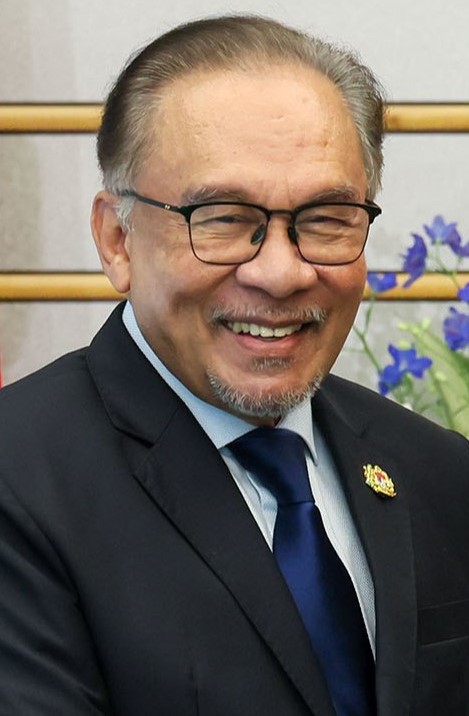
Prime Minister Anwar Ibrahim took centre stage at Padang Bukit Gambir Extreme Park on 22 June 2026 to launch Pakatan Harapan's campaign for the 16th Johor State Election, unveiling the coalition's full slate of candidates in what the party dubbed its "Night of Hope." The event represented a significant moment for the ruling coalition as it seeks to consolidate support in Malaysia's second-largest state ahead of the electoral contest, with Anwar positioning PH as the guardian of principled governance and transparent administration in Johor politics.
The candidate announcement served as more than a procedural exercise in presenting names to voters. Instead, Anwar used the platform to articulate a broader political philosophy that encompasses economic opportunity, community strengthening, and generational hope. In his remarks, the Prime Minister stressed that politics ought to be an instrument for genuine social betterment, articulating that the role of elected representatives extends beyond rhetoric to tangible improvements in citizens' daily lives. This framing signals PH's attempt to counter opposition narratives that often characterise the coalition as detached from grassroots concerns, particularly in traditionally competitive constituencies across Johor.
The emphasis on youth opportunity carries particular resonance for Johor's demographic profile, where younger voters represent an increasingly influential electoral segment. Anwar's specific mention of creating pathways for young people to succeed economically and professionally suggests that PH recognises the frustration among Malaysia's generation of school leavers and university graduates facing uncertain job prospects. In Johor specifically, where manufacturing, logistics, and services sectors dominate employment opportunities, the coalition's messaging around economic enablement appears calibrated to address concerns about wage stagnation and career progression that have animated political discourse in recent electoral cycles.
The business community dimension of PH's campaign narrative also deserves scrutiny given Johor's economic significance. The state's manufacturing base, port operations, and growing service sectors make business confidence a critical variable in electoral outcomes. By positioning the coalition as committed to supporting entrepreneurship and commercial activity, Anwar seeks to reassure the business establishment that PH governance prioritises stability and growth-oriented policies. This messaging becomes especially important given the state's position as a gateway to Singapore and its role in regional supply chains, where policy continuity and institutional credibility directly affect investment decisions.
The Malaysia Madani vision, which PH invoked as the overarching framework for its campaign, represents the government's attempt to consolidate its ideological positioning around concepts of inclusive growth, social protection, and meritocratic advancement. By anchoring the Johor campaign explicitly within this broader national narrative, the coalition demonstrates an effort to create coherence between federal policy directions and state-level pledges. For voters, this connection potentially enhances the credibility of campaign promises, as state governments operating within a PH-led federal framework can point to policy instruments and resources available through national programmes.
The integrity emphasis that permeated the campaign messaging responds directly to voter concerns about political corruption and institutional capture that have shaped electoral behaviour across Malaysia in recent years. Johor, having experienced significant political turbulence and leadership transitions, carries particular sensitivity to governance standards and official conduct. By placing integrity at the centre of its campaign communication, PH implicitly contrasts its approach with perceptions of corruption that opponents may attempt to associate with alternative coalitions or candidates, while simultaneously offering voters a relatively tangible criterion against which to evaluate candidate performance.
The unity and compassion pillars of PH's campaign messaging address the social cohesion challenges that have intensified across Malaysia's diverse communities. These themes resonate especially in Johor, where demographic and religious diversity sometimes surfaces in electoral contest through identity-based mobilisation. By foregrounding compassion as a governing principle, the coalition signals an intention to develop policies and administrative practices that recognise and accommodate the interests of different communities, potentially counteracting divisive political messaging that seeks to weaponise identity concerns for electoral advantage.
From a regional Southeast Asian perspective, Johor's electoral outcome carries implications beyond state boundaries. The state's geographic proximity to Singapore, its role in regional trade networks, and its demographic ties to other Malaysian states mean that political stability and governance quality in Johor influence confidence levels among foreign investors across the broader region. Elections in economically significant Malaysian states thus attract attention from regional business communities and government officials who view local political outcomes as indicators of broader institutional health and policy continuity.
The comprehensive nature of PH's candidate announcement—presenting the full slate across all state seats rather than a phased or selective rollout—demonstrates strategic confidence in the coalition's organisational capacity and candidate quality. This approach differs from strategies sometimes employed by politically defensive coalitions that announce candidates selectively to manage narrative control or accommodate late-minute negotiations. The comprehensive unveiling suggests PH confidence that its candidate pool can withstand public scrutiny and maintain support momentum through to polling day.
Looking forward, the campaign framework articulated through this event establishes benchmarks against which PH's eventual governance in Johor will be measured. Voters exposed to messaging emphasising youth opportunity, business support, integrity, and compassion will evaluate the state government's actual policies and resource allocation decisions against these explicit commitments. This creates both opportunity and risk for the coalition—the chance to demonstrate responsive governance that validates campaign promises, but also the possibility of voter disappointment should implementation fall short of rhetorical commitments. For Malaysian observers monitoring state-level political dynamics, the Johor election represents a crucial test of whether PH's governance narrative translates into measurable improvements that sustain voter confidence through subsequent electoral cycles.