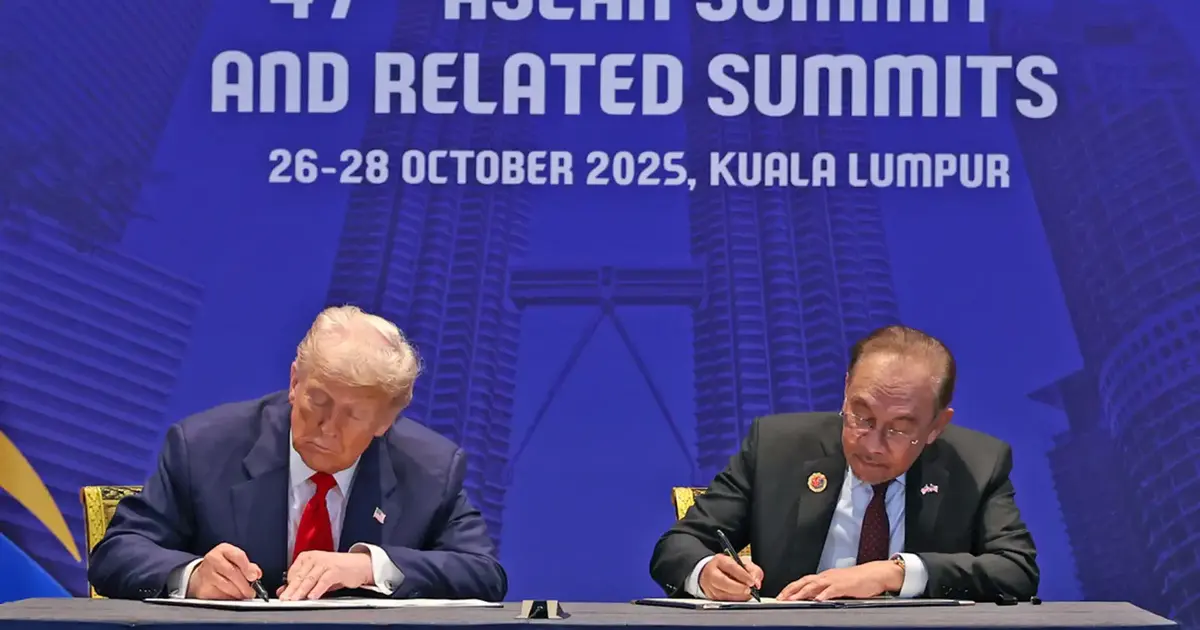
Prime Minister Anwar Ibrahim's administration has mounted a legal offensive to dismiss a suit filed by opposition parliamentarians who are contesting the validity and implementation of the Malaysia-United States reciprocal trade agreement. The government's application to strike out the case represents an escalation in the dispute over the trade deal's constitutional standing and procedural propriety, signalling deep divisions within Parliament over the administration's economic policy direction.
The opposition MPs' challenge strikes at the heart of how trade agreements are negotiated and ratified in Malaysia's constitutional framework. Their lawsuit questions whether the government possessed the necessary authority and followed proper parliamentary procedures when concluding the reciprocal trade agreement with Washington. This legal manoeuvre reflects broader anxieties among certain political quarters regarding the executive's latitude in committing the nation to international economic arrangements without what they argue is adequate legislative scrutiny.
Beyond the immediate strike-out application, the opposition MPs have simultaneously pursued a more far-reaching constitutional avenue by requesting that the court refer specific legal questions to the Federal Court. This dual-track strategy suggests the MPs view the case as having implications that transcend the specific trade agreement in question, potentially affecting how future trade deals are concluded. The constitutional referral would require the highest court to establish binding precedent on the proper procedures governing such agreements, a development that could constrain executive flexibility in trade negotiations.
The Malaysia-US reciprocal trade agreement carries substantial economic consequences for both nations' commercial relationship and for Malaysian businesses operating in American markets. The trade relationship between Kuala Lumpur and Washington has expanded considerably in recent years, with American investment flowing into Malaysian technology, manufacturing, and services sectors. Any legal uncertainty surrounding the agreement's validity could create complications for companies seeking to take advantage of improved market access or preferential trading terms negotiated under the arrangement.
The government's decision to file a strike-out application suggests confidence in its legal position on procedural grounds, though it also indicates that officials view the constitutional questions as sufficiently serious to warrant preemptive action. Rather than proceeding to a full hearing where the substantive merits of the trade agreement would be examined, the administration is arguing that the case should be dismissed at an early procedural stage, presumably on grounds that the MPs lack standing, that the matter is not justiciable, or that existing constitutional provisions already authorise the government's actions.
For Malaysia's regional standing, the judicial outcome carries implications beyond domestic politics. Southeast Asian nations are carefully watching how member states of ASEAN, particularly larger economies like Malaysia, navigate the intersection of domestic constitutional governance and international economic commitments. A finding that the government overstepped constitutional bounds could set a regional precedent affecting how other Southeast Asian governments approach trade agreement ratification, potentially complicating future economic integration efforts across the region.
The opposition MPs' insistence on constitutional clarification reflects legitimate concerns about parliamentary oversight of executive power, concerns that have become increasingly prominent across democracies grappling with the growing complexity of international trade relationships. By seeking Federal Court intervention on constitutional questions, they are essentially arguing that matters of such national importance deserve more than executive discretion and should involve Parliament in a meaningful way beyond mere notification after agreements are concluded.
The timing of these legal challenges comes as Malaysia continues to navigate a complex international trade landscape, balancing relationships with major powers including the United States, China, and India. The government's prioritisation of the US relationship, including through trade agreements, represents a strategic choice that some opposition figures view as requiring greater democratic validation through parliamentary processes. This friction between executive-led international engagement and demand for parliamentary involvement reflects broader democratic tensions in Malaysian governance.
Politically, the dispute has become entangled with broader questions about Prime Minister Anwar's administration's direction and accountability. Opposition parties have increasingly utilised constitutional and legal channels to challenge government decisions when traditional parliamentary opposition proves insufficient. The strategy of filing both a strike-out application and seeking constitutional referral simultaneously demonstrates how these legal manoeuvres have become an integral part of Malaysia's political contestation, sometimes obscuring substantive debate about trade policy's actual merits and drawbacks.
The Federal Court's eventual decision will likely influence not only the fate of the current Malaysia-US trade agreement but also establish a framework for evaluating future trade deals. Should the court find that Parliament must play a more active role in approving such agreements, Malaysian governments will need to fundamentally restructure how they negotiate and implement international trade commitments. Conversely, if the court upholds the government's authority to conclude such deals without explicit parliamentary approval, it would affirm considerable executive discretion in this domain, though the constitutional questions raised may continue to generate political controversy regardless of the legal outcome.
For Malaysian business communities and civil society, the protracted legal proceedings create uncertainty about which trading terms, market access provisions, and regulatory frameworks will ultimately govern Malaysia-US commercial relations. Companies investing based on expectations created by the agreement now face the prospect of its invalidation through court order, a risk that could dampen enthusiasm for deepening bilateral economic ties. The government's aggressive legal strategy suggests it views the stakes as sufficiently high to justify combative litigation rather than negotiated compromise or parliamentary accommodation of opposition concerns.