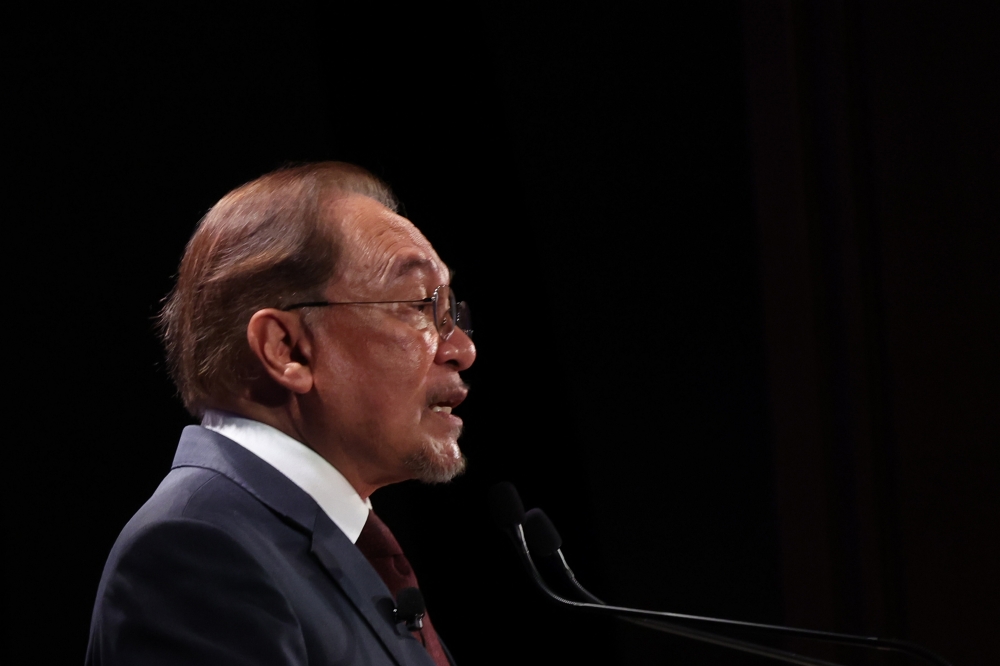
Prime Minister Datuk Seri Anwar Ibrahim has formally filed a defamation suit targeting PAS deputy president Tuan Ibrahim, signalling a significant hardening of relations between the federal government and the Islamic opposition party. The legal action, initiated through Malaysian courts, centres on statements attributed to Tuan Ibrahim that Anwar's legal team contends constitute unsubstantiated attacks on the Prime Minister's character and integrity. This development underscores the deepening political friction between Malaysia's ruling Pakatan Harapan coalition and PAS, which operates as part of a rival Perikatan Nasional alliance.
The timing of the lawsuit carries considerable political weight, emerging at a juncture when government-opposition dynamics remain fractious following recent parliamentary developments and state-level political manoeuvres. Legal recourse through defamation proceedings represents a departure from conventional political sparring, indicating that Anwar's administration views the alleged remarks as crossing established boundaries of acceptable parliamentary discourse. Such litigation typically signals erosion in informal norms that traditionally insulate senior political figures from court-based personal attacks, a shift with potential ramifications for Malaysian politics more broadly.
Tuan Ibrahim, who holds significant influence within PAS as second-in-command of the party, has emerged as a prominent voice in the opposition's critique of government policies and the Prime Minister's leadership. His statements, which form the basis of the defamation action, appear to have ventured into territory that Anwar's legal advisers deemed sufficiently damaging to warrant formal court intervention rather than political rebuttal alone. The specifics of the alleged defamatory remarks remain focused on personal character assertions rather than policy disagreements, a distinction that carries legal significance in Malaysian defamation jurisprudence.
From a constitutional perspective, the suit raises delicate questions regarding parliamentary privilege and the boundaries between legitimate political criticism and actionable defamation. Malaysia's legal framework provides certain protections for statements made within parliamentary chambers, yet remarks made outside formal parliamentary proceedings face fewer protections. The context in which Tuan Ibrahim's statements were made will likely feature prominently in courtroom proceedings, as such circumstances substantially influence how Malaysian courts assess whether comments constitute protected political speech or actionable defamation.
The lawsuit reflects broader tensions stemming from Malaysia's fragmented political landscape, where coalition stability remains dependent on managing competing ideological agendas. PAS, operating from an Islamist ideological foundation, has consistently positioned itself as a moral alternative to what it characterises as secular-leaning government factions. This fundamental philosophical divide inevitably generates heated rhetoric, though previous administrations have generally absorbed such criticism without resorting to legal remedies. Anwar's decision to pursue judicial intervention suggests his government perceives the statements as exceptionally egregious or strategically damaging.
For Malaysia's legal community and courts, the case will command attention as it navigates the intersection of political speech protections and individual reputation rights. The presiding judge will confront interpretive challenges regarding how Malaysian defamation law accommodates vigorous political debate whilst protecting individuals from demonstrably false and harmful allegations. Precedents established through this case may influence how future political disputes are adjudicated, potentially reshaping the terrain on which Malaysian politicians conduct their adversarial exchanges.
The broader implications for Southeast Asian politics warrant consideration, particularly as the region witnesses increasing recourse to legal mechanisms in political conflicts. Malaysia's approach to balancing free speech with reputation protection amid intense political rivalry could provide instructive lessons for neighbouring democracies grappling with similar tensions. The outcome may either reinforce litigation as a standard political tool or reaffirm informal mechanisms as preferable dispute-resolution channels.
Within Malaysia's fractious coalition politics, the lawsuit may paradoxically strengthen or destabilise existing arrangements. Coalition partners aligned with Anwar may perceive the action as appropriate defence against opposition aggression, whilst others might view it as unnecessarily provocative, potentially hardening opposition resolve. PAS, for its part, will likely interpret the legal challenge as confirmation of government intolerance for dissent, using the lawsuit to mobilise its support base and reinforce its positioning as a persecuted alternative.
Political observers have noted that defamation suits in Malaysian political contexts frequently generate protracted proceedings with uncertain outcomes, occasionally amplifying the very allegations they seek to suppress. The Streisand Effect—whereby legal action against damaging statements paradoxically increases public awareness—represents a genuine risk that the Prime Minister's legal team presumably weighed against potential reputational benefits. Nevertheless, pursuing litigation signals resolve and demonstrates that certain boundaries around acceptable political conduct remain enforced through legal mechanisms.
The case unfolds against the backdrop of Malaysia's preparations for potential electoral contests and ongoing state-level political negotiations. How the judiciary handles this politically charged defamation matter will reverberate through Malaysia's political establishment, potentially influencing how future governments and opposition figures navigate the intersection of vigorous politics and legal accountability. The outcome will likely shape not merely the immediate relationship between Anwar and Tuan Ibrahim, but broader understandings regarding acceptable boundaries for political rhetoric in contemporary Malaysian democracy.

