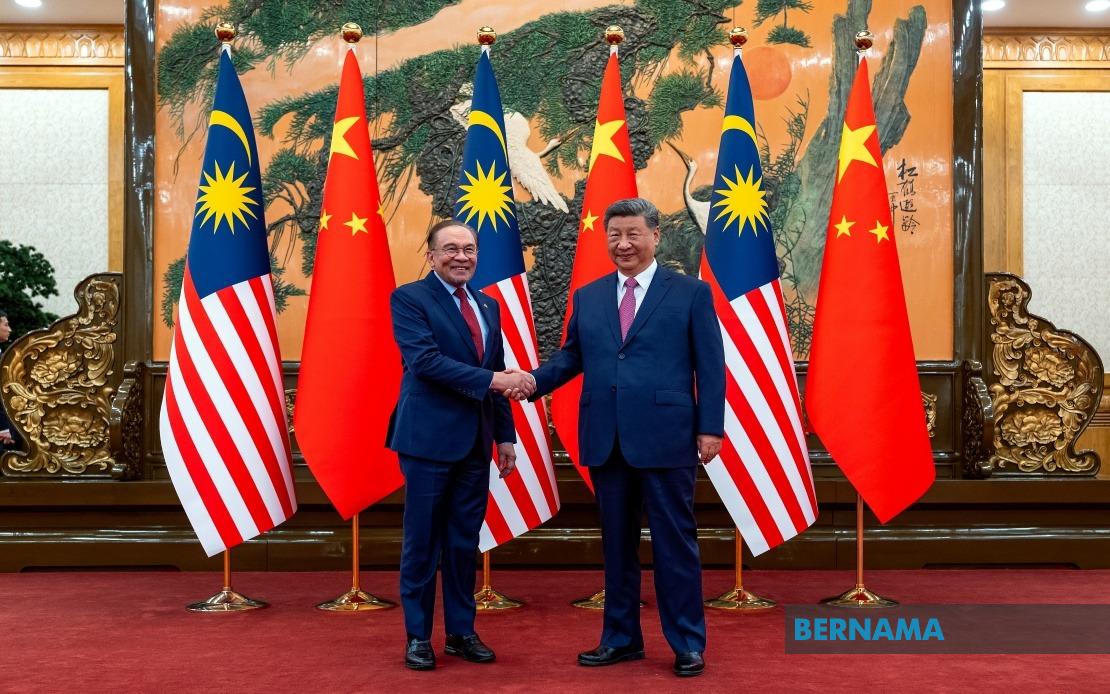
Prime Minister Datuk Seri Anwar Ibrahim has extended official congratulations to the Chinese government on the occasion of the 105th anniversary of the Chinese Communist Party, underscoring the continuing importance of Malaysia-China relations at the highest levels. Through a letter addressed to Chinese President Xi Jinping, Anwar conveyed greetings from both the Malaysian government and its people, signalling the ceremonial significance placed on maintaining warm bilateral ties with Beijing.
In announcing the gesture via a Facebook post, Anwar articulated appreciation for the party's trajectory across more than a century, characterising its development as one rooted in the civilisational heritage and enduring values that have underpinned modern China's transformation. The Prime Minister's remarks reflect a diplomatic approach that acknowledges China's internal political institutions while focusing on the shared historical experience and mutual interests that bind the two nations.
A particularly significant reference in Anwar's message concerned Malaysia's pivotal diplomatic decision on May 31, 1974, when the country became the first non-socialist state in Southeast Asia to formally recognise the People's Republic of China. This moment represented a watershed in Malaysian foreign policy, made at a time when Cold War tensions still dominated regional geopolitics and many Western-aligned nations maintained distance from Beijing. The recognition, executed with what Anwar termed "great wisdom and foresight," fundamentally altered Malaysia's trajectory in international affairs.
The establishment of diplomatic relations five decades ago created an institutional framework that has weathered multiple regional shifts and international transformations. That foundational recognition has evolved into one of Southeast Asia's most substantive bilateral relationships, spanning trade, investment, infrastructure development, and strategic coordination. Anwar's invocation of this anniversary reminds both nations of their shared commitment to deepening engagement across multiple dimensions.
In his message, the Prime Minister reiterated Malaysia's strategic commitment to expanding cooperation with China across critical areas, grounding this commitment in principles of mutual respect and reciprocal benefit. This formulation reflects contemporary Malaysian foreign policy doctrine, which seeks to balance engagement with major powers whilst preserving autonomy in decision-making. The emphasis on shared benefits and regional considerations positions Malaysia as a nation seeking partnership rather than subordination, a delicate calibration important for domestic political consumption.
For Malaysian readers, the significance of such diplomatic courtesies extends beyond ceremonial politeness. Malaysia's relationship with China carries profound implications for trade corridors, investment inflows, employment opportunities, and regional security architecture. Chinese direct investment in Malaysia has grown substantially, spanning manufacturing, real estate, telecommunications, and increasingly technology sectors. Similarly, Malaysian exports to China—particularly in palm oil, petrochemicals, and electronics—constitute a substantial portion of national trade revenues, making the health of bilateral relations economically consequential.
The timing of such congratulatory gestures also reflects Malaysia's balancing act within increasingly polarised great power competition. As the United States and China navigate strategic rivalry across the Indo-Pacific, middle powers like Malaysia must maintain functional relationships with both whilst avoiding forced alignment. Anwar's government has consistently emphasised non-alignment principles and the virtues of pragmatic engagement with all major economic and security partners, a position that appeals to Malaysia's domestic political constituencies.
Regionally, Malaysia's approach toward China carries implications for ASEAN cohesion and Southeast Asian autonomy. As chair of various ASEAN mechanisms and a voice for smaller member states, Malaysia's diplomatic posture influences broader regional conversations about managing Chinese engagement constructively whilst preserving regional agency. The emphasis on mutual respect and shared prosperity in Anwar's message echoes ASEAN's preferred framing of such relationships, one that acknowledges China's regional importance without accepting hegemonic presumptions.
Looking forward, the continued invocation of Malaysia's 1974 recognition decision serves an important function in Malaysian strategic narrative. It demonstrates that engagement with China need not compromise sovereignty or independence, provided relationships rest on reciprocal respect and clear mutual interests. For a government navigating complex domestic politics alongside international obligations, such historical references provide legitimacy to foreign policy choices that might otherwise face nationalist criticism.

