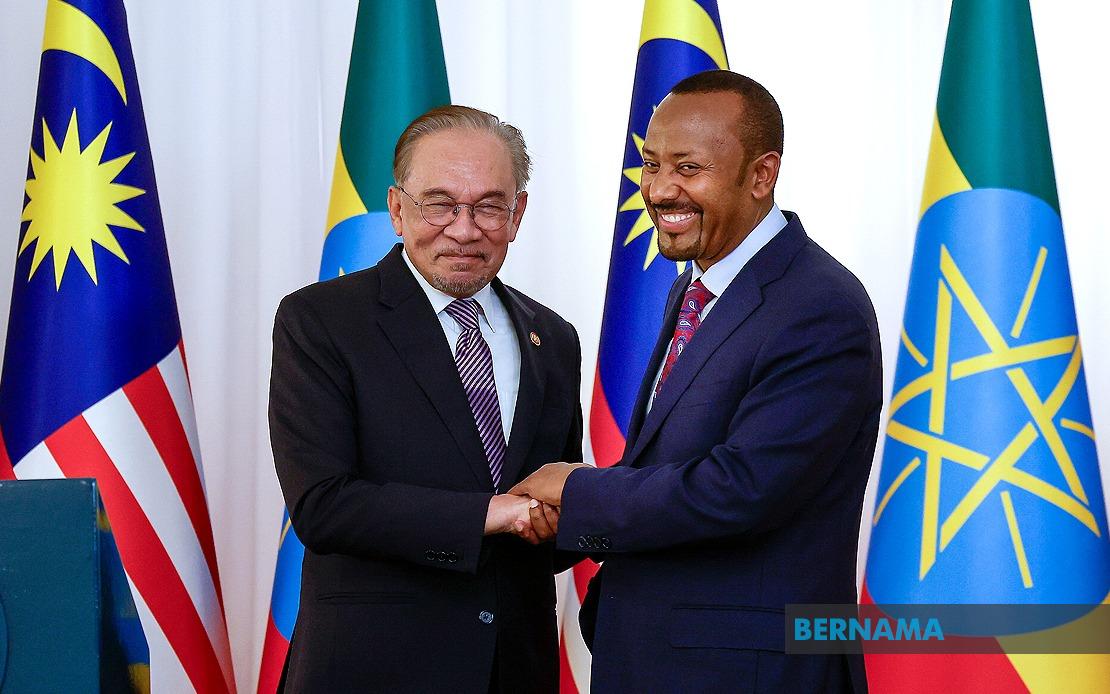
Prime Minister Datuk Seri Anwar Ibrahim has publicly congratulated Ethiopian Prime Minister Abiy Ahmed Ali and his Prosperity Party following their successful outcome in Ethiopia's recent general election. The gesture, conveyed through a Facebook statement, underscores Malaysia's commitment to deepening diplomatic relations across the African continent and reflects the personal rapport that has developed between the two leaders.
Anwar's message comes in the context of his landmark visit to Addis Ababa in the previous year, which marked a historic milestone as the first official visit by a Malaysian prime minister to the Ethiopian capital. During that groundbreaking trip, Anwar engaged in substantive discussions with Abiy that went beyond ceremonial protocol, establishing a foundation for enhanced bilateral engagement between the two nations.
The Prime Minister's public endorsement emphasises the ideological alignment he perceives with Abiy's administration. Anwar noted in his statement that he and the Ethiopian leader share a remarkably similar worldview, particularly regarding the positioning and potential of developing nations in the current global landscape. This convergence of vision appears to centre on the notion that countries belonging to the Global South possess untapped opportunities for mutual benefit through collaborative arrangements based on parity rather than hierarchical relationships.
Ethiopia's significance within Malaysia's broader African strategy cannot be overstated. As the seat of the African Union headquarters in Addis Ababa, the country serves as a critical diplomatic hub for any nation seeking to strengthen its continental influence. For Malaysia, which has increasingly sought to expand its footprint in Africa over recent years, cultivating robust relations with Ethiopia provides both symbolic weight and practical access to continental networks and decision-making processes.
The foundations laid during Anwar's previous visit appear substantial. The Prime Minister indicated in his congratulatory message that meaningful initiatives were launched during that engagement, with concrete plans to advance these developments further. This suggests that Malaysia and Ethiopia have identified specific areas of cooperation, whether in trade, investment, education, or diplomatic coordination, that both governments intend to progress over the coming period.
The election outcome for the Prosperity Party, while significant for Ethiopia's domestic political trajectory, also carries implications for Malaysia's strategic position in Africa. A strengthened Abiy administration would likely provide continuity and predictability in the bilateral relationship, allowing medium-to-long-term projects and partnerships to proceed without the disruption that might accompany a change in government. For Malaysian stakeholders in various sectors, this electoral outcome signals stability in an important African counterpart.
Anwar's public messaging on this matter reflects a broader Malaysian diplomatic posture that emphasises South-South cooperation and the collective interests of developing nations. By explicitly framing Malaysia-Ethiopia ties within this larger context, the Prime Minister is positioning the relationship not merely as a bilateral arrangement but as part of a wider movement toward greater equity and agency among nations in the Global South. This rhetorical framing carries weight in international forums where developing nations increasingly seek to assert greater voice in global affairs.
The congratulatory statement also serves to reinforce Malaysia's non-aligned approach to international relations. Rather than deferring to established power centres, Malaysia under Anwar's leadership has consistently sought to build bridges across the developing world, treating relationships with African, Asian, and other Global South partners as intrinsically valuable rather than instrumental to relationships with traditional Western powers.
Looking ahead, the successful election of the Prosperity Party creates an opportune moment for Malaysia to operationalise the commitments made during Anwar's previous visit. Whether through trade delegations, investment initiatives, or expanded educational exchanges, the coming months will likely see concrete manifestations of the goodwill expressed in the Prime Minister's message. The presence of a stable, re-elected government in Addis Ababa removes potential obstacles to implementing these plans.
For Malaysia's broader engagement with Africa, this development carries positive signals. Ethiopia's continued political stability under experienced leadership enhances the continent's attractiveness to Malaysian businesses and investors seeking reliable partnerships. The country's strategic location, large population, and growing economy make it a natural focal point for Malaysian interests in East Africa. An election outcome that provides continuity in Addis Ababa facilitates longer-term strategic planning for Malaysian entities operating or seeking to establish presence in the region.
The relationship between Anwar and Abiy, grounded in personal familiarity and apparent ideological affinity, creates a valuable foundation for sustained high-level engagement. Such personal relationships between heads of government often translate into pragmatic benefits for citizens and businesses of both nations, ranging from visa facilitation to preferential trade arrangements. The warmth evident in Anwar's congratulatory message suggests this relationship remains robust and is likely to translate into tangible benefits.
As Malaysia continues to chart a course emphasising diversified international partnerships and collective action among developing nations, Ethiopia represents an important anchor point on the African continent. The successful election of Abiy Ahmed Ali and the Prosperity Party thus carries significance that extends beyond Addis Ababa's borders, touching Malaysia's own strategic interests and broader diplomatic objectives in an increasingly multipolar world.