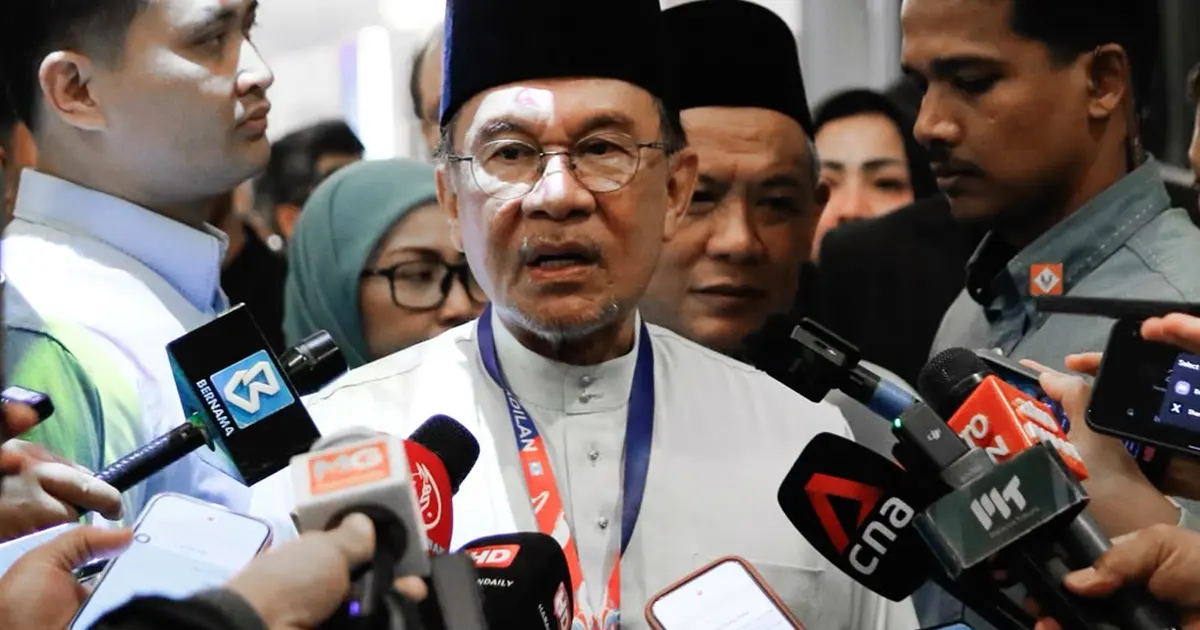
Prime Minister Anwar Ibrahim has moved to defuse suggestions of fractured relations within his coalition by categorically denying trust problems with his Deputy, Zahid Hamidi, and attributing recent critical remarks to the personal viewpoint of former Umno Youth chief Khairy Jamaluddin rather than any institutional breakdown.
The premier's response came after Khairy Jamaluddin, speaking on a podcast platform, had raised questions about the depth of confidence between Anwar and Zahid, touching on a sensitive nerve in Malaysia's delicate coalition dynamics. Rather than engaging in a protracted rebuttal, Anwar chose to frame the matter as a difference in perspective, suggesting that various observers might interpret the same situation through distinct lenses.
This characterisation carries significant weight in Malaysian political discourse, where leadership cohesion directly impacts legislative effectiveness and policy implementation. The coalition government, formed following the 2022 general election, has always operated on a careful balance of competing interests across multiple parties. Any suggestion of discord at the highest levels risks emboldening opposition voices and unsettling coalition partners who depend on perceived stability for their own political fortunes.
Khairy Jamaluddin's podcast comments represented a rare public articulation of concerns that political observers had been discussing in private circles. As a former Umno Youth leader and cabinet member himself, Khairy maintains credibility within party circles and his remarks carried the weight of insider knowledge. However, his departure from frontline politics following recent elections may have given him licence to speak more candidly than serving ministers typically would.
Anwar's swift and measured response demonstrates the premium placed on maintaining public confidence in the coalition's stability. By reducing Khairy's observations to personal interpretation rather than accepting them as reflections of genuine tension, the prime minister attempted to contain potential damage while avoiding direct contradiction that might escalate the dispute. This diplomatic approach allows all parties to claim vindication while moving forward.
The Zahid question touches on broader fault lines within the governing coalition. The deputy prime minister, who heads Umno's representation in government, brings both substantial parliamentary numbers and considerable historical baggage to the partnership. Managing this relationship requires constant calibration, and perceptions of strain between the two leaders could trigger instability among Umno backbenchers concerned about their party's interests being overlooked.
For Malaysian readers monitoring coalition stability, the exchange highlights how political commentary from semi-retired figures like Khairy can influence public perception despite not necessarily reflecting current governmental reality. The media amplification of such remarks, combined with their discussion across social platforms, means that even personal observations can acquire outsized political significance in the Malaysian context.
This incident also underscores the tension between transparency and strategic silence in coalition management. Khairy's willingness to voice concerns about trust dynamics reflects a broader Malaysian political culture where ambitious individuals sometimes use media platforms to signal their continued relevance and policy preferences. Whether this represents genuine worry or political positioning remains subject to interpretation.
The prime minister's response strategy reveals confidence in his coalition's foundational strength. Rather than issuing defensive denials or launching counterattacks, Anwar essentially invited observers to move past what he presented as mischaracterisation. This suggests his administration believes the coalition relationship with Zahid and Umno remains sufficiently durable to weather occasional critical commentary from external voices.
Looking forward, the resilience of Malaysia's governing arrangement will depend on continued pragmatism from leaders across the coalition spectrum. Partners must occasionally absorb criticism from former colleagues while maintaining public unity. The Anwar-Zahid relationship, despite its complexities, appears stable enough to weather such storms, though sustained pressure from multiple directions could eventually test even well-managed partnerships.
For Southeast Asian observers, Malaysia's coalition politics demonstrate the practical challenges of multi-party governance in democracies where no single party commands majority control. The requirement to balance competing interests while projecting unity demands sophisticated political management, evident in Anwar's measured handling of the Khairy situation. Whether such careful choreography can indefinitely sustain the current arrangement remains an open question as pressures mount from various quarters.

