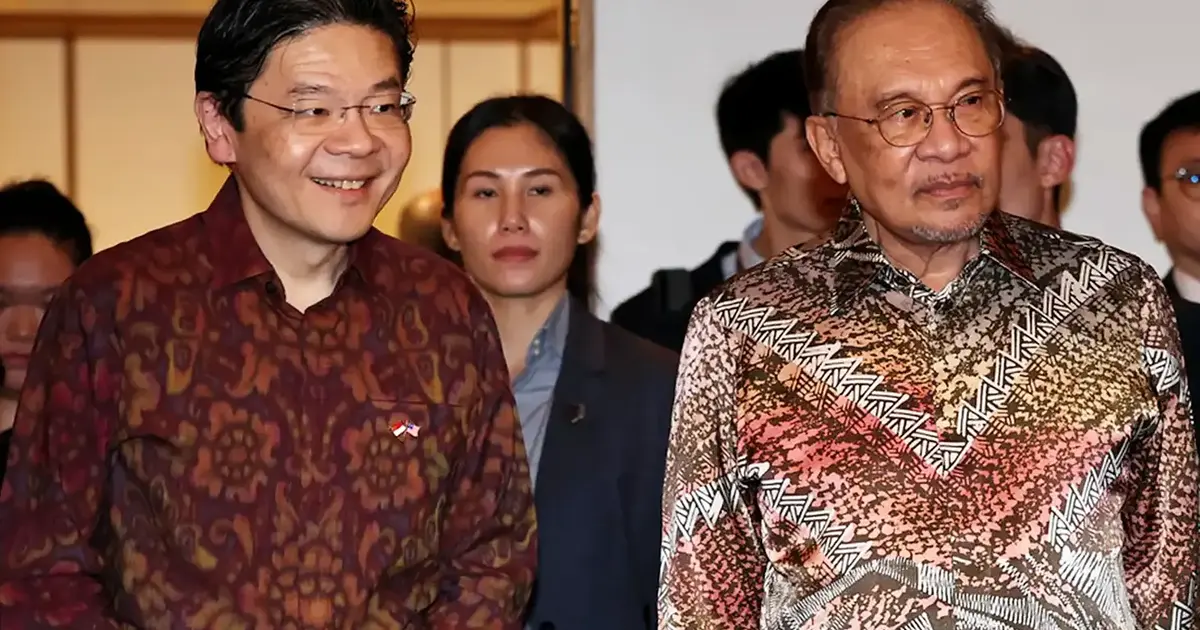
Prime Minister Anwar Ibrahim has moved to quash speculation about potential diplomatic overtures to Singapore regarding the forthcoming Johor state election, stating explicitly that no such request has been made to his Singapore counterpart. The clarification came in response to questions about whether the Malaysian government would formally ask Singapore to permit Malaysians employed there to travel home to cast their votes.
The timing of Anwar's statement reflects broader concerns within Malaysia's political establishment about voter participation levels, particularly among the substantial population of Malaysian workers based in Singapore. Johor's proximity to the island republic means that thousands of eligible voters reside across the causeway for employment, creating recurring questions about their ability to participate in state-level elections without disrupting their work commitments.
Malaysian governments have historically grappled with the challenge of accommodating overseas voters, especially in border states like Johor where cross-border employment is significant. The phenomenon of Malaysian professionals, skilled workers, and labourers commuting to or residing in Singapore is a long-standing feature of the region's economic integration, yet the electoral implications have proven less straightforward to manage.
Anwar's denial suggests that despite informal discussions that may occur between neighbouring governments on routine matters, there has been no official diplomatic initiative on this particular issue. This distinguishes between the kind of background conversations that regularly occur between leaders and formal requests that would carry greater political weight. The distinction matters because a formal request might signal concerns within Malaysia about election participation or could be interpreted as requesting another nation's cooperation in internal electoral matters.
The question itself touches on an ongoing tension in Malaysian electoral administration: how to balance the democratic principle of universal suffrage with the practical realities of modern labour mobility. Unlike federal or parliamentary elections where advance voting mechanisms have been expanded, state elections operate under different rules, creating complications for those unable to be physically present on polling day.
Singapore's position as a global financial hub and manufacturing centre means that Malaysians working there span multiple economic sectors and skill levels. From high-earning banking professionals in the city's financial district to construction workers and domestic helpers, the Malaysian workforce in Singapore represents a cross-section of society. Their voting patterns, particularly in states like Johor, can carry measurable electoral significance, making the issue politically relevant to opposition and ruling coalitions alike.
Anwar's response also reflects the current political environment in which opposition parties have occasionally raised concerns about voter access and participation. By clarifying that no request has been made, the Prime Minister preemptively addresses potential criticism about the government disadvantaging voters unable to return. This framing protects the government from accusations of suppressing opposition votes, particularly since opposition supporters are also among those working in Singapore.
The practical challenges of overseas voting in state elections remain substantive. Malaysia's electoral system does provide for postal voting in limited circumstances, but these are typically restricted to military and civil service personnel abroad on official duty. Ordinary citizens working or residing overseas do not automatically qualify for postal voting rights in state elections, distinguishing Malaysian practice from some other democracies that grant broader overseas voting provisions.
Regional precedent shows varying approaches to this issue. Singapore itself restricts voting strictly to residents and does not permit overseas voting. Other Southeast Asian nations employ different models, from expansive postal voting systems to hybrid approaches. Malaysia's decentralised federal system, where state elections are governed separately from federal elections, adds an additional layer of complexity compared to more centralised voting frameworks.
Looking forward, Anwar's statement effectively closes off discussion of a formal diplomatic approach to this particular problem. This suggests that any solutions to overseas voter participation would need to come through Malaysia's own electoral and administrative frameworks rather than through negotiation with neighbouring countries. Such developments would likely need to navigate constitutional provisions and electoral commission guidelines, processes that typically move slowly.
The incident also underscores how globalisation and regional economic integration create governance challenges that traditional electoral frameworks were not designed to address. As Southeast Asian workers increasingly move across borders for employment, questions about their political participation in home countries will likely become more pressing, particularly in states with high concentrations of overseas workers.
For Malaysian voters in Singapore and their families, the practical effect remains unchanged: those unable to obtain leave for voting day will continue to be absent from the polls unless either Malaysian electoral rules change or they are able to secure time off work. Until substantive electoral reforms expand provisions for overseas voting in state elections, the political engagement of Malaysians working abroad will remain constrained by the immobility requirements of the current system.

