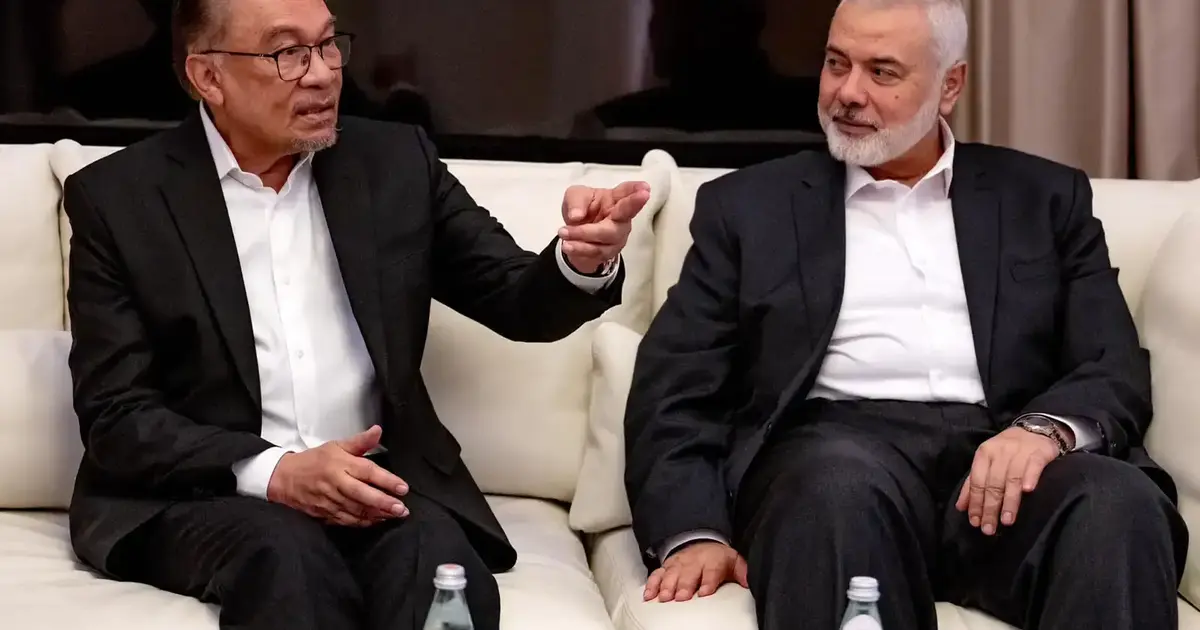
Prime Minister Anwar Ibrahim has firmly rejected allegations that members of Hamas have been conducting training operations within Malaysian territory, describing such claims as devoid of factual basis. The denial came as the government faces scrutiny over its historical engagement with various international organisations and figures, a recurring point of contention in Malaysia's diplomatic relations.
Anwar's response directly addresses concerns raised in international circles about potential militant activity in Southeast Asia. The accusation touches on sensitive geopolitical issues involving US foreign policy, Islamic militant designations, and Malaysia's positioning as a religiously diverse Muslim-majority nation that historically maintains dialogue channels with various Palestinian political actors. His categorical rejection signals the government's attempt to distance itself from any association with groups classified as terrorist entities by Western powers.
The Prime Minister simultaneously revealed that he had informed US President Donald Trump about a prior meeting he held with a Hamas leader. This disclosure suggests proactive diplomatic communication aimed at clarifying Malaysia's stance and preventing misunderstandings between Kuala Lumpur and Washington. Such pre-emptive transparency indicates awareness of the potential diplomatic complications arising from any perceived connections to organisations on international terror watchlists.
The meeting Anwar referenced likely occurred during his earlier tenure in opposition politics or during his decades-long career as a prominent international figure in Islamic circles. Anwar has long been involved in Palestinian solidarity movements and maintains extensive networks across the Islamic world, roles that have occasionally brought him into contact with various Palestinian organisations and leaders. The timing of his disclosure to Trump suggests concern that the recent allegations might otherwise poison perceptions in Washington, where such associations face intense scrutiny.
Malaysia's relationship with Palestinian causes has deep historical roots, with the country serving as a vocal supporter of Palestinian statehood at international forums. This positioning has sometimes placed Malaysia at odds with Western security concerns, particularly regarding organisations designated as terrorist entities by the United States and European Union. The government's balancing act—maintaining humanitarian and political support for Palestinians while complying with international security frameworks—remains a persistent diplomatic challenge.
The allegations of Hamas training operations, if they had substance, would represent a serious violation of Malaysian sovereignty and international law. Malaysia has in recent years strengthened its counter-terrorism apparatus and security cooperation with regional and international partners, including through information-sharing arrangements with Western intelligence agencies. The government's swift and unequivocal denial reflects both the seriousness of such accusations and Malaysia's commitment to maintaining its international standing as a responsible state actor.
Anwar's invocation of his communication with Trump appears designed to demonstrate that the government is not concealing its diplomatic history but rather ensuring major powers understand Malaysia's perspective directly. This approach reflects a broader strategy of managing relations with the United States under the Trump administration, which has taken notably harder positions on Palestinian matters and Middle Eastern affairs compared to its predecessor. By voluntarily disclosing his past meeting, Anwar may be attempting to demonstrate transparency and forestall any accusations of deception.
The baselessness claim gains weight from Malaysia's documented national security protocols and international cooperation frameworks. The country maintains intelligence-sharing relationships with several nations and has conducted operations against actual militant cells operating within its borders. The presence of government oversight and security apparatus suggests that any significant training operation by a designated terrorist group would likely be detected and disrupted before becoming established.
The incident highlights the complex position Malaysia occupies as a bridge between the Islamic world and the international community, where historical connections and contemporary security requirements often create tension. Malaysian political leaders must navigate between domestic constituencies who support Palestinian causes and international partners who view certain Palestinian organisations through a security lens. This diplomatic tightrope walk occasionally results in accusations that prove unfounded but nonetheless create reputational challenges.
For Malaysian readers and the broader Southeast Asian region, the dismissal underscores ongoing debates about how nations in this strategically important zone should manage their relationships with different actors in global conflicts. Malaysia's response also signals that despite its historical openness to dialogue with various Palestinian groups, the government will not tolerate actual security threats or operational bases within its jurisdiction. The swift clarification with Washington indicates that bilateral relations remain sufficiently robust to weather such allegations through direct communication.
Looking forward, the incident may prompt Malaysia to provide additional reassurances regarding its security posture to international partners, particularly the United States. Anwar's proactive engagement with Trump on this matter suggests the government views maintaining strong ties with Washington as important enough to warrant voluntary disclosure of diplomatic contacts that might otherwise be considered sensitive. This approach reflects the pragmatic calculations of contemporary Malaysian foreign policy, where managing perceptions in key capitals remains essential.

