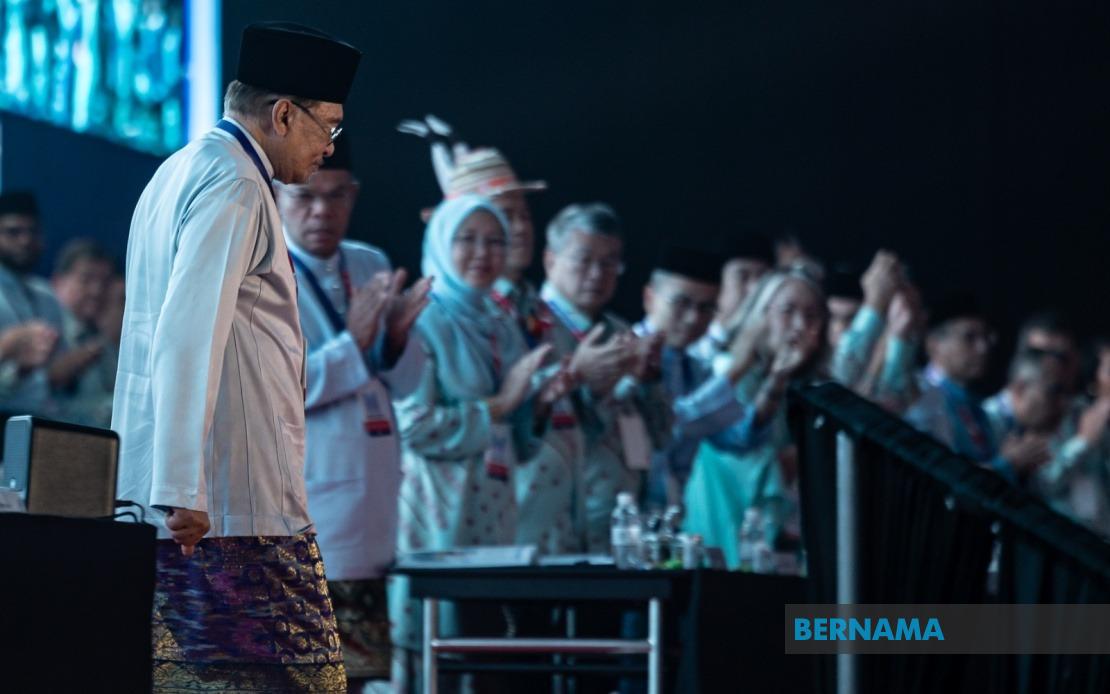
Prime Minister Datuk Seri Anwar Ibrahim has pushed back against criticism of his administration's reform timeline, insisting that tangible progress under his leadership should not be overshadowed by demands for accelerated change. Delivering his presidential address at the 2026 PKR National Congress in Melaka on Thursday, Anwar acknowledged public calls for transformation while firmly defending the government's approach to institutional overhaul and legislative modernisation.
The remarks underscore a fundamental tension within Malaysia's ruling coalition between those seeking swift, comprehensive reform and the pragmatic constraints of governing a multi-party unity administration. Anwar, who doubles as Finance Minister and Pakatan Harapan chairman, framed the government's achievements as historically significant given the slow pace of change during the six decades preceding his tenure. His argument centres on the notion that recognising completed reforms should not be dismissed simply because additional modifications remain pending or incomplete.
The government has moved on several legislative fronts, Anwar detailed, citing amendments to the Audit Act 1957, modifications to the Parliamentary Service Act, passage of the Public Finance and Fiscal Responsibility Act 2023, and the creation of a Special Task Force on Agency Reform. Beyond these institutional measures, the administration has enacted the Consumer Credit Act and related legislation governing gig workers—changes that touch directly on the economic lives of ordinary Malaysians. For a government barely three years into its mandate, the breadth of legislative activity represents a departure from the legislative gridlock that characterised previous administrations.
Yet Anwar's defence reflects a broader political reality that constrains reform ambitions: the necessity of negotiation and compromise within a fragile coalition government. The 2022 general election result denied any single bloc a decisive majority, forcing Pakatan Harapan to enter the Unity Government alongside other coalition partners whose interests do not always align with comprehensive reform. As the principal coalition member, PKR and its allies must weigh institutional modernisation against the political costs of alienating partners whose support remains essential for government stability. This calculus explains why certain reforms move forward while others languish in committee or become subject to staged implementation.
The Prime Minister explicitly acknowledged that executing reform is neither simple nor perfect. This candid admission carries weight in Malaysian politics, where rhetorical excess often masks implementation challenges. Anwar signalled awareness that some government measures have stumbled or fallen short of their intended impact, a recognition that differentiates his approach from the triumphalism sometimes heard from political leadership. The admission also suggests a government learning from its missteps rather than doubling down on failed strategies—a posture that could enhance public confidence even when reform proceeds more slowly than advocates prefer.
Central to Anwar's argument is the concept of phased, foundational change rather than sweeping simultaneous transformation. He invoked his repeated warnings against rushing reforms, cautioning that sustainable change requires proper grounding and implementation structures. This philosophy reflects lessons from previous reform attempts in Malaysia and elsewhere, where ambitious changes introduced without adequate institutional preparation often faltered. The government's approach emphasises creating durable foundations for reform so that legislative amendments and administrative changes survive shifts in political leadership or coalition dynamics.
The timing of Anwar's remarks carries particular significance given Malaysia's political volatility and the Unity Government's precarious parliamentary arithmetic. Any perception that reform has stalled completely could alienate PKR's reform-minded base while emboldening opposition parties who campaign on institutional renewal. Conversely, claiming excessive progress risks appearing disconnected from citizens' lived experience of government services and corruption. Anwar's calibrated message attempts to thread this needle, validating reform demands while contextualising constraints.
For Malaysian readers and observers across Southeast Asia, the speech illuminates how coalition politics fundamentally shapes the trajectory of institutional change. Unlike dominant-party systems that can impose comprehensive reforms, Malaysia's plural democracy requires building consensus across competing interests. This structure produces incremental progress that frustrates reformers yet prevents wholesale institutional destabilisation. The question facing the government is whether this measured pace can satisfy public appetite for change before political windows close or coalition dynamics shift unfavourably.
The reform agenda has touched areas directly affecting middle-class Malaysians and urban professionals who form PKR's electoral base. Changes to parliamentary procedures, financial accountability mechanisms, and worker protections signal responsiveness to constituent concerns even if progress appears glacial to impatient observers. However, spectacular failures in implementation—such as delays in anti-corruption prosecutions or stalled institutional restructuring—have also generated scepticism about whether legislative reforms translate into meaningful administrative change.
Moving forward, the government faces mounting pressure to demonstrate that reforms generate tangible benefits visible to ordinary citizens. Abstract institutional improvements matter less to voters than concrete improvements in service delivery, corruption reduction, and economic opportunity. Anwar's insistence that critics acknowledge progress whilst pressing for acceleration suggests awareness that the government's political durability depends on maintaining this delicate balance. Should reform momentum visibly accelerate over coming months, his defence of current pace might appear merely preliminary. Should progress stall, his framing may appear defensive and unconvincing to an increasingly impatient electorate.

