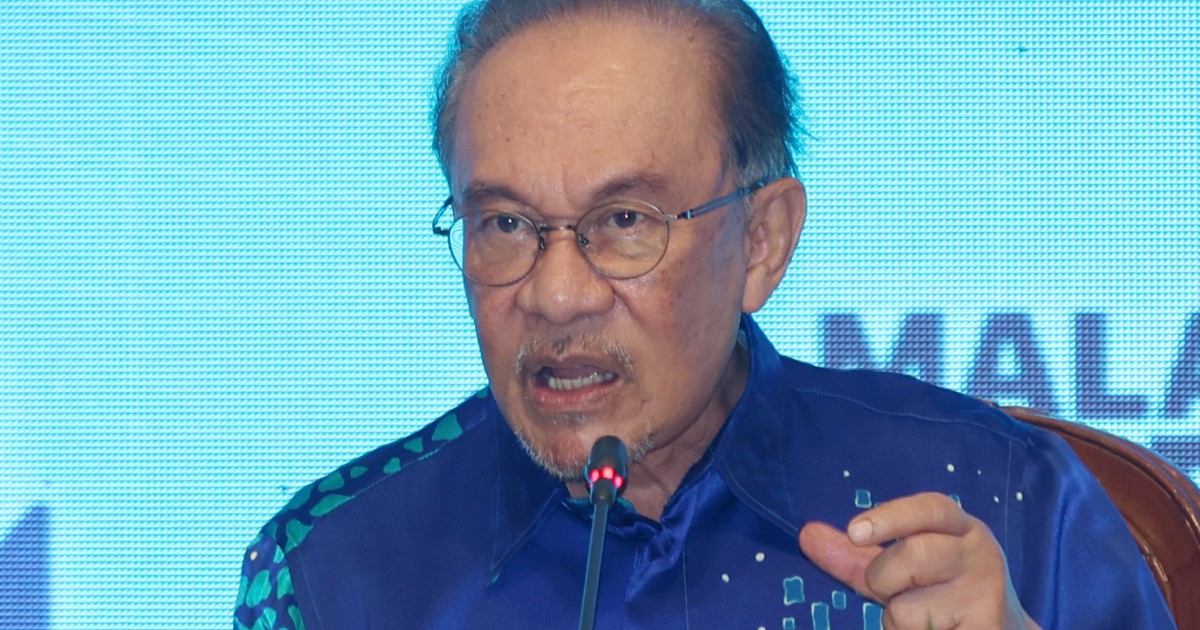
Prime Minister Datuk Seri Anwar Ibrahim has moved to justify the government's recent decision to significantly reduce the number of special lottery draws permitted annually, cutting the figure from 22 to just eight draws. Speaking in his Permatang Pauh constituency, Anwar made clear that the reduction reflects his personal convictions and the administration's broader policy direction against gambling activities.
The scaling back of special draws represents a notable shift in Malaysia's lottery policy and signals the government's intent to tighten regulations surrounding gambling. The move follows sustained scrutiny over the social and economic impacts of widespread betting, an issue that has concerned policymakers across the region. By capping special draws to eight per year, the government aims to reduce opportunities for public participation in lottery-based gambling while maintaining some controlled revenue streams through the remaining authorised draws.
Anwar's public defence of the policy underscores the government's commitment to aligning national gambling regulations with Islamic principles and broader social welfare objectives. Malaysia, as a Muslim-majority nation with Islam as the state religion in several states, has historically grappled with balancing commercial revenue from lotteries against religious and moral considerations. The Prime Minister's stance reflects this tension and suggests that his administration is prioritising social values over potential revenue maximisation from increased lottery draws.
The reduction in special draws will have cascading effects across multiple sectors. Operators who have relied on frequent special draw opportunities will need to recalibrate their business models and revenue expectations. Retailers, marketing agencies, and associated service providers that depend on lottery promotion will face reduced activity and income opportunities. Simultaneously, the Malaysian government may experience a decrease in revenue from licensing and taxation of lottery operations, though officials argue this trade-off is necessary for social stability.
Civil society organisations and health advocates have long campaigned against expanded gambling opportunities in Malaysia, citing concerns about addiction, financial hardship among vulnerable populations, and associated social problems. The government's decision to restrict special draws aligns with these advocacy efforts and suggests receptiveness to evidence-based policy regarding gambling's societal costs. Public health experts argue that fewer opportunities to gamble can reduce problem gambling rates, particularly among lower-income Malaysians who may spend disproportionate amounts on lottery tickets.
The policy change also reflects broader regional trends toward stricter gambling regulation. Several Southeast Asian governments have implemented similar measures, recognising that uncontrolled gambling expansion creates externalities that are costly to address through social services and healthcare systems. By reducing special draws, Malaysia positions itself alongside neighbouring countries adopting more restrictive stances on gambling activities.
Anwar's personal opposition to gambling carries particular weight given his position as Prime Minister and his known religious convictions. His willingness to articulate a clear moral stance on the issue suggests that the reduction policy is unlikely to be reversed in the near term and may serve as a foundation for further tightening of gambling regulations. This consistency between personal values and policy direction can strengthen public confidence in government decision-making, particularly among voters who prioritise Islamic principles in governance.
However, the policy also presents challenges for the government. Some business interests and revenue-dependent stakeholders may lobby for reversal or modification of the restrictions. The government will need to manage these pressures while maintaining its stated commitment to reduced gambling. Additionally, as special draws are eliminated, the government must ensure that illegal or unlicensed lottery operations do not proliferate to fill the gap, a concern that requires robust enforcement resources.
International investment and foreign business interests in Malaysia's lottery sector may also be affected. Multinational operators and international investors who viewed Malaysia's lottery market as an attractive expansion opportunity may reassess their strategies in light of the reduced number of authorised special draws. This could impact foreign direct investment in Malaysia's gaming and entertainment sectors, though the government appears willing to accept this trade-off.
The implementation of the reduced draw schedule will require clear communication to lottery operators, retailers, and consumers to avoid confusion and ensure compliance. The government must establish transparent timelines for which eight special draws will be authorised annually and publish clear guidelines for operators. This administrative clarity is essential for maintaining the legitimacy of the remaining approved draws and preventing disputes over allocation of draw opportunities.
For Malaysian consumers, the policy means fewer chances to purchase special lottery tickets throughout the year, potentially reducing gambling expenditure among regular participants. This could have positive effects on household finances and family welfare, particularly in lower-income communities where lottery spending often represents a significant proportion of discretionary income.
The government's decision also sets a precedent for future policy decisions affecting other forms of gambling and entertainment. If the special draw reduction successfully achieves stated social objectives without causing significant economic disruption, it may embolden policymakers to pursue additional restrictions on other gambling activities, ranging from online betting platforms to sports wagering facilities.

