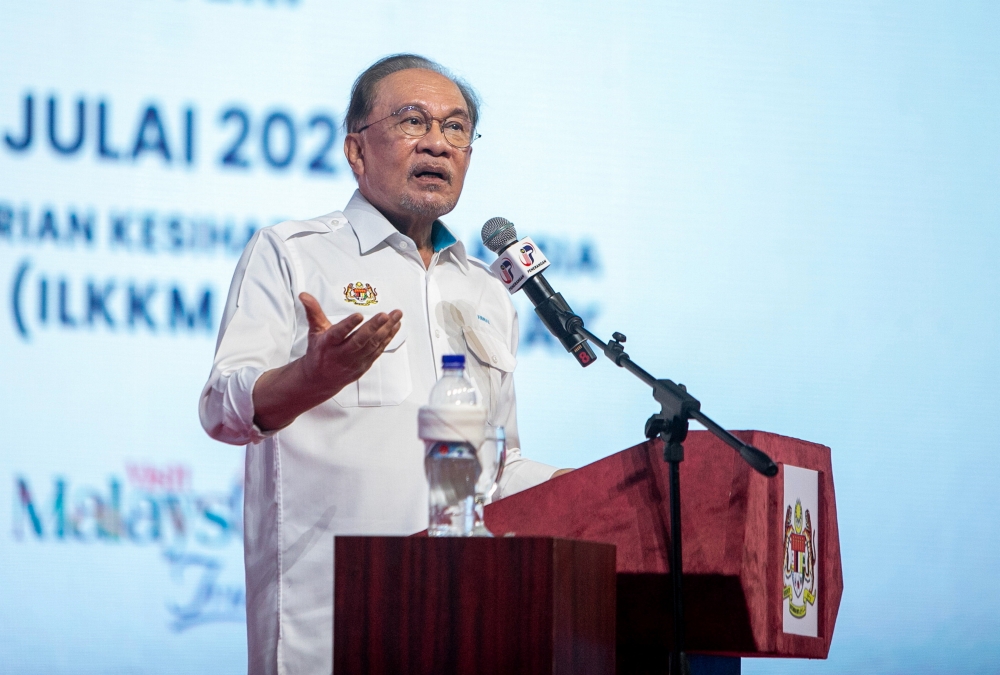
Prime Minister Datuk Seri Anwar Ibrahim has mounted a vigorous defence of Malaysia's fuel pricing policy, framing the debate around fiscal responsibility and long-term economic stability rather than short-term consumer relief. Speaking in Kajang, Anwar emphasised that while the government remains committed to managing fuel costs for ordinary Malaysians, expenditures cannot be expanded indefinitely without serious consequences for the nation's financial health. His intervention enters a politically sensitive discussion about how Malaysia should balance the competing demands of household affordability and budgetary discipline.
The core of Anwar's argument rests on a fundamental economic principle: every subsidised rupiah or ringgit must originate from somewhere within the government's finite resources. By raising the question "who will pay for it?", the Prime Minister has signalled that policymakers must confront uncomfortable trade-offs between maintaining fuel support and investing in essential services such as healthcare, education, and infrastructure. This framing suggests the administration views uncontrolled subsidy expansion not as benevolent social policy but as a form of deferred taxation that future generations will ultimately settle.
Malaysia's relationship with fuel subsidies carries particular historical weight. For decades, the nation has used petroleum pricing as a political tool to manage cost-of-living pressures, particularly during election cycles. This approach has created structural inefficiencies within the energy sector and contributed substantially to Malaysia's fiscal deficits during commodity downturns. Anwar's public emphasis on debt sustainability indicates an attempt to reframe subsidy discussions away from electoral calculation and towards macroeconomic prudence—a shift that challenges both opposition rhetoric and potential pressures within his own coalition.
The debt accumulation concern is not rhetorical flourish but reflects genuine budgetary constraints facing Kuala Lumpur. Malaysia's total national debt has grown significantly in recent years, limiting the government's fiscal space for new initiatives or expanded existing programmes. When subsidies consume substantial portions of annual allocations, less funding becomes available for other development priorities or for servicing existing obligations. Anwar's intervention suggests the government intends to resist calls for blanket fuel price controls, instead advocating for targeted assistance mechanisms that limit budgetary exposure.
The Prime Minister's stance carries implications beyond fuel policy itself. His emphasis on fiscal discipline signals to international investors and rating agencies that Malaysia's leadership takes debt sustainability seriously—a message critical for maintaining investor confidence and access to international capital markets at reasonable rates. By publicly defending the need for restraint, Anwar positions the government as economically responsible even when facing domestic pressure from constituencies demanding lower petrol prices.
Regionally, Malaysia's approach contrasts with neighbouring countries that have pursued different subsidy strategies. Indonesia has undertaken painful fuel subsidy reforms that initially sparked social unrest but eventually improved fiscal positions. Thailand has maintained more generous support regimes, contributing to persistent budgetary pressures. Singapore maintains market-based fuel pricing with virtually no subsidies. Anwar's public reasoning suggests Malaysia may be charting a middle course—maintaining limited support while resisting expansion—rather than moving toward either extreme.
The political economy of fuel pricing in Malaysia reveals deep tensions between populist demands and technocratic governance. Opposition parties have repeatedly criticised the government for any price increases, framing subsidies as state obligations rather than discretionary spending. By articulating the constraint question directly, Anwar attempts to elevate public discourse beyond simple "more subsidy versus less subsidy" binary arguments toward recognition of genuine resource limitations. This educational dimension of his remarks reflects perhaps an understanding that sustainable policy requires public acceptance of fiscal realities.
The Kajang setting for these remarks carries its own significance, as the location has historically been a political battleground reflecting broader Malaysian electoral dynamics. By choosing this venue to discuss subsidy policy, the Prime Minister may be attempting to build support in the Selangor region for fiscal discipline measures while also directly engaging the electorate on economic trade-offs. This suggests a confident but not complacent political posture—willing to defend unpopular positions when necessary but doing so transparently rather than obscuring difficult choices.
Looking forward, Malaysia's fuel pricing framework will likely remain contested terrain between those demanding greater state support and officials emphasising fiscal sustainability. Anwar's framing suggests the government intends to maintain its current policy stance against expansion while potentially refining the targeting of whatever support mechanisms remain in place. The outcome of this debate will significantly influence Malaysia's medium-term economic trajectory, affecting both household finances and the nation's creditworthiness in international markets.
Ultimately, Anwar's defence of current policy represents a bet that Malaysian voters will eventually accept the logic of fiscal constraints when properly explained, even if they prefer lower fuel prices. Whether this strategy proves politically sustainable will depend partly on broader economic conditions, energy price movements, and the government's ability to deliver tangible benefits in other policy areas. The subsidy question, therefore, extends well beyond fuel pumps to encompass fundamental questions about Malaysia's economic future and the government's fiscal priorities.

