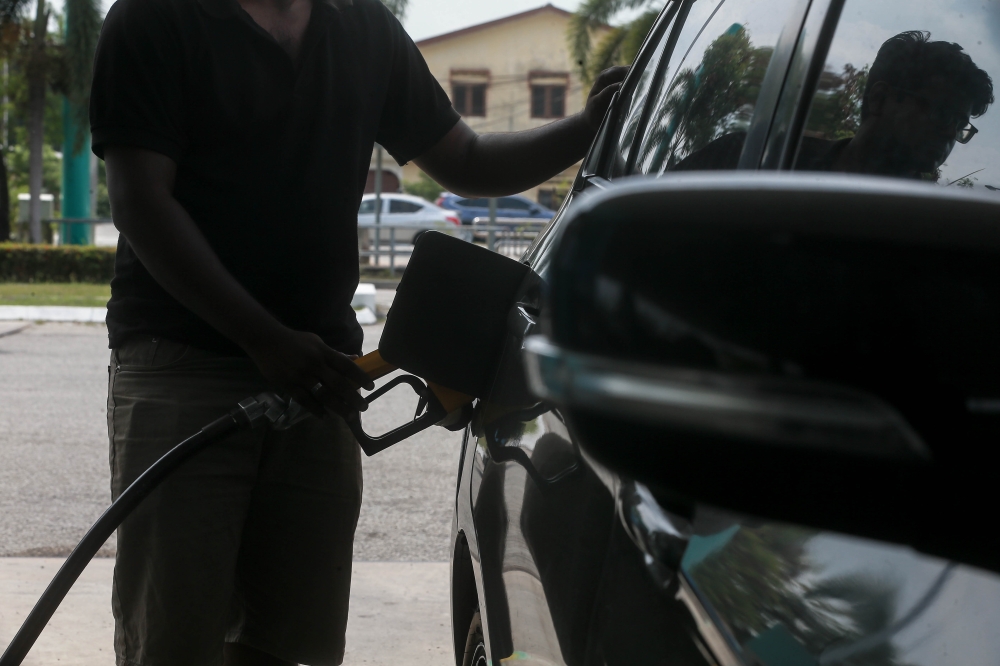
Prime Minister Datuk Seri Anwar Ibrahim has moved to justify the government's contentious decision to limit the monthly BUDI95 subsidised fuel allowance to 200 litres, countering concerns that the reduction places undue burden on motorists. In remarks addressing the policy adjustment, the Prime Minister argued that the 200-litre ceiling represents a reasonable threshold that adequately accommodates the typical consumption patterns of Malaysian vehicle owners, pointing to usage data showing the average driver consumes approximately 100 litres each month.
The BUDI95 scheme, formally known as the Budi Maintenance of Petrol Subsidy programme, represents the government's targeted approach to fuel subsidy management following the broader economic restructuring initiatives undertaken since Anwar's administration took office. By transitioning from universal fuel subsidies to a capped allocation system tied to vehicle ownership, authorities have sought to direct assistance more precisely toward those deemed most dependent on government support whilst simultaneously controlling the escalating fiscal burden of open-ended petrol subsidies. The 200-litre monthly quota effectively doubles the typical consumption figure cited by the Prime Minister, theoretically providing a comfortable buffer for most households.
Anwar's defence of the policy reflects ongoing government efforts to balance social protection with fiscal sustainability, a tension that has defined Malaysian economic policy throughout the present term. The subsidised BUDI95 petrol scheme operates alongside broader cost-of-living support measures, yet represents a particularly visible intervention that touches millions of households directly. By framing the quota in terms of actual usage data rather than political rhetoric, the administration attempts to position the policy as evidence-based rather than arbitrary, anchoring the discussion in empirical patterns of consumption behaviour across the driving population.
The Prime Minister's justification carries particular significance given public sentiment surrounding fuel price volatility and household budget pressures across the region. Malaysia's fuel subsidy architecture has long served as a barometer of government priorities and social compact expectations, with adjustments to petrol pricing mechanisms frequently triggering political debate. The introduction of the capped BUDI95 system marked a departure from previous arrangements, introducing direct limits on individual access rather than relying on broader price controls. This shift toward means-tested and quota-based support has required sustained government communication to maintain public acceptance.
Anwar's invocation of consumption data underscores the administration's reliance on technical justification for policy choices that inherently carry distributive consequences. By arguing that the 200-litre monthly allocation exceeds typical requirements, the government frames potential hardship as affecting only those with above-average usage patterns, thereby narrowing the perceived scope of inconvenience to a minority of drivers. For households operating within normal consumption ranges—such as those commuting moderate distances or conducting limited business travel—the quota theoretically remains non-binding, meaning the subsidy mechanism operates transparently without requiring active rationing behaviour.
However, the policy framework inevitably affects specific population segments differently, including commercial drivers, those commuting from outer suburbs to urban employment centres, and vehicle owners operating in sectors dependent on high-mileage transportation. The apparent adequacy of the quota at population average masks distributional effects across geographic, occupational, and socioeconomic categories. Drivers regularly exceeding 100 litres monthly face substantially higher fuel costs once they exhaust their subsidised allocation, creating effective price increases that concentrate costs among particular groups rather than spreading them across the motoring population uniformly.
The government's emphasis on consumption data reflects broader international trends in subsidy reform, where many countries have transitioned from generalised price controls toward targeted mechanisms. Such approaches theoretically improve fiscal efficiency whilst concentrating benefits on specified populations, yet frequently encounter resistance rooted in perceptions of equity and social solidarity. The Malaysian approach of combining a capped quota with the option to purchase additional fuel at market rates represents a middle path between universal subsidies and complete market pricing, attempting to preserve some social protection whilst introducing price discipline.
For Malaysian drivers and policymakers alike, the BUDI95 framework raises fundamental questions about the appropriate relationship between government and transport costs. Regional comparisons prove instructive: neighbouring countries employ varying subsidy models, from Singapore's market-based approach to Indonesia's more generous cap structures. These alternatives provide useful reference points for evaluating the adequacy of Malaysia's chosen path. The 200-litre monthly allocation positions Malaysia between more interventionist and more market-oriented models, reflecting a particular political economy choice about how to manage the intersection of transport, livelihoods, and fiscal sustainability.
Anwar's defence of the policy, grounded in consumption statistics rather than normative arguments about state responsibility, signals the government's calculation that technical justification proves more persuasive than ideological positioning. This rhetorical choice reflects contemporary governance approaches emphasising evidence and data-driven policymaking, yet may inadvertently suggest that the allocation emerged from neutral analysis rather than contested value judgments about how to distribute the burden of fiscal adjustment. The 200-litre quota thus embodies not simply a neutral response to consumption patterns, but rather a deliberate political choice about whose usage patterns merit subsidy support and whose ought to shift toward market pricing.
Looking ahead, the sustainability of the BUDI95 framework depends partly on whether consumption patterns remain relatively stable or shift in response to the altered price incentives the quota structure creates. As drivers become conscious of usage limits, some may adjust travel behaviour, pursue vehicle efficiency improvements, or shift consumption to unsubsidised fuel grades. These adaptive responses could eventually vindicate the government's framing of the 200-litre allocation as adequate, or alternatively, could demonstrate that the quota inadequately reflects functional transportation requirements across significant population segments. The policy thus remains embedded within ongoing processes of economic adjustment and social negotiation rather than representing a settled resolution.

