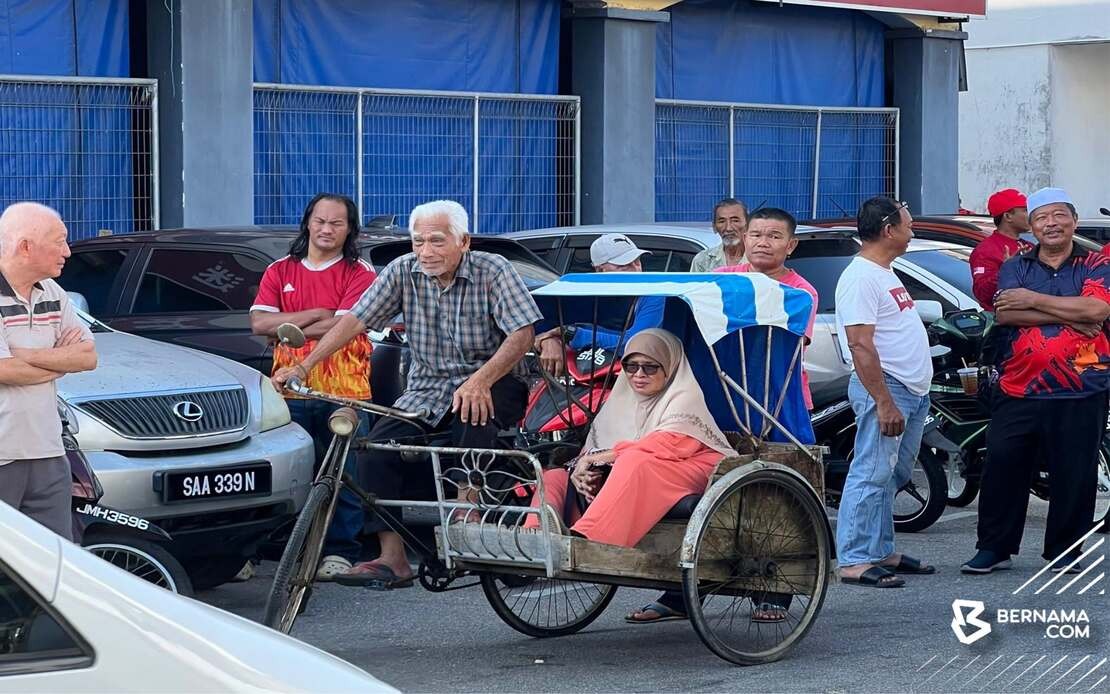
Prime Minister Datuk Seri Anwar Ibrahim has publicly expressed deep gratitude toward an elderly resident of Johor who made a determined effort to see him during a recent campaign stop, highlighting a touching moment that has resonated with observers of Malaysian politics. Through a Facebook post, the premier acknowledged the gesture of Abdul Razak Pelangga, 86, who travelled by trishaw with his wife, Jamilah Samsudin, 64, from their home in Kampung Parit Bugis to a coffee shop in Senggarang, Batu Pahat, after learning of his planned visit to the area.
The couple's journey took on added significance given the distance involved and the practical challenges they might have faced using alternative transport options. According to the imam of Masjid Raudhatul Jannah Parit Bugis, Abdul Razak deliberately chose to travel by trishaw rather than driving a car or riding a motorcycle, specifically to avoid the complications of securing parking in the congested area near the eatery. This decision reflected both his commitment to meeting the premier and his pragmatic approach to navigating the logistical hurdles that often accompany political visits to smaller towns.
Anwar stopped at Kedai Kopi Hailam Sri Medan during his campaign activities in the Senggarang state constituency, a visit timed to coincide with the Johor State Election. The prime minister spent approximately 50 minutes at the establishment, engaging with local residents as part of a meet-and-greet programme designed to connect with voters in the region. Despite his presence at the location, the timing or circumstances prevented him from having a direct encounter with the elderly couple, leaving them disappointed but undeterred.
In his public response, Anwar extended an apology for the missed opportunity to meet Abdul Razak and Jamilah in person, acknowledging that their efforts to attend his visit had gone unreciprocated on that occasion. The sentiment reflected a recognition of the personal sacrifice involved in their journey and the significance they had attached to witnessing the country's top leader. His statement conveyed both humility and awareness of the emotional investment that supporters sometimes make in political engagement.
The prime minister's message also carried spiritual and sincere wishes for the couple's wellbeing. Anwar concluded his post with a prayer for their continued good health and the resolution of their personal difficulties, invoking Islamic blessing formulae that resonated with the predominantly Muslim demographic of the region. He expressed confidence that a future opportunity for them to meet would materialise, framing the missed encounter not as a final disappointment but as a postponement of an inevitable interaction.
This incident underscores the generational dimensions of political participation in Malaysia, particularly in rural and semi-rural areas where senior citizens continue to engage actively with national politics. The willingness of an 86-year-old to undertake such a journey speaks to the emotional connections that Malaysian voters maintain with their leaders, transcending the transactional nature often associated with campaign activities. Such grassroots enthusiasm, even when unreciprocated in the immediate moment, shapes the narrative around a political leader's accessibility and connection to ordinary citizens.
The story also illuminates the practical realities of campaign logistics in smaller Malaysian towns, where infrastructure limitations and parking constraints create genuine obstacles for organisers attempting to manage large gatherings. The couple's choice of trishaw became a symbol of adapting to these constraints while refusing to abandon their objective, lending an almost poignant quality to their determination. For many observers, their actions represented the quiet dignity of rural Malaysia's older generation, who navigate modern political engagement on their own terms and within the bounds of their practical circumstances.
From a broader perspective, the incident reflects how Malaysian political culture continues to value personal gestures and direct encounters between leaders and citizens, regardless of formal structures or scheduled opportunities. The fact that Anwar took the time to publicly acknowledge the couple's effort through social media amplified the significance of their spontaneous gesture far beyond what might have occurred had they met him in person at the coffee shop. In contemporary politics, where digital communication increasingly mediates political relationships, this public recognition arguably elevated the couple's status beyond that of ordinary campaign visitors.
The Johor State Election context provides important background, as campaign activities in constituencies like Senggarang represent crucial moments for political mobilisation in a state that holds strategic importance within Malaysia's broader electoral landscape. Visits by the prime minister to such areas carry weight beyond the immediate locality, signalling the ruling coalition's commitment to engaging voters across diverse communities. The encounter with Abdul Razak and Jamilah, while seemingly minor, contributed to a broader narrative about grassroots support and intergenerational political participation during this significant electoral period.

