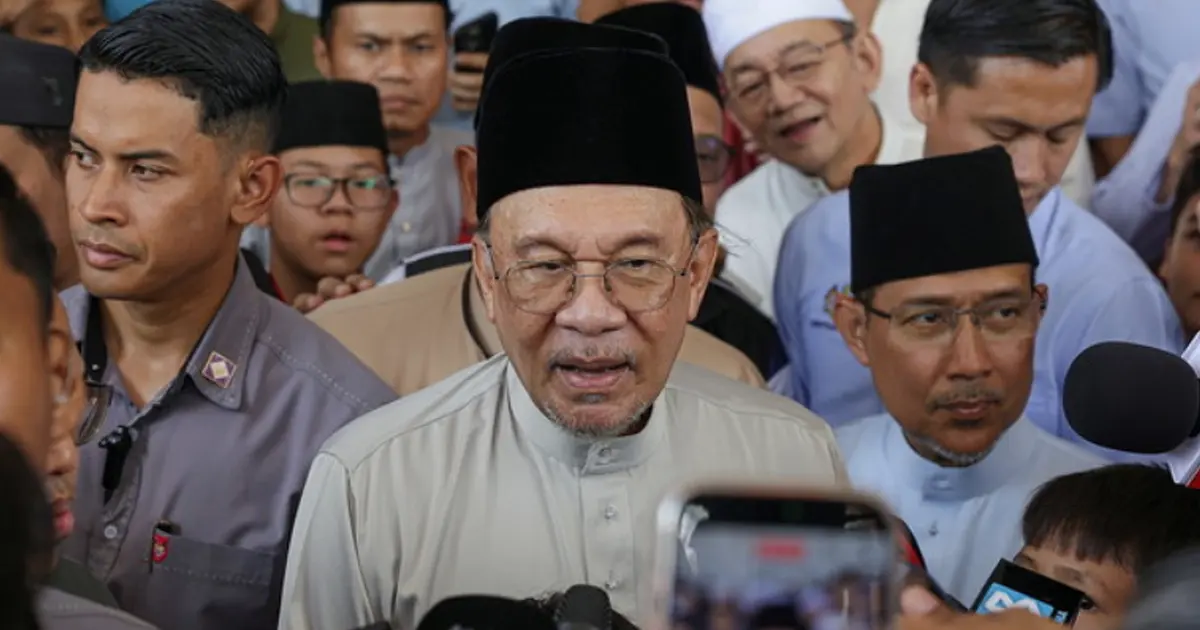
Prime Minister Anwar Ibrahim has stated that the Royal Commission of Inquiry report examining Tabung Haji has been disseminated in its complete and unaltered form, rejecting any suggestions that portions of the document were withheld or modified before publication.
Anwar's announcement addresses long-standing concerns about government transparency regarding investigations into the pilgrimage savings fund. The commitment to releasing the report without censorship or editorial intervention signals an attempt to demonstrate the administration's dedication to accountability, particularly given the historical sensitivity surrounding Tabung Haji's management and governance issues.
Tabung Haji, the state-owned body responsible for facilitating hajj pilgrimages for Malaysian Muslims while managing substantial investment portfolios, has faced intense scrutiny in recent years over its financial performance and administrative practices. The establishment of a Royal Commission of Inquiry represented a significant step in officially examining alleged irregularities and management failures within the institution, making the comprehensive release of findings particularly important for public confidence.
The public availability of the complete report without modifications carries substantial implications for Malaysian governance standards. In a regional context where government transparency remains inconsistent across Southeast Asia, such disclosure demonstrates Malaysia's commitment to institutional oversight and public accountability. However, this move also reflects broader political pressures, as public and parliamentary expectations for governmental openness continue to intensify.
Anwar's explicit assurance that no edits were introduced speaks to potential criticism that might have emerged had portions of the report appeared redacted or classified. The prime minister's preemptive statement anticipates concerns that could undermine public trust in both the investigation process and the government's willingness to accept unfavourable findings. This approach contrasts with previous administrations' handling of sensitive inquiries, where selective disclosure sometimes occurred.
The Tabung Haji situation holds particular resonance for Malaysian Muslim voters, who comprise a significant portion of the electorate. Many citizens maintain accounts with the fund and depend on its services for pilgrimage planning. The credibility of the institution directly affects millions of Malaysians, making the transparency of investigative processes especially consequential during an election cycle or period of political transition.
The Royal Commission's findings likely encompass financial discrepancies, investment decisions, governance structures, and administrative accountability within Tabung Haji's leadership. A complete report publication enables informed public discourse about institutional reform requirements and prevents speculation about suppressed conclusions. This openness potentially strengthens Anwar's political position by demonstrating his government's distinction from predecessors regarding governance transparency.
For Malaysian policymakers and religious authorities, the complete report provides a foundation for implementing systematic reforms within Tabung Haji. Legislative measures, organizational restructuring, or leadership changes may follow based on documented evidence and recommendations. The accessibility of findings ensures that proposed reforms can be evaluated against specific evidence rather than fragmentary information.
The implications extend beyond Tabung Haji itself, establishing precedent for how the current administration handles controversial institutional investigations. If applied consistently across government bodies and linked entities, this commitment to comprehensive disclosure could meaningfully elevate Malaysia's governance standards. Conversely, selective application of transparency principles to this case while restricting other reports might damage credibility.
Regional observers monitoring Malaysian governance may view the report's complete release as a positive indicator for institutional maturity and democratic accountability. Within Southeast Asia, Malaysia's approach to investigating and disclosing findings about state-linked entities influences perceptions of the country's political trajectory and institutional health.
The timing of Anwar's confirmation also reflects consideration of parliamentary scrutiny and potential opposition questioning. By proactively declaring the report's completeness, the prime minister addresses anticipated criticisms and frames the narrative around transparency rather than defensive concealment. This strategy acknowledges that selective disclosure would generate significantly greater political damage than accepting unfavourable findings.
Moving forward, the government's implementation of recommendations contained within the report will determine whether this transparency translates into substantive institutional improvement. Stakeholders will monitor whether promised reforms materialize and whether the administration's commitment to transparency extends to other investigations and inquiries within the public sector.

