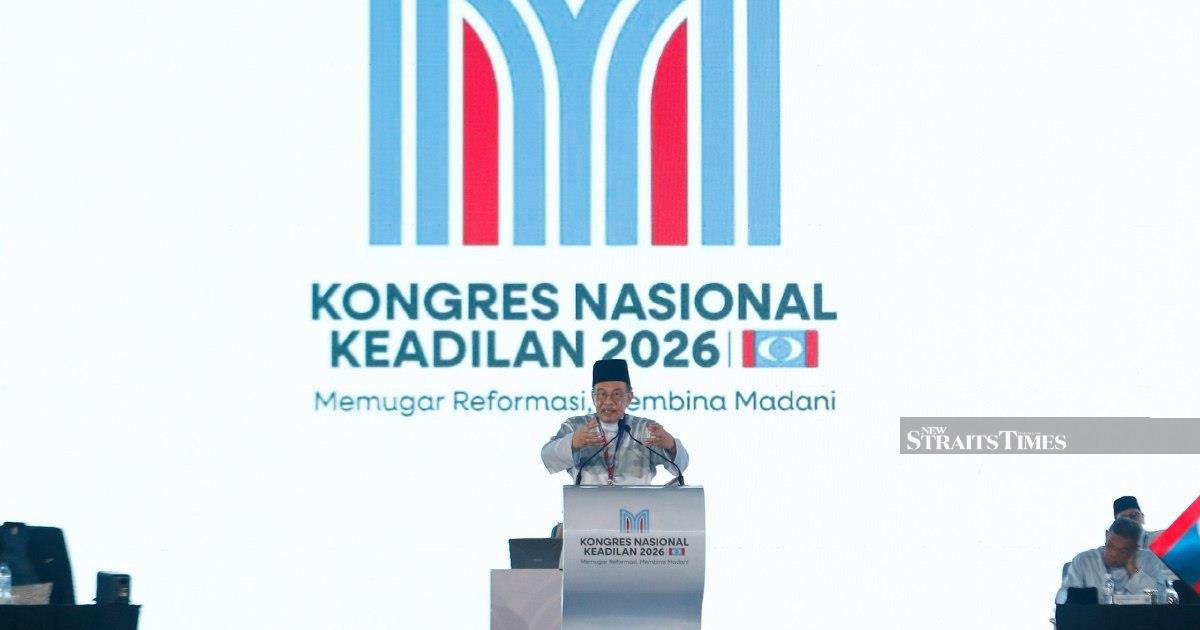
Speaking at the PKR Congress in Ayer Keroh, Datuk Seri Anwar Ibrahim has publicly acknowledged that embezzlement of funds at Tabung Haji took place, drawing on the conclusions reached by the Royal Commission of Inquiry established to examine the troubled institution. The PKR president used the platform to underscore what he characterised as serious misconduct within Malaysia's largest Islamic pilgrimage savings fund, reinforcing the party's position that accountability must accompany any recovery efforts.
The confirmation carries particular weight given Anwar's position as de facto leader of the coalition government and signals continued political attention on the Tabung Haji controversy, which has remained a flashpoint for public concern over financial governance within major state institutions. By directly addressing the embezzlement allegations using the Malay term "sakau" at a party gathering, Anwar appears intent on ensuring the matter remains visible within political discourse and policymaking circles.
Tabung Haji, which administers savings accounts for Malaysians performing the Hajj pilgrimage, has faced mounting scrutiny over its financial management and accumulated losses. The Royal Commission of Inquiry, tasked with examining the institution's operations and the origins of its financial difficulties, has provided findings that substantiate claims of funds being improperly diverted or misappropriated. Anwar's invocation of the RCI report suggests the government intends to base any regulatory or enforcement actions on these independently verified conclusions.
The Islamic pilgrimage fund serves millions of Malaysian contributors who set aside money over years to fund their Hajj journeys. When financial irregularities emerged, they prompted concerns not merely about administrative competence but about the safeguarding of savings belonging to a religiously significant demographic. The discovery of embezzlement within such an institution has raised questions about internal controls, oversight mechanisms, and the timeliness of detection and disclosure of such misconduct.
For Malaysian Muslims who entrust their hajj savings to Tabung Haji, the confirmation of embezzlement represents a breach of institutional trust that carries both practical and spiritual dimensions. Many contributors view their deposits as part of a sacred obligation, making the misappropriation of these funds particularly troubling. The political acknowledgment by Anwar potentially opens pathways toward recovery measures and compensation, though details on how the government intends to proceed remain to be articulated.
The RCI's investigation represents an attempt to establish factual clarity on how extensively embezzlement occurred and to identify systemic vulnerabilities that permitted such misconduct to persist. By anchoring his statement to the RCI's findings, Anwar suggests the government is prepared to act on independently verified evidence rather than allegations alone. This approach may help establish the credibility of any subsequent corrective measures or legal actions the government contemplates.
Regionally, Malaysia's experience with governance failures at major financial institutions reflects broader challenges across Southeast Asia in managing large public funds with adequate transparency and oversight. The Tabung Haji case offers lessons on the importance of rigorous internal audit frameworks, external verification, and clear accountability hierarchies. Other nations in the region managing substantial pools of religiously motivated savings may draw instructive parallels from how Malaysia addresses this situation.
The timing of Anwar's comments at the PKR Congress also reflects the political dimensions of the Tabung Haji matter. The opposition and coalition partners remain attentive to how effectively the government responds to institutional failures, with questions lingering about whether sufficient responsibility has been assigned to senior figures and whether preventive measures have been adequately strengthened. By speaking directly to the issue, Anwar demonstrates that the government regards restoration of public confidence as a priority.
The path forward for Tabung Haji involves complex decisions around restitution, institutional reform, and personnel accountability. The RCI findings provide the evidentiary foundation upon which such decisions must rest, and Anwar's public confirmation signals that the government is committed to grounding its response in verifiable facts. How quickly and comprehensively the government moves to implement recommendations from the inquiry will significantly shape public perception of its commitment to financial governance standards.
Beyond immediate corrective steps, the Tabung Haji situation underscores the necessity for Malaysian institutions managing collective savings to adopt governance standards comparable to those in advanced financial systems. Enhanced transparency in fund deployment, rotation of key personnel, and independent auditing represent baseline protections that religiously motivated savers have legitimate reason to expect. The government's approach to this matter will likely influence trust in other state-administered funds and savings schemes.

