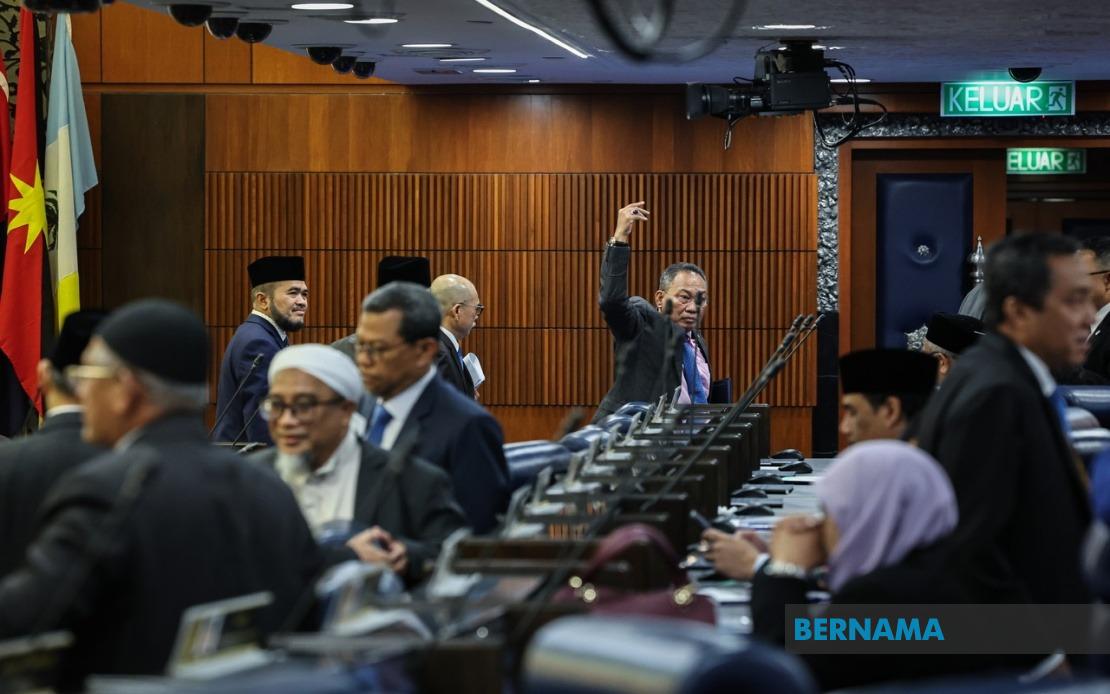
Prime Minister Datuk Seri Anwar Ibrahim has delivered a sharp rebuke to the Opposition, accusing them of weaponising the Tabung Haji controversy to score political points while diverting attention from the core issues affecting millions of Muslim depositors. In a Facebook statement issued on August 11, the Prime Minister expressed frustration at what he characterized as deliberate attempts to shift the narrative away from institutional failures and betrayals that have undermined public confidence in Lembaga Tabung Haji (TH).
The confrontation erupted following a parliamentary boycott by Opposition Members of Parliament during a special sitting of the Dewan Rakyat convened to discuss the Royal Commission of Inquiry (RCI) Report on Tabung Haji. The boycotting lawmakers objected to both the absence of the Prime Minister and the Dewan Rakyat Speaker Tan Sri Johari Abdul's decision to reject a motion to adjourn proceedings. Anwar had apologized for missing the session, explaining that he was recuperating from elective laparoscopic surgery to treat a para-umbilical hernia and undergoing physiotherapy. The walkout, however, prompted a significant policy response from the government's highest office.
In his statement, Anwar posed a pointed question to the Opposition: whether their priority lay in debating his person or defending the interests of Tabung Haji and its depositors. This rhetorical framing underscores a fundamental disagreement over how Malaysia's political class should respond to a major institutional scandal affecting millions of ordinary Malaysians. The Prime Minister emphasized that the true betrayal—of Muslim Malays and the institution itself—ought to command undivided political attention, rather than becoming fodder for partisan conflict.
Partly directing his criticism at the PAS-led Perikatan Nasional (PN) coalition, Anwar questioned their commitment to defending the economic interests of Tabung Haji's diverse depositor base. He specifically highlighted the vulnerability of working-class contributors to the scheme, including fishermen, farmers, teachers, police personnel, military personnel, and retirees who have accumulated savings through the institution with the hope of fulfilling the Hajj pillar of Islam. By drawing attention to these demographic groups—traditionally associated with lower incomes and dependence on government employment—Anwar attempted to reframe the Tabung Haji debate as fundamentally a social justice issue rather than a vehicle for opposition tactics.
The RCI report, released publicly on July 29, paints a picture of deep institutional dysfunction spanning from 2014 to 2020. The 211-page document identifies significant weaknesses in both management and operational frameworks during this critical period and advances 25 recommendations aimed at systematic improvement. As of July 30, Tabung Haji claimed that approximately 75 percent of these recommendations had already been implemented, suggesting a government attempt to demonstrate momentum in addressing the crisis. The report's presentation to Yang di-Pertuan Agong on August 30, 2022, formalized the inquiry that the government had commissioned back in 2021, with formal appointment of commissioners following in January 2022.
The context of this political dispute is significant for Malaysian observers. Tabung Haji operates as a quasi-religious financial institution serving over 9 million account holders, making it one of the largest savings schemes in Southeast Asia. The institution's stability carries profound implications not merely for individual retirement savings but for Malaysia's broader reputation as a trustworthy Islamic financial hub. When governance failures emerge within such a prominent entity, they reverberate across multiple constituencies—from individual depositors anxious about their accumulated wealth to international observers assessing the competence of Malaysia's institutional frameworks.
Anwar's intervention also reveals the intersection of health, governance, and political strategy in contemporary Malaysian politics. The Prime Minister's absence from the parliamentary sitting due to medical reasons created an opening for the Opposition to protest the proceedings' legitimacy. By subsequently explaining his position through social media, Anwar sought to reclaim narrative control while simultaneously attacking opposition motivations. This dynamic illustrates how even procedural parliamentary matters can rapidly escalate into broader questions about institutional accountability and political intent.
The charge that the Opposition has transformed the Tabung Haji issue into "political drama" reflects genuine disagreement about institutional reform priorities. Government supporters contend that criticism should be constructive and focused on implementation of remedial measures rather than blame assignment. Opposition voices, by contrast, argue that accountability for past failures cannot be divorced from current management performance. This philosophical divide—between looking forward toward reform and looking backward toward accountability—shapes Malaysian political discourse across multiple policy domains.
The invocation of PAS and Perikatan Nasional in Anwar's statement carries particular significance given Malaysia's recent political realignments. The Malay-Muslim opposition coalition has long positioned itself as the authentic defender of Malay and Islamic interests, a rhetorical position that Anwar directly challenged by questioning their apparent indifference to ordinary working-class Muslims' financial security. By framing the debate in these terms, Anwar attempts to neutralize opposition claims to represent Muslim interests while simultaneously appealing to voters concerned about bread-and-butter economic security.
For regional observers, Malaysia's handling of the Tabung Haji crisis and the subsequent political contestation reveals how major institutional failures can become flashpoints for broader political struggles. Unlike some Southeast Asian contexts where such scandals might be managed through administrative channels with minimal public scrutiny, Malaysia's competitive political environment ensures robust public debate. Whether this ultimately strengthens institutional accountability or merely generates unproductive partisan conflict remains contested.

