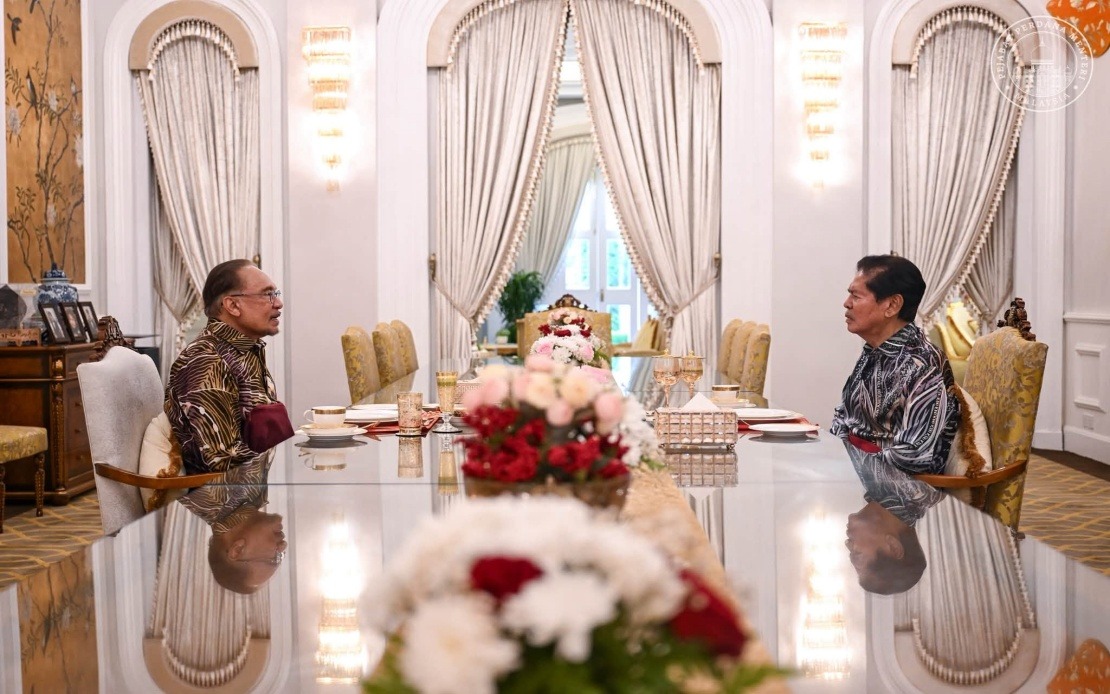
Prime Minister Datuk Seri Anwar Ibrahim marked the end of his two-day working visit to Penang with a formal tea reception at the Governor's official residence, Seri Mutiara, hosted by Governor Tun Ramli Ngah Talib on August 29. The engagement provided an opportunity for both leaders to reflect on their discussions and reaffirm the collaborative relationship between Kuala Lumpur and the state government.
Through a Facebook post, Anwar emphasised that the gathering had reinforced the working partnership between the Federal Government and Penang's state administration. He underscored their mutual dedication to accelerating the state's economic and social development while improving living standards for residents across the island.
For Governor Ramli, hosting the Prime Minister represented a significant moment to engage on matters affecting both Penang and Malaysia at large. The Governor used the occasion to reflect on various national and state issues that require coordinated attention, viewing the visit as a platform for constructive dialogue between the two levels of government.
In his own social media message, Ramli extended his appreciation for Anwar's time and willingness to visit Seri Mutiara prior to his return to Kuala Lumpur. The Governor highlighted the warmth and informality of the reception, noting how it transcended typical protocol and created space for genuine engagement.
A memorable moment arose when Ramli's grandson, Aldrey Alfi, joined the gathering and eagerly posed questions to the Prime Minister. Anwar's gracious reception of the young boy's curiosity demonstrated the lighter, more personal dimension of high-level political engagements, humanising an otherwise formal state occasion.
Anwar's presence in Penang had been bookended by substantive official commitments throughout the 48-hour period. The Prime Minister participated in launching or overseeing the Permatang Pauh Entrepreneur Revival Programme, an initiative aimed at supporting small business growth and economic resilience within the constituency. This focus on entrepreneurship reflects the government's broader agenda of nurturing grassroots economic participation.
The 15th Malaysia Scout Jamboree represented another significant component of his itinerary, allowing Anwar to engage with the youth movement and reinforce the government's commitment to developing young Malaysians through civic participation and character building. Such events carry symbolic weight in positioning the administration as invested in the country's future generation.
Complementing these engagements was his participation in the MADANI Sahabat 2026 National Day Countdown Programme, which aligns with the government's messaging strategy around the MADANI framework—an initiative centred on prosperity, inclusivity, and strengthened national bonds. By associating himself with these varied programmes, Anwar demonstrated the breadth of the Federal Government's engagement across economic, youth, and national-unity portfolios.
The visit illustrates a broader pattern of Federal leadership maintaining visible presence in major states, particularly Penang, which remains economically and politically significant within Malaysia's federation. Such interactions serve multiple purposes: they demonstrate working relationships between Federal and state executives to constituents, provide platforms for addressing state-specific concerns at the highest level, and generate media attention that reinforces political narratives.
For Penang, which has experienced periods of political tension with Federal administrations, the cordial nature of this engagement signals an attempt at stabilising centre-state relations. The state's importance as a manufacturing hub and tourist destination makes collaborative governance essential for pursuing development objectives that benefit both the Federal and state treasuries.
The tea reception itself, while brief and ceremonial, carried diplomatic significance. The informal setting at an official residence, rather than at formal government buildings, suggested a desire to project openness and personal rapport between the two leaders. Such atmospherics matter in Malaysian political culture, where relationship-building and personal trust between leaders influence the rhythm and efficacy of governance.
Anwar's packed schedule during the visit—encompassing entrepreneurship support, youth development, and national commemoration initiatives—demonstrates how senior political figures orchestrate their movements to address multiple constituencies simultaneously. Each event carried messaging tailored to different audiences: business owners, young citizens, and the broader electorate preparing for national celebrations.
As the Federal Government continues navigating the complex dynamics of Malaysia's federal system, visits such as Anwar's to Penang serve as important barometers of centre-state coordination. The successful conclusion with the Governor's reception suggests that despite any underlying political differences, both levels of government recognise the practical necessity of working together on matters affecting citizens' welfare and the nation's development trajectory.

