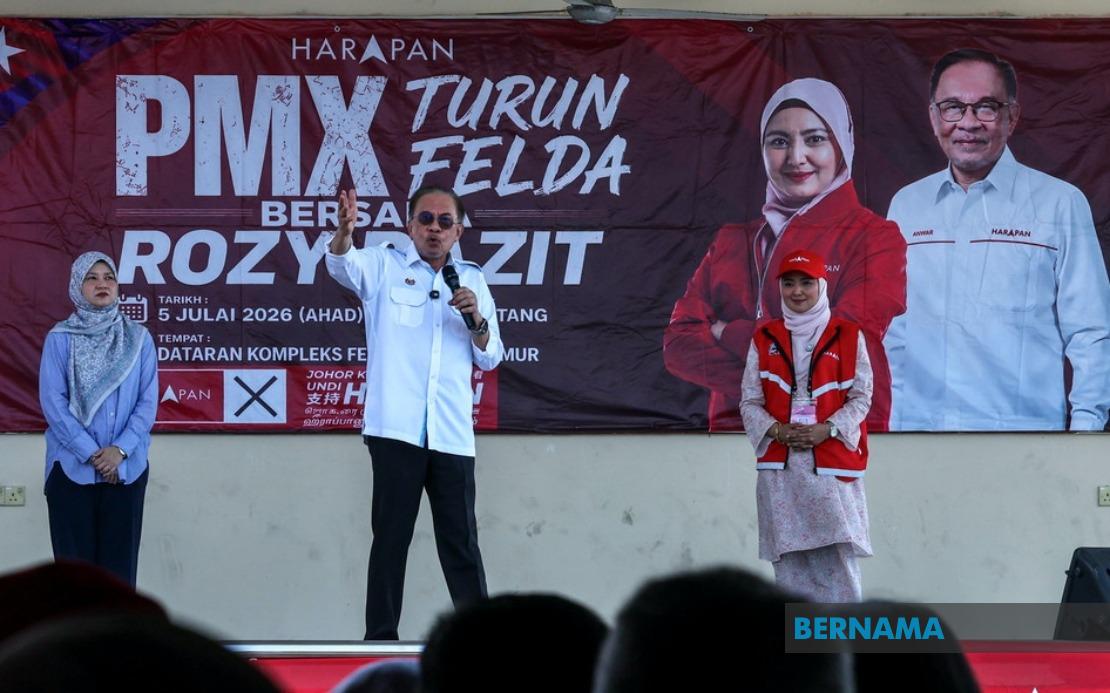
Prime Minister Datuk Seri Anwar Ibrahim has committed to tackling a housing crisis that has plagued the second generation of FELDA settlers for decades, signalling that resolving this thorny social issue sits high on his administration's agenda. Speaking during a community engagement session in Segamat, Anwar underscored the government's determination to secure permanent housing solutions and land allocations for this segment of the rural population, framing it as both a policy priority and a matter of social equity.
The FELDA scheme, which reshaped Malaysia's agricultural landscape by establishing planned settlements for smallholder farmers, has left a generational gap in its wake. While the scheme's original beneficiaries received land and housing parcels, their children—now adults with families of their own—have largely been excluded from similar provisions. This second-generation cohort, numbering in the tens of thousands across the country, faces precarious living conditions and limited economic prospects, as they lack secure tenure on family land or government-allocated housing sites. The issue has festered for years despite its socio-economic significance, breeding frustration within FELDA communities and becoming a recurring source of grievance during political campaigns.
Anwar's pledge, made public at the Dataran Putra FELDA Palong Timur gathering in the Buloh Kasap state constituency, carries both symbolic and practical weight. By framing the resolution of this problem as a personal commitment tied to his tenure as Prime Minister, he has raised political stakes and public expectations. He explicitly stated that he intends to work with the relevant federal minister overseeing FELDA affairs to translate this commitment into concrete action before his administration concludes, suggesting an awareness that delay may undermine public confidence in the government's resolve.
However, Anwar also candidly acknowledged a fundamental constitutional constraint that complicates swift implementation. Land matters and the provision of infrastructure—two pillars of any housing solution—fall under state jurisdiction in Malaysia's federal system. This constitutional reality means that federal initiatives, no matter how well-intentioned, require the cooperation and active participation of state governments. For a solution to take root across FELDA settlements nationwide, multiple state administrations must align their policies, allocate land reserves, and commit resources to developing supporting infrastructure such as roads, water supplies, and utilities.
This federalism challenge carries particular significance in the Malaysian context, where state governments represent diverse political interests and possess varying financial capacities. Some states may prove more receptive than others to prioritising second-generation FELDA housing in their development budgets. Selangor, represented at the Segamat event by Menteri Besar Datuk Seri Amirudin Shari, is home to sizeable FELDA communities and has historically engaged with settlement issues, offering a potential model for federal-state coordination. Yet replicating such arrangements across states with different political alignments and resource constraints remains a substantial organisational challenge.
The presence of Selangor's Menteri Besar alongside Education Minister Fadhlina Sidek and Deputy National Unity Minister R. Yuneswaran at the event signalled a whole-of-government approach, suggesting that the Prime Minister's office intends to leverage various portfolios toward a coordinated solution. This multi-agency involvement hints that the government recognises the complexity of the issue and may be considering a comprehensive framework addressing not only housing allocation but also livelihood support, financial assistance, and social programmes for second-generation settlers.
For FELDA communities, particularly those in constituencies like Buloh Kasap that saw strong voter turnout, this commitment speaks to their electoral importance and their influence on political calculations. FELDA settlers have historically formed a politically significant bloc, and second-generation members, now integrated into the broader electorate, represent voting power that neither the government nor opposition can afford to dismiss. Anwar's willingness to engage directly with these communities and pledge tangible action reflects this political reality.
The underlying social dynamics warrant consideration as well. Many second-generation FELDA members have lived their entire lives within settlement communities, developing cultural and social ties even as they face housing insecurity. Some live in informal arrangements on family plots without legal documentation, exposing them to eviction risks and limiting their ability to secure loans or undertake improvements. Others have migrated to urban centres but maintain family connections to FELDA land, creating a dispersed yet interconnected constituency with shared grievances. Any housing solution must account for this geographic and social complexity.
From a policy perspective, Anwar's approach suggests openness to creative solutions beyond simply allocating new land. These could include formalising existing occupancy through documentation, facilitating land consolidation and subdivision schemes, enabling settlers to leverage land values for housing loans, or establishing dedicated housing development programmes within or adjacent to existing settlements. The specific mechanisms will likely emerge from consultations between the FELDA ministry and state authorities.
The timeline remains uncertain, though Anwar's personalisation of the commitment suggests he views resolution as achievable within a reasonable political window. Meeting this target will require sustained political will, successful federal-state coordination, adequate budgetary allocation, and potentially legislative amendments to existing frameworks governing FELDA land and settlement governance. The government's performance on this issue will serve as a significant test of its capacity to deliver on major social commitments involving multiple layers of administration.
For Malaysian observers and particularly for residents of FELDA settlements nationwide, the coming months will reveal whether this pledge translates into visible progress. Success would demonstrate the government's ability to tackle embedded social problems through coordinated action, while delay or half-measures could deepen cynicism within these communities. The outcome will likely influence both the political trajectory of current leadership and broader public confidence in the government's commitment to addressing long-neglected rural welfare issues.

