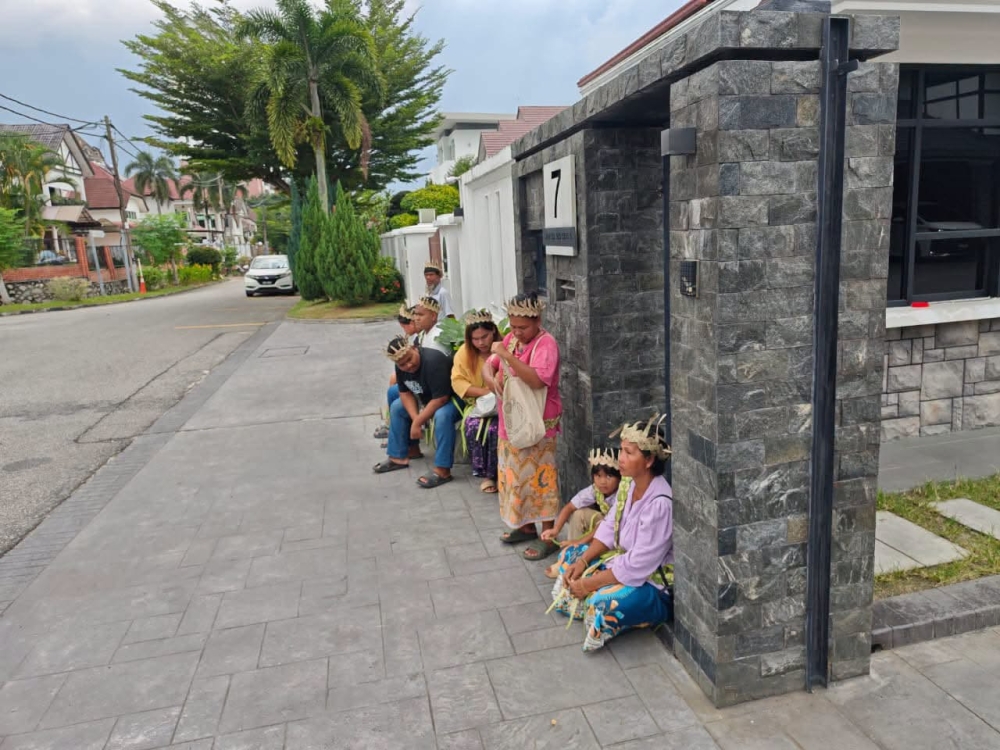
Prime Minister Datuk Seri Anwar Ibrahim has committed to bringing the contentious Orang Asli land dispute in Maran before Pahang's state authorities after meeting with affected villagers to understand their concerns firsthand. The pledge marks a direct intervention at the federal level on an issue that has festered at the local and state level, signalling the government's willingness to engage with indigenous communities facing property rights challenges.
During his engagement with residents, Anwar encountered families whose livelihoods and ancestral claims have become entangled in a property dispute that stretches back years. The Maran area in Pahang is home to several Orang Asli settlements, and the tensions surrounding land ownership reflect broader struggles across Malaysia where indigenous peoples confront competing land claims and development pressures. By personally visiting the affected communities, the Prime Minister demonstrated a commitment to understanding the human dimensions of administrative and legal deadlocks that might otherwise remain abstract in federal corridors.
The Maran situation exemplifies the precarious position of Orang Asli communities navigating Malaysia's complex land tenure system. Traditional customary land claims often clash with formal state land records and commercial interests, leaving indigenous residents vulnerable to displacement or legal uncertainty over properties their families have occupied for generations. Such disputes have repeatedly emerged across Peninsular Malaysia, from Perak to Selangor, highlighting systemic gaps in how the state recognises and protects Orang Asli land rights despite constitutional recognition of their special position.
Anwar's decision to escalate the matter to Pahang's government suggests recognition that state-level mechanisms alone have proven insufficient to resolve the dispute satisfactorily. State governments hold significant authority over land administration and tenure, yet they frequently lack coordination with federal indigenous affairs policies or the political will to challenge established interests. By inserting federal pressure, Anwar seeks to break what villagers may perceive as bureaucratic gridlock at the state level.
The intervention arrives at a sensitive moment for Orang Asli advocacy in Malaysia. Indigenous rights organisations have intensified campaigns documenting land dispossession and calling for systemic reform in how customary claims are recognised and protected. International attention to indigenous rights, particularly through mechanisms like the UN Declaration on the Rights of Indigenous Peoples, has also amplified pressure on the Malaysian government to demonstrate concrete progress beyond rhetorical commitments.
For Pahang's state government, Anwar's involvement raises the political stakes on the dispute. The state has competing interests to balance: acknowledging legitimate Orang Asli claims while managing relationships with other landholders and potential commercial stakeholders. However, the Prime Minister's public commitment transforms what might have remained a footnote in state affairs into a matter of national governance credibility, making avoidance or indefinite delay riskier politically.
The timing of the village consultations also reflects the broader federal government's approach to legitimacy, emphasising direct engagement with affected populations rather than top-down policy announcements. Anwar's administration has positioned itself as more responsive to grassroots grievances, and these Maran visits reinforce that image while simultaneously placing the Pahang government on notice that land disputes affecting Orang Asli communities will receive scrutiny from Putrajaya.
For Malaysian Orang Asli communities more broadly, the Prime Minister's pledge carries both symbolic and practical significance. Symbolically, it acknowledges that their land struggles warrant attention at the highest levels of government rather than remaining confined to state bureaucracies. Practically, federal intervention could unlock solutions by applying diplomatic pressure, deploying federal resources, or facilitating inter-agency coordination that state-level actors cannot achieve independently.
However, translating commitment into resolution will require navigating complex legal questions about land ownership, historical occupancy, and compensation mechanisms. Pahang's authorities must reconcile competing claims while crafting outcomes that indigenous residents perceive as just rather than merely expedient. The involvement of the Prime Minister's office also means that any perceived unfair resolution will reflect poorly on the federal government's credibility with indigenous constituencies nationwide.
The Maran case also underscores persistent governance challenges in Malaysia's federal system, where indigenous affairs straddle federal and state jurisdictions without always having clear delineation of responsibility. Orang Asli land disputes frequently reveal gaps in coordination between the federal Department of Orang Asli Affairs, state land offices, and state governments, each operating under different mandates and constraints. Anwar's intervention implicitly acknowledges these structural weaknesses while attempting to overcome them through executive pressure.
Moving forward, stakeholders will scrutinise whether the Prime Minister's commitment translates into tangible progress within a reasonable timeframe. Pahang residents will be watching for concrete outcomes: legal clarity, remediation of grievances, or compensation arrangements that genuinely improve their circumstances. The resolution of Maran may also set a precedent for how the federal government handles similar disputes elsewhere, making the stakes extend beyond this single community to encompass the broader relationship between Malaysia's government and its indigenous populations.

