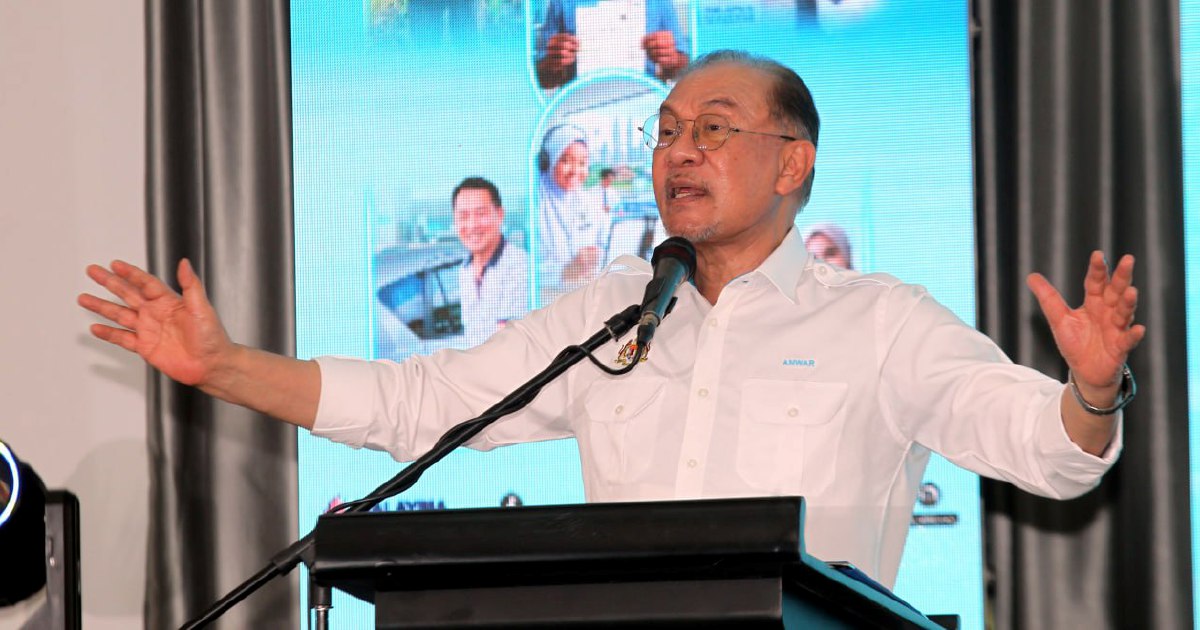
Prime Minister Datuk Seri Anwar Ibrahim has pledged RM15.3 million to enhance facilities and educational standards at religious and Islamic boarding schools throughout Perak, reaffirming the administration's commitment to supporting faith-based education across Malaysia. The announcement, made in Ipoh, underscores the Madani government's strategy to integrate religious learning institutions into broader national development plans whilst maintaining quality standards comparable to conventional schools.
The allocation represents a tangible government response to long-standing requests from religious and pondok school communities in Perak, one of Malaysia's largest states by student population in these sectors. By directing specific funding toward physical infrastructure, curriculum development, and educator training programmes, the initiative addresses gaps that have historically limited these institutions' competitive standing within Malaysia's broader education ecosystem. The commitment also demonstrates recognition that religious schools serve a vital cultural and spiritual function that extends beyond conventional academic metrics.
Perak's religious and pondok schools educate tens of thousands of students annually across Islamic studies, traditional disciplines, and increasingly, integrated curricula combining religious knowledge with mainstream subjects. The funding injection comes as these institutions face mounting pressure to modernise facilities whilst preserving pedagogical approaches rooted in centuries of Islamic tradition. Many establishments operate with minimal government support, relying heavily on parental contributions, wakaf funding, and community donations, creating sustainability challenges that disproportionately affect schools serving economically disadvantaged areas.
Anwar's pledge reflects broader Madani government priorities that emphasise inclusivity and support for diverse educational pathways. Rather than viewing religious schools as separate from national development agendas, the administration positions them as complementary institutions serving Malaysia's pluralistic education landscape. This approach acknowledges that whilst public schools remain foundational to national cohesion, religious schools fulfil distinct community needs and preserve Islamic intellectual traditions that remain integral to Malaysian identity.
The RM15.3 million targeted at Perak represents part of larger nationwide commitments to strengthen religious education infrastructure. Perak's geographic and demographic characteristics—spanning urban centres like Ipoh and sprawling rural constituencies—create particular challenges for equitable resource distribution. Schools serving remote communities often struggle to attract qualified educators and maintain modern facilities, perpetuating educational disparities that extended funding seeks to rectify.
Implementation mechanics for the allocation remain subject to detailed announcements, but precedent suggests funds will support classroom construction, technology integration, teacher professional development, and library expansion. Successful deployment requires coordination between federal and state education authorities, religious school boards, and community stakeholders to ensure resources reach intended beneficiaries efficiently. Perak's State Religious Affairs Department will likely play coordinating roles, liaising between schools and federal dispersal mechanisms.
The initiative carries implications extending beyond Perak's borders. As Malaysia's largest Muslim-majority nation in Southeast Asia, investment signals in religious education influence how other ASEAN states approach faith-based schooling. Countries like Indonesia and Brunei, where pondoks and pesantrens play similarly significant roles, observe Malaysian policy trajectories when evaluating their own institutional frameworks. The Madani government's financial commitment potentially establishes benchmarks for regional religious education investment.
Challenges persist in translating pledges into sustained improvements. Religious schools frequently report difficulties accessing skilled technical staff for specialised roles, particularly in STEM integration and digital literacy. Geographic remoteness, modest teacher compensation relative to public schools, and limited infrastructure in economically disadvantaged areas compound recruitment difficulties. The RM15.3 million must therefore address human capital development alongside physical upgrades to generate lasting transformation.
Community participation proves essential for successful implementation. Successful religious school modernisation in Malaysia has historically depended on collaborative approaches involving headmasters, religious scholars, parent associations, and student bodies. The funding announcement should catalyse stakeholder engagement processes clarifying priorities and ensuring allocations reflect ground-level needs rather than top-down assumptions about institutional requirements.
Anwar's commitment also arrives amid broader Malaysian conversations regarding educational quality assurance across school types. Periodic concerns about academic standards in certain religious institutions reflect legitimate quality control imperatives, though equally important is recognising excellence present in many establishments. Strategic investment provides opportunities to elevate performance across sectors whilst maintaining institutional autonomy and religious character that define these schools' missions.
The announcement positions the Madani government as responsive to constituencies historically marginalised within education policy discussions. Religious school communities, predominantly concentrated in rural and lower-income areas, rarely command significant political attention despite educating substantial student populations. Direct financial commitments signal genuine policy priority rather than rhetorical acknowledgment, potentially reshaping political dynamics surrounding religious education in Malaysian federalism.
Longer-term success requires sustained commitment beyond single allocations. Religious schools need predictable, multi-year funding trajectories enabling capital planning and programme development. One-off injections, whilst welcome, risk creating unsustainable expectations if not complemented by structural budget allocations. The Madani framework's sustainability hinges on institutionalising religious education support within permanent revenue streams rather than treating it as discretionary spending fluctuating with political priorities.
Moving forward, the Perak investment should establish demonstration models for national scaling. Schools receiving funding allocations could document improvement trajectories, share pedagogical innovations, and serve as reference points for policy refinement. By treating the initiative as both immediate support and learning opportunity, the government can extract maximum development value whilst building evidence bases justifying continued investment in religious education infrastructure across Malaysia.

