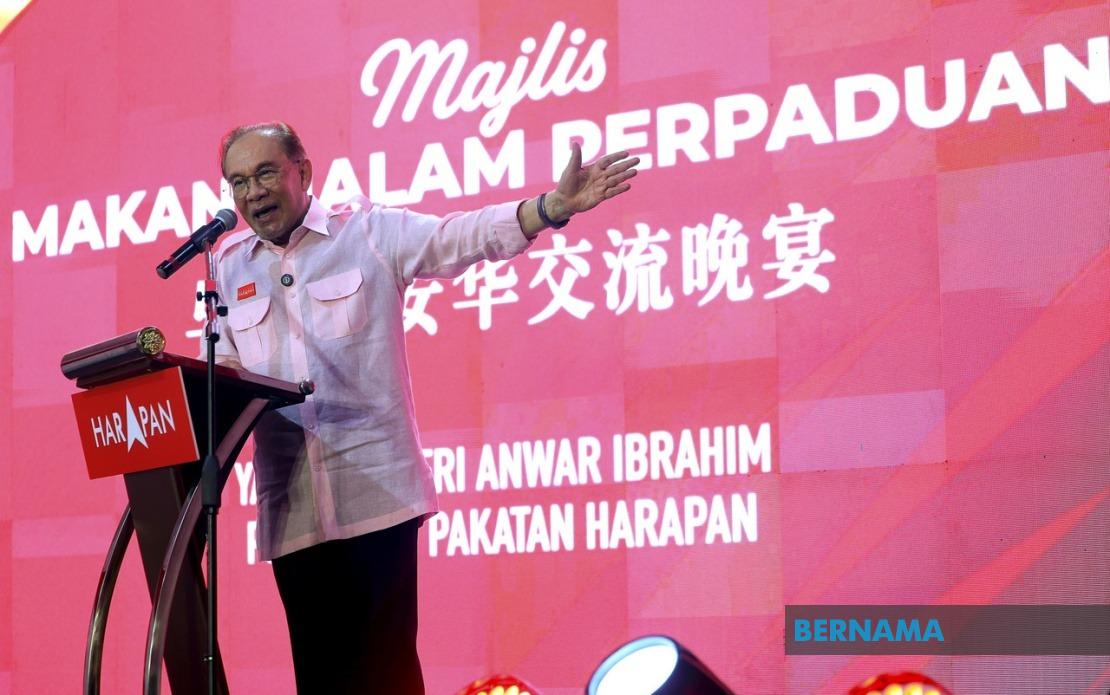
Prime Minister Datuk Seri Anwar Ibrahim has launched a pointed critique of the opposition's approach to the upcoming Negeri Sembilan state election, suggesting that internal rivalries over the chief minister position undermine their credibility to lead. Speaking at a campaign dinner in Sikamat on July 22, the Pakatan Harapan chairman drew a stark contrast between what he portrayed as opposition disunity and the stability offered by the ruling coalition, framing the election as a choice between self-interested factionalism and proven governance.
The timing of Anwar's remarks is significant, coming as several opposition coalitions jockey for position ahead of the August 1 polling date. His observation that competing parties are already contesting the menteri besar prize before voters have cast their ballots appears designed to suggest a lack of serious policy focus among challengers. This rhetorical strategy aims to redirect voter attention away from any grievances with the current administration and toward perceived weaknesses in alternative power structures.
Anwar's defence of continuity centred on incumbent Negeri Sembilan Menteri Besar Datuk Seri Aminuddin Harun, who is also the PH candidate for Linggi. The prime minister highlighted Aminuddin's administrative record, emphasising governance marked by integrity and freedom from corruption and abuse of power. By anchoring the campaign to an individual with an established track record rather than abstract promises, Anwar attempted to provide voters with a tangible measure against which to evaluate the opposition's untested alternatives.
The broader context reveals Pakatan Harapan's strategic positioning as a stabilising force in Malaysian politics. After more than two years of navigating the Unity Government coalition with Barisan Nasional components, the alliance is seeking to consolidate support at state level by emphasising coherence and continuity. The contrast Anwar drew between harmonious governance and opposition infighting reflects wider efforts to portray the current arrangement as functional despite occasional tensions, particularly regarding ministerial appointments and policy priorities.
Anwar also used the campaign platform to address what he characterised as divisive racial narratives being deployed by certain quarters during the election campaign. This criticism reflects growing concern within the government about polarising rhetoric that might undermine the Unity Government's inclusive mandate. By openly confronting this issue, Anwar signalled that the coalition intends to contest elections on grounds of competent administration and equitable resource distribution rather than allowing opponents to dominate the campaign terrain through identity-based appeals.
The socio-economic commitments outlined by Anwar—increased allocations for disadvantaged communities, housing initiatives, and civil service salary adjustments—were presented as evidence of the government's practical commitment to serving all segments of society regardless of ethnic background. These programmatic elements, while not novel, serve to illustrate that the Unity Government's governance model prioritises tangible benefits over rhetorical division. For Malaysian voters assessing the relative merits of competing coalitions, such material policy content often carries greater weight than symbolic gestures.
Pakatan Harapan's electoral strategy in Negeri Sembilan reflects the party coalition's overall approach to state elections following the 2022 general election. By fielding candidates across all 36 state seats, with PKR providing 16 candidates, DAP 11, and Amanah nine, PH demonstrates organisational capacity and internal discipline. This distribution reflects negotiated power-sharing arrangements that have held relatively stable despite occasional friction between component parties over candidate selection and ministerial portfolios in other states.
The campaign represents a significant test of whether the Unity Government can replicate its 2022 federal performance at state level. Negeri Sembilan, with a population of approximately 1.1 million, serves as a barometer for broader electoral trends affecting Malaysian politics. A strong PH showing would reinforce the coalition's narrative of stability and competent administration, while a weakened performance might embolden opposition claims that the government has lost momentum or failed to deliver promised improvements in living standards and governance.
Opposition fragmentation in Negeri Sembilan appears real, with Perikatan Nasional, Barisan Nasional components operating independently, and other smaller parties contesting individual seats. This splintering of anti-PH votes could significantly benefit the ruling coalition if opposition support divides across multiple contestants rather than coalescing behind a single alternative. However, strategic coordination among opposition parties or tactical voting by citizens dissatisfied with the government could reverse this arithmetic.
The campaign dinner format, with prominent PH figures including Linggi candidate Nor Azman Mohamad and Ampangan candidate Datuk Muhammad Nazri Kassim present, served both to showcase candidate quality and to reinforce party unity. Such events help build grassroots momentum and provide opportunities for direct dialogue with constituents, particularly important in state elections where national media coverage may be less intensive than during federal campaigns.
For Malaysian observers monitoring the Unity Government's durability, the Negeri Sembilan election offers important signals about whether the coalition can maintain coherence and electoral appeal. Anwar's attack on opposition disunity, while tactically sound, implicitly acknowledges that governance stability represents the government's strongest campaign asset. If voters prioritise functional administration over ideological purity or radical policy change, PH's emphasis on Aminuddin's record and administrative continuity may prove persuasive. Conversely, if dissatisfaction with economic conditions or policy priorities drives electoral behaviour, opposition divisions may matter less than widespread appetite for change.
Early voting scheduled for July 28 precedes the main polling day by four days, potentially affecting campaign dynamics by shifting participation forward. This compression of the campaign timeline may advantage the governing coalition, which typically enjoys superior organisational resources and media access compared to opposition parties operating with fewer resources and less sympathetic news coverage in mainstream outlets.

