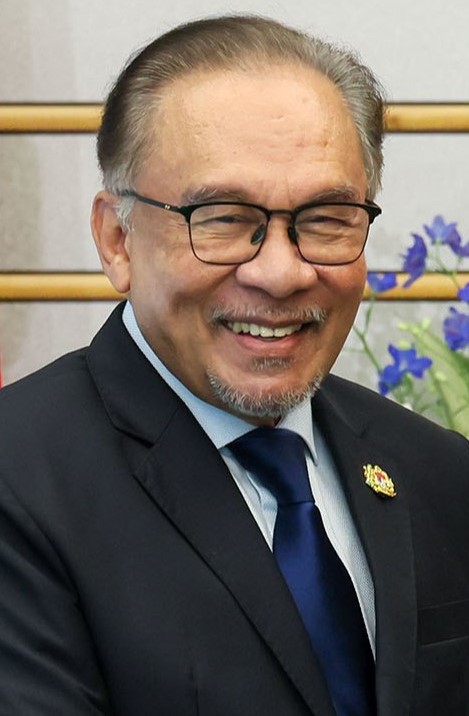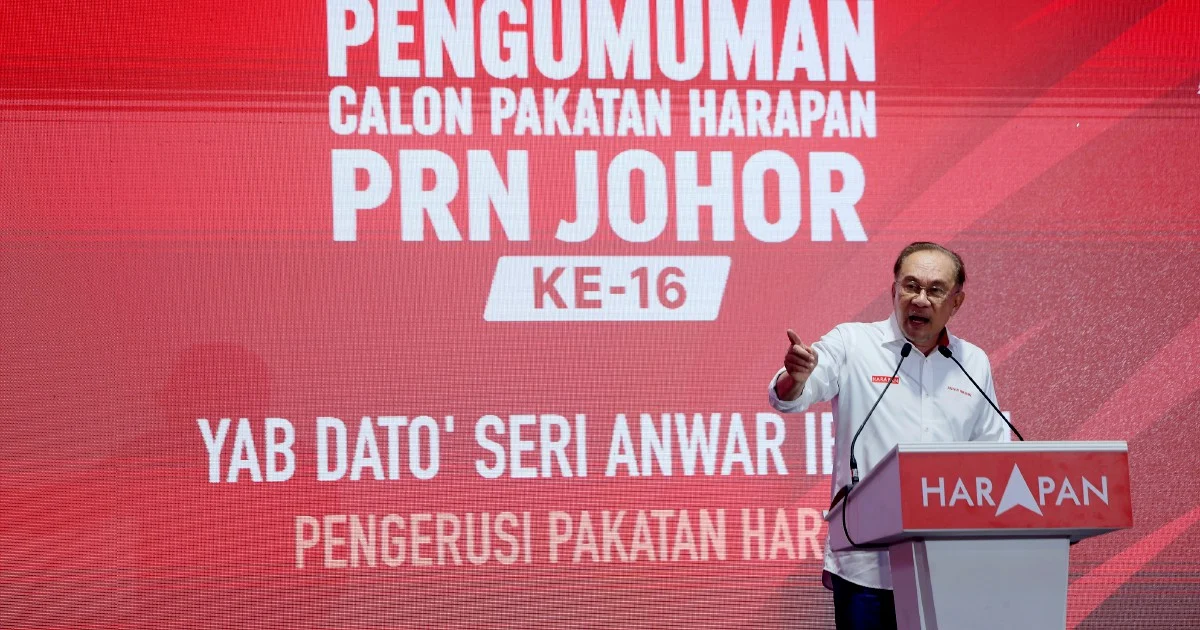
Prime Minister Datuk Seri Anwar Ibrahim has called on members of Johor's executive council to conduct thorough examinations of how preceding federal administrations handled the state's revenue distribution, particularly in light of longstanding complaints that Johor failed to receive equitable financial treatment from Kuala Lumpur. Speaking at an engagement in Tangkak, Anwar suggested that state leadership should directly interrogate the track records of both the Barisan Nasional and Perikatan Nasional federal governments on this contentious matter, signalling his willingness to place responsibility squarely on his predecessors' shoulders.
The statement carries significant weight within Malaysia's ongoing discourse about federal-state financial arrangements, a perennial source of tension in the country's political landscape. Johor, as one of the nation's wealthiest states with substantial port revenues, land sales, and commercial activity, has historically maintained that its contributions to the federal coffers exceed what it receives in return through development allocations and grants. This imbalance has fuelled periodic complaints from state leadership and business communities about underfunded infrastructure projects and insufficient support for state-level initiatives.
Anwar's directive to scrutinise past administrations reflects a broader political strategy of distinguishing his current Pakatan Harapan-led government from the decades of Barisan Nasional rule that preceded it. By publicly acknowledging historical grievances and suggesting that state officials should demand accountability, he positions his administration as responsive to legitimate state concerns whilst implicitly suggesting that earlier governments had neglected these issues. This rhetorical approach serves multiple purposes: it validates local frustrations, establishes distance from the previous system, and potentially builds political capital with state leaders who may feel vindicated in their criticisms.
The financial relationship between Johor and the federal government has been complicated by various factors over the decades. Port revenues from strategic facilities, land development taxes, and other commercial activities have made Johor a net contributor to federal finances. However, the distribution of federal development funds has not always reflected the state's economic contributions, leading to periodic disputes over what constitutes fair allocation. These tensions have occasionally spilled into public discourse, with state governments and business chambers articulating concerns about infrastructure deficits relative to contributions made.
Former Barisan Nasional administrations, which governed Malaysia until 2018 and again from 2020 to 2022, operated under different fiscal philosophies that often prioritised political considerations in revenue distribution. The Perikatan Nasional government, which held office from 2020 to 2022, faced its own structural constraints and political complications that may have affected how revenue matters were handled. Anwar's suggestion that state executives examine these periods implies there are substantive questions worth asking about how decisions were made and whether they served Johor's interests adequately.
From a practical governance perspective, Anwar's comments may also signal that his administration is open to reconsidering revenue distribution formulas or providing additional allocations to address perceived historical shortfalls. Such overtures are crucial for maintaining political stability, particularly in a state like Johor where federal-state relations carry considerable weight in determining coalition stability and electoral outcomes. Johor's political alignment has shifted multiple times in recent years, making it important for federal leadership to maintain constructive relationships with the state government.
The timing of these remarks reflects the broader political environment in Malaysia, where questions about resource distribution and federal responsibility remain live issues. Economic pressures, infrastructure demands, and the need for state-level development have intensified scrutiny of how federal finances are allocated. Johor, with its growing population and economic importance, faces particular pressures to fund transportation networks, utilities, and social services that keep pace with development.
For Malaysia's broader political economy, Anwar's statement underscores how federal-state fiscal arrangements remain politically charged territories. The mechanisms governing revenue sharing, the criteria for development allocations, and the fairness of the overall system continue to generate debate across all states, not merely Johor. By explicitly inviting state officials to examine past decisions, Anwar acknowledges that transparency and accountability in federal-state financial relations are matters of legitimate political concern.
The call also reflects recognition that Johor's political preferences carry disproportionate weight in Malaysian politics. As the second-most populous state and a significant economic contributor, Johor's leadership has leverage in coalition negotiations and federal-state discussions. Anwar's openness to questioning past decisions regarding Johor's revenue treatment may be calculated to shore up political support and demonstrate responsiveness to state-level concerns that resonate with voters and business communities.
Moving forward, whether these statements translate into concrete policy changes remains to be seen. Revenue distribution formulas are complex technical matters involving multiple stakeholder interests, and revising them involves considerable political negotiation. Nevertheless, Anwar's public acknowledgement that past administrations warrant scrutiny on this issue signals that the current federal government recognises the legitimacy of Johor's grievances and may be willing to explore solutions that better align revenue distribution with state contributions and development needs.