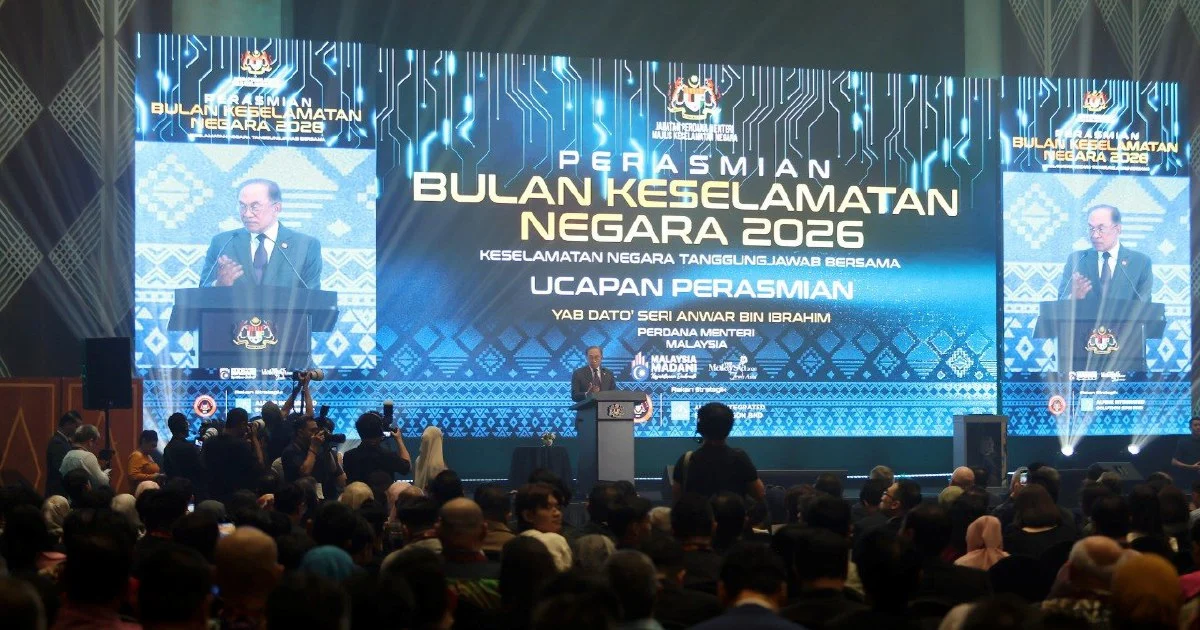
Prime Minister Datuk Seri Anwar Ibrahim has sounded the alarm over the resurgence of racial and regional fault lines in Malaysian political discourse as Johor prepares for elections, expressing concern that the country risks becoming mired in polarising narratives that undermine national cohesion. Speaking from Putrajaya, the Prime Minister highlighted the troubling tendency of campaigns to gravitate towards divisive identity politics rather than substantive policy platforms, a pattern he views as particularly counterproductive during electoral contests that should focus on improving citizens' lives.
The warning carries substantial weight in the contemporary Malaysian political landscape, where communal sensitivities remain acute and electoral campaigns have historically been flashpoints for inflammatory rhetoric. Johor, Malaysia's second-largest state by population and a longtime Barisan Nasional stronghold, occupies strategic importance in the nation's political geography, making statements about its electoral dynamics relevant to broader national stability. Anwar's intervention suggests apprehension that campaign dynamics in the state may be veering towards the kind of ethno-religious messaging that has characterised Malaysian politics for decades, despite efforts by his administration to reorient governance towards cross-cutting issues affecting all communities.
The Prime Minister's remarks underscore a fundamental tension within Malaysian democracy: the persistence of community-based voting blocs and identity-driven political mobilisation even as successive governments have nominally committed to transcending such divisions. Johor's electoral context amplifies this challenge, given the state's diverse demographic composition and its role as a microcosm of Malaysia's broader multiethnic fabric. The concern that campaigns might devolve into competing racial narratives reflects anxiety that political actors, seeking electoral advantage, may prioritise divisive appeals over unifying governance agendas.
Anwar's commentary also signals frustration with what he perceives as an entrenched political culture that recycles tired tropes rather than confronting contemporary challenges. Issues spanning economic inequality, employment generation, healthcare accessibility, and educational quality affect voters across all communities, yet often disappear from campaign discourse in favour of culturally coded arguments that reinforce existing group boundaries. This pattern, the Prime Minister suggests, perpetuates a political economy of resentment rather than fostering genuine national progress.
The timing of Anwar's warning is significant within Malaysia's recent political evolution. Since assuming office, his administration has emphasised stability, institutional reform, and inclusive development frameworks intended to move beyond the zero-sum racial calculations that historically characterised Malaysian governance. Johor's electoral campaign thus becomes a test case for whether this reorientation can take root at the state level, or whether entrenched patterns of communal mobilisation remain too powerful to overcome.
For Southeast Asian observers, Malaysia's electoral dynamics hold broader relevance. The region encompasses numerous multiethnic societies navigating similar challenges of maintaining democratic competition whilst preventing ethnicity from becoming the primary axis of political conflict. How Malaysian parties and voters respond to Anwar's exhortation to transcend racial narratives offers insights into whether plural democracies can evolve beyond identity-based politics without suppressing legitimate communal concerns.
The Prime Minister's intervention also illuminates fault lines within his own coalition. Different partner parties within the Pakatan Harapan-Barisan Nasional framework have constituencies with varying sensitivities to communal messaging, creating internal pressure to deploy identity-based appeals despite leadership declarations favouring unity. Managing these internal tensions whilst maintaining a public commitment to non-divisive campaigning represents a central challenge for Anwar's government.
From a Malaysian perspective, Anwar's caution addresses a persistent vulnerability in the nation's democratic architecture. Electoral contests periodically amplify existing communal sensitivities, with unscrupulous actors instrumentalising racial grievances for narrow political gain. The resulting polarisation imposes substantial costs on social cohesion and institutional trust, particularly when campaigns extend into inflammatory territory. The Prime Minister's intervention suggests determination to establish norms constraining such behaviour, though enforcement mechanisms remain unclear.
The statement additionally reflects calculations about Johor's specific context. As a state where opposition and ruling coalition strength remain relatively balanced, campaigns could intensify competitive pressures driving candidates towards extreme positioning. Early warning against racial narratives may aim to establish guardrails preventing such escalation, whilst signalling to voters that the government prioritises stability and inclusive development.
Moving forward, how political parties in Johor respond to Anwar's admonition will reveal whether his vision of transcending racial politics possesses traction beyond rhetorical commitment. The Prime Minister's willingness to make this statement publicly suggests he views the risks of inaction as substantial. Whether such exhortations, unaccompanied by institutional mechanisms incentivising cross-communal coalition-building, can meaningfully reorient electoral behaviour remains an open question in Malaysian politics.

