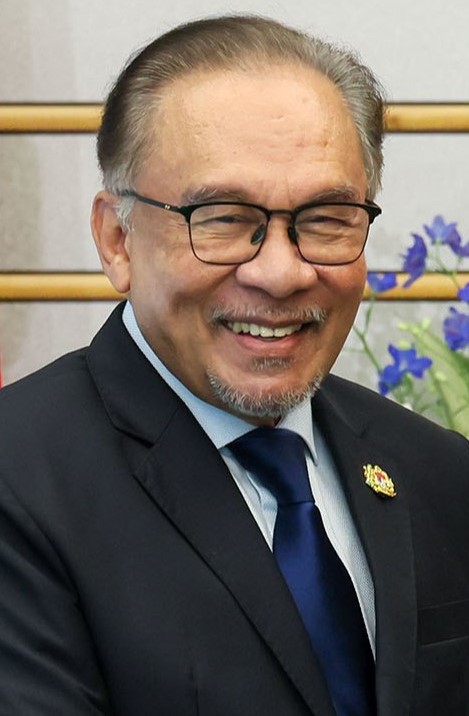
Prime Minister Datuk Seri Anwar Ibrahim has issued a pointed reminder to Malaysia's political establishment that the nation's royal institutions must remain insulated from the rough-and-tumble of electoral competition and partisan disagreement. Speaking in Alor Gajah on June 24, Anwar emphasised that the sanctity of the Malay Rulers—a cornerstone of Malaysia's constitutional framework—should not become collateral damage in the contest for political power.
The caution reflects mounting sensitivity within government circles about the boundaries between legitimate political discourse and commentary that strays into territory involving the crown. Anwar's intervention came in response to remarks attributed to Amanah president Datuk Seri Mohamad Sabu, delivered during Pakatan Harapan's candidate announcement in Johor on Monday. While the specifics of those remarks remained subject to interpretation, observers noted that certain quarters had perceived them as veering uncomfortably close to institutional criticism.
Anwar's framing of the issue underscores a fundamental principle embedded in Malaysia's political culture: that while parties may contest fiercely on policy, ideology, and governance, there exist certain boundaries that transcend electoral calculation. The Prime Minister articulated this distinction plainly, suggesting that political opponents should settle their disagreements through mature engagement rather than through tactics that implicate constitutional institutions. His language—referring to the royal institution as sacred—reflects the reverence with which these institutions are traditionally regarded in Malaysian political discourse.
The timing of Anwar's statement carries particular weight given the electoral calendar. With elections shaping political behaviour and messaging, parties inevitably seek competitive advantage through rhetorical escalation. However, the Prime Minister's intervention signals that his administration views certain forms of political criticism as crossing a line, particularly when they invite interpretation as commentary on or critique of monarchical institutions. This position aligns with Malaysia's constitutional tradition, which accords special status and protection to the Malay Rulers under the Federal Constitution.
For Southeast Asian readers, the episode illustrates a distinctive feature of Malaysian politics: the coexistence of democratic competition with institutional frameworks that stand somewhat apart from ordinary political contestation. Unlike purely republican systems where all institutions theoretically fall within the realm of public debate and critique, Malaysia's constitutional monarchy creates a protected sphere around the crown. This arrangement reflects Malaysia's federal structure and the bargain struck at independence, where Malay rulers ceded certain powers to a federal government in exchange for constitutional recognition of their ceremonial and symbolic roles.
The involvement of senior government figures in Anwar's statement—including Melaka Chief Minister Datuk Seri Ab Rauf Yusoh and Deputy Higher Education Minister Adam Adli Abd Halim—suggests that the administration viewed the matter as sufficiently significant to warrant a coordinated message. The staging of the remarks at a civil service engagement, attended by the Chief Secretary to the Government and other top bureaucrats, indicated that Anwar sought to communicate his position not merely to the public but to the machinery of state itself.
For political operatives, the statement functions as a boundary-setting exercise. By speaking publicly and prominently about what constitutes unacceptable political conduct, Anwar establishes clearer norms for the electoral contest ahead. This matters considerably in a political environment where rules are sometimes contested and where practices evolve through precedent. The Prime Minister's willingness to intervene suggests that his coalition views infringement of these boundaries as sufficiently serious to warrant executive attention.
The controversy also reflects broader questions about the appropriate scope of political criticism in systems with constitutional monarchies. Democratic societies must balance the principle that no institution should be beyond scrutiny with the principle that certain institutions merit special protection. Malaysia has historically resolved this tension by maintaining relatively strict prohibitions on what may be said about the sultans—restrictions codified in the Sedition Act and related legislation—while allowing robust debate on virtually all other political matters.
Moving forward, the episode signals that Anwar's government will jealously guard this distinction. Whether Mohamad Sabu's remarks genuinely transgressed the boundary remains a matter of interpretation, but the Prime Minister's intervention ensures that all parties understand the stakes. For smaller coalition partners and opposition figures, the message is plain: electoral competition, however intense, must respect these institutional guardrails.
The practical implications for Malaysia's political landscape are noteworthy. As parties prepare for electoral contest, operatives at all levels will weigh Anwar's warning against the temptation to deploy institutional critique as a political weapon. While some may view such boundaries as constraining legitimate democratic expression, the Malaysian system has consistently maintained that protecting the monarchy serves deeper constitutional purposes—ensuring stability, maintaining federalism, and preserving the compact between the centre and the sultans that underpins the entire constitutional order.