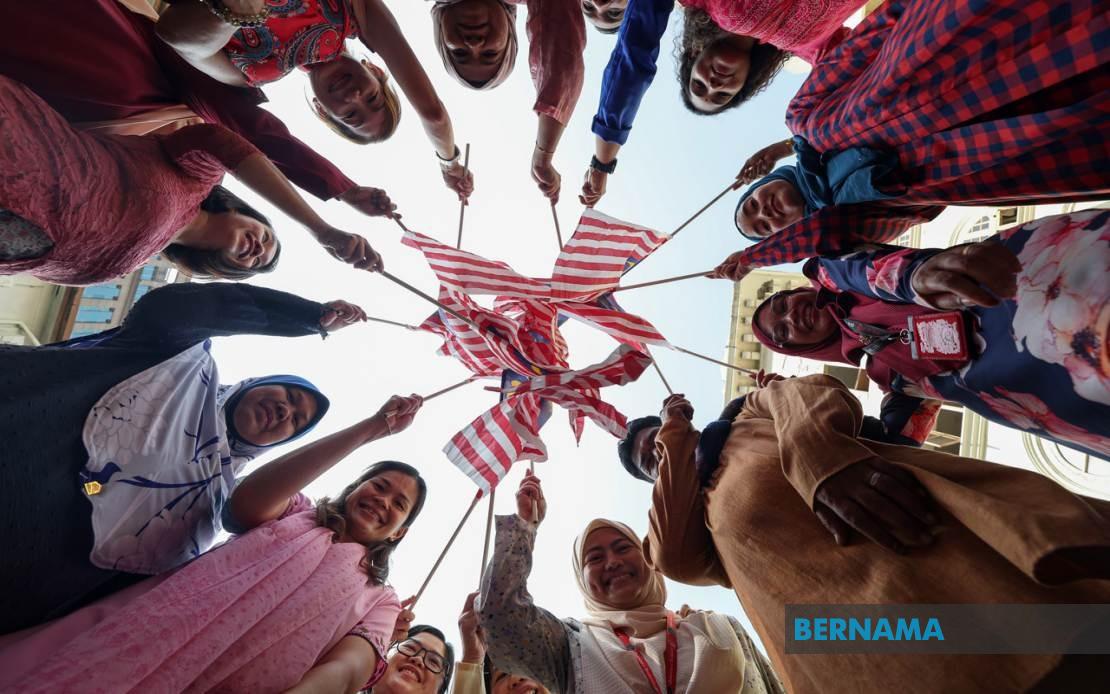
Prime Minister Datuk Seri Anwar Ibrahim has appealed to Malaysians to shoulder responsibility for protecting the nation and sustaining the multi-ethnic bonds that constitute the country's greatest asset, with these remarks coming as the nation prepares to commemorate its 69th National Day tomorrow. The messaging underscores a leadership emphasis on cohesion and shared national identity, particularly as Malaysia celebrates under the theme "Malaysia MADANI: Kesejahteraan Dinikmati"—a vision centred on collective wellbeing and prosperity that extends across all demographic groups.
In his statement issued today, Anwar characterised independence not merely as a historical achievement but as an ongoing commitment requiring active stewardship. He positioned sovereignty as intrinsically linked to the confidence and dignity of the Malaysian people, suggesting that true freedom extends beyond political autonomy to encompass the capacity for self-determination and the maintenance of institutional legitimacy. This framing carries implications for how citizens engage with democratic governance and their role in preserving the structures that facilitate national decision-making independent of external pressure.
Central to Anwar's message is an acknowledgement of historical debt. He emphasised that contemporary Malaysian achievements—economic development, institutional capacity, regional standing—are the products of accumulated sacrifice by previous generations. This retrospective dimension serves to remind Malaysians that the foundation upon which current prosperity rests was neither inevitable nor easily secured, thereby creating a moral imperative for present custodians to maintain and strengthen what their predecessors established. The invocation of "sweat, blood and tears" carries particular weight in a nation whose path to independence involved negotiation, compromise, and in some cases, violent struggle.
Anwar specifically identified Malaysia's diverse ethnic communities—Malay, Chinese, Indian, Iban, Kadazan, Murut, Bidayuh, and Orang Ulu populations—as sources of collective strength rather than sources of friction. This enumeration of communities, particularly the inclusion of Sabah and Sarawak indigenous groups alongside larger peninsular populations, reflects a deliberate attempt to construct a more inclusive national narrative. The positioning of ethnic plurality as an asset rather than a liability contradicts zero-sum framings that have occasionally characterised Malaysian political discourse, where advancement for one community has sometimes been portrayed as corresponding loss for another.
A distinctive element of Anwar's appeal concerns the relationship between national and sectional interests. He contended that Malaysia's welfare depends on communities setting aside ethnic and regional parochialism in favour of nationally-oriented priorities. This principle addresses a persistent challenge in Malaysian politics: balancing legitimate group interests with overarching national cohesion. The statement implicitly rejects the notion that ethnic advocacy must necessarily entail zero-sum competition, instead proposing that genuine community advancement emerges through frameworks that elevate general prosperity.
The prime minister also articulated a justice-centered vision of national identity. He insisted that Malaysia must be internationally recognised as a nation guaranteeing equitable treatment for all inhabitants, including populations historically experiencing marginalisation and exclusion. This articulation connects material governance outcomes—whether marginalised communities receive adequate representation, resources, and dignified treatment—to questions of national character and international standing. The emphasis on justice as foundational to national identity suggests that unity cannot be constructed through coercion or exclusion but requires genuine institutional responsiveness to diverse needs.
Anwar's deployment of the word "Merdeka"—independence—carried resonance beyond its historical moment. Rather than treating independence as a fixed 1957 achievement, his invocation suggested an ongoing process requiring perpetual recommitment and defence. This rhetorical move reframes National Day celebrations from commemorative occasions into actionable reminders of responsibilities that inhere to each generation of Malaysians. The concept that independence must be actively defended rather than passively inherited places agency and responsibility on contemporary citizens.
The video message component of Anwar's address, distinct from his social media post, allowed for more elaborate exposition of these themes. Video communication enables leaders to deploy tone, facial expression, and bodily language to reinforce verbal messaging, creating a more intimate connection with audiences than text-based statements typically facilitate. The deliberate use of multiple communication channels suggests strategic intent to ensure broad penetration of the core message across diverse demographic groups with varying media consumption patterns.
For Southeast Asian observers, Anwar's emphasis on multi-ethnic solidarity carries regional significance. The Malaysia model—imperfect though it remains—represents an alternative to ethno-nationalist frameworks that have gained prominence elsewhere in the region. At a moment when other Southeast Asian nations have confronted intercommunal tensions or democratic backsliding, Malaysia's articulation of a pluralist, justice-centred nationalism offers a counterpoint. The substance and consistency with which such principles are implemented, however, remains subject to ongoing scrutiny and contestation.
The theme selected for this year's National Day—"Malaysia MADANI: Kesejahteraan Dinikmati"—aligns with Anwar's broader messaging around shared prosperity and inclusive development. The concept of MADANI, drawing on Islamic philosophical traditions of civilisational advancement, suggests that national progress cannot be measured solely through GDP figures or infrastructure metrics but must encompass human dignity, social cohesion, and institutional fairness. This framing positions the government's development agenda as integral to national identity rather than as technocratic administration disconnected from foundational values.
Looking forward, Anwar's call for Malaysians to function as "one team" while preserving unity and collective spirit establishes an implicit standard against which his government's performance will be measured. The exhortation to "defend the country with all their might" carries multiple dimensions—territorial sovereignty, institutional integrity, and the preservation of the multi-ethnic compact that undergirds Malaysian statehood. How effectively the administration translates these rhetorical appeals into policy outcomes affecting economic opportunity, justice delivery, and communal harmony will substantially shape whether such calls resonate or appear disconnected from lived experience.

