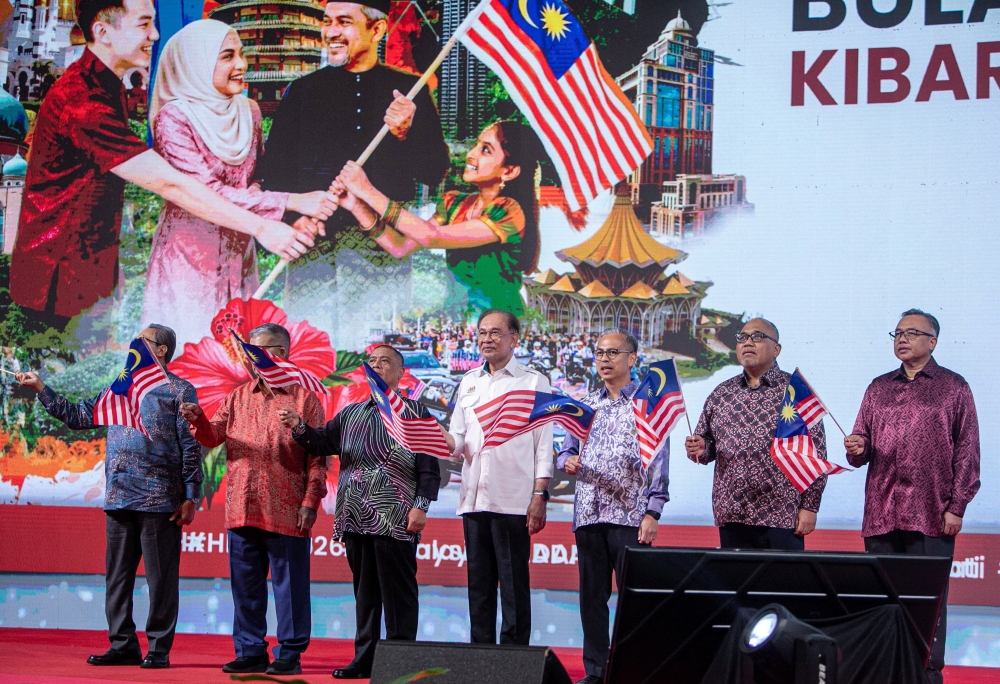
Prime Minister Datuk Seri Anwar Ibrahim has issued a forceful reminder to Malaysia's youth that the nation's sovereignty and freedoms were secured through significant sacrifice and struggle, urging a new generation not to lose sight of the historical foundations upon which modern Malaysia stands. Speaking in Ipoh, Anwar emphasised that appreciating the independence movement's legacy remains essential as the country confronts present-day obstacles and pursues its development agenda.
The Prime Minister's exhortation reflects a broader concern among Malaysia's political establishment that younger citizens, increasingly distant from the colonial era and the tumultuous years surrounding 1957, may underestimate the effort invested by earlier generations in securing the nation's freedom and building its institutions. Anwar's message carries particular weight given his own background as a prominent political figure who has navigated Malaysia's complex governance landscape for decades, lending credibility to his appeal for historical consciousness.
Anwar's remarks highlight the tension between honouring the past and addressing present realities. While Malaysia has achieved remarkable progress since independence—transforming from a colonial possession into a middle-income nation with relatively sophisticated institutions—contemporary challenges ranging from economic inequality to political polarisation demand fresh thinking and renewed commitment from youth. The Prime Minister's call suggests that remembering the independence struggle should not mean dwelling on history, but rather drawing inspiration and lessons applicable to current nation-building endeavours.
The emphasis on youth engagement is strategically significant in Malaysian politics. Younger voters represent an increasingly influential demographic, and their enthusiasm for national causes can substantially affect the country's trajectory. By invoking the independence narrative, Anwar seeks to bridge generational divides and foster a sense of shared national purpose that transcends partisan interests. This approach recognises that Malaysia's future depends on whether younger citizens develop genuine investment in the nation's progress.
Malaysia's independence struggle, culminating in the nation's emergence from British colonial rule on August 31, 1957, was neither simple nor inevitable. It involved complex negotiations, political mobilisation across diverse communities, and the tireless work of nationalist leaders who envisioned a united, multi-ethnic nation. The constitutional framework they established remains foundational to Malaysian governance today, and understanding this history provides context for appreciating the democratic and federal structures that shape national life.
Anwar's message also implicitly addresses the risk of historical revisionism and fragmented national narratives. In an era of social media and competing ideological perspectives, younger Malaysians may encounter selective or distorted accounts of independence. A unified, accurate understanding of this period becomes important for maintaining social cohesion and preventing the independence narrative from being monopolised by particular political factions seeking to advance narrow agendas.
The call to remember independence carries particular resonance as Malaysia approaches significant milestones and faces mounting pressures on multiple fronts. Economic challenges, including rising cost of living and questions about inclusive growth, compete with the government's capacity to invest in education, infrastructure, and social programmes. Climate change, technological disruption, and regional geopolitical shifts present novel difficulties that historical parallels can only partially illuminate. Young Malaysians inheriting these challenges require both historical grounding and forward-looking vision.
Anwar's emphasis on appreciation rather than mere commemoration suggests a more sophisticated understanding of how history serves contemporary needs. Mechanical celebration of independence—flag-raising ceremonies and patriotic speeches without deeper engagement—risks becoming hollow ritual that fails to inspire commitment. By urging youth to genuinely understand and internalise the independence struggle, Anwar advocates for history that shapes behaviour and values rather than merely occupying a commemorative calendar.
The Prime Minister's remarks come amid ongoing debates within Malaysian society about national identity, the social contract between government and citizens, and the country's future direction. These conversations inevitably reference Malaysia's founding principles and the intentions of independence architects. When contemporary challenges threaten social stability or national unity, political leaders frequently appeal to foundational documents and historical memory as anchoring points for consensus-building.
For Malaysian youth specifically, engaging with independence history offers several practical benefits beyond sentiment. Understanding how diverse communities negotiated their relationships at independence provides insight into managing contemporary pluralism. Recognising the institutional innovations that early nation-builders established fosters appreciation for systems that, despite imperfections, have enabled relative stability across significant social diversity. Learning how previous generations overcame obstacles and made difficult compromises supplies both inspiration and cautionary lessons for present problem-solving.
The challenge facing Anwar and other national leaders remains translating historical awareness into active civic participation and genuine commitment to national development. Young Malaysians must see how remembering independence connects to addressing joblessness, improving education quality, fighting corruption, and creating opportunities. When history feels disconnected from daily concerns, even well-intentioned appeals fall on deaf ears. The most effective invocation of independence will link historical memory to tangible improvements in young people's lives and prospects.
Anwar's call ultimately reflects recognition that sustainable national progress requires more than policy implementation and economic indicators—it demands shared understanding of national purpose rooted in historical consciousness. As Malaysia navigates the next phase of its development, ensuring that youth appreciate the independence struggle becomes part of the broader project of strengthening national identity and fostering the collective will necessary to address future challenges.

