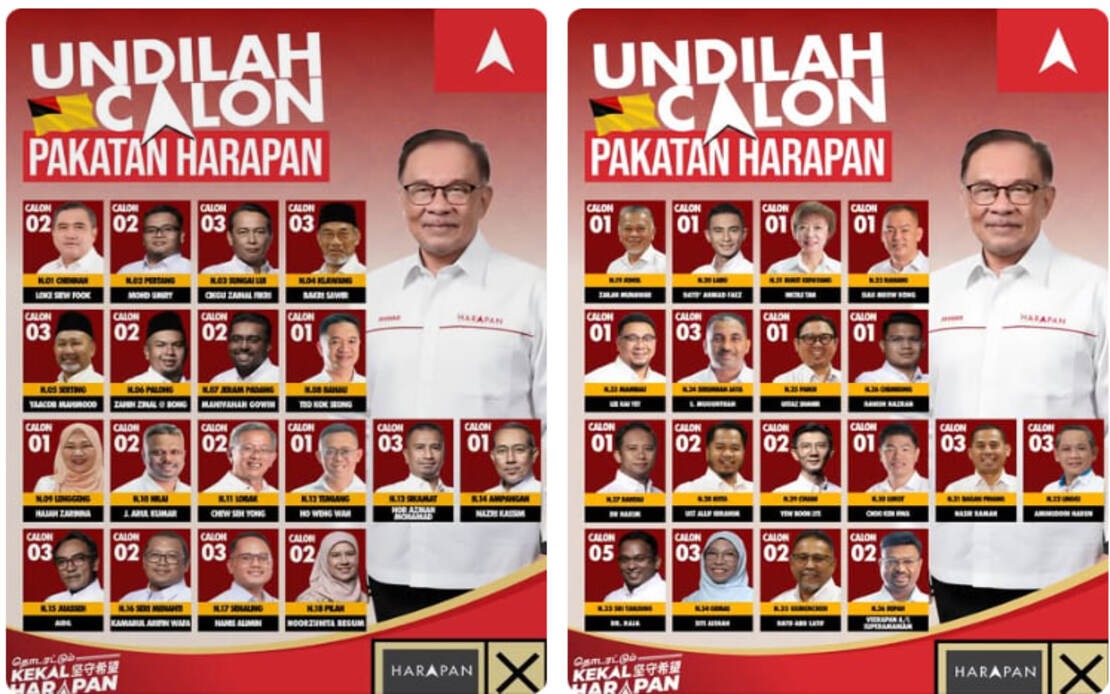
Prime Minister Datuk Seri Anwar Ibrahim has launched an appeal to voters in Negeri Sembilan to deliver a decisive mandate to Pakatan Harapan in the imminent state election, framing the vote as a referendum on continuity and good governance. Speaking through social media on July 18, Anwar emphasized that entrusting PH with strengthened representation would enable the coalition to consolidate gains made since 2018 while accelerating development that benefits all residents. The appeal reflects the coalition's confidence heading into the August 1 polling day, though it also signals awareness that maintaining momentum in a state election requires active public endorsement rather than passive support.
The timing of Anwar's statement comes as the Election Commission confirmed the full slate of candidates contesting for 36 State Legislative Assembly seats. In total, 103 candidates from various political parties and independent groups will compete in what marks the 16th state election for Negeri Sembilan. This represents the opening of a crucial electoral test for PH's administration at the state level, where local governance directly impacts everyday services and development projects that shape voter perceptions of federal leadership. Negeri Sembilan, while smaller than Selangor or Perak, holds symbolic importance as a barometer of public sentiment towards the PH-led federal government.
Pakatan Harapan has fielded a full slate of 36 candidates, covering all available seats and signaling maximum ambition in the contest. The coalition's strategy includes fielding incumbent Menteri Besar Aminuddin Harun in the Linggi state seat, anchoring the campaign with a sitting chief minister seeking fresh validation from his constituency. This move underscores PH's desire to present continuity and proven leadership rather than wholesale change, though opposition parties will likely argue that fresh leadership could deliver better results. The inclusion of all 36 seats in PH's candidate list represents an aggressive posture, contrasting with a more cautious approach of contesting only winnable seats.
Barisan Nasional has entered the race with 25 candidates, positioning itself as the principal opposition force despite its weakened position nationally following the 2022 general election. BN's decision to contest selectively rather than field candidates in all seats reflects resource constraints and realistic assessment of competitive viability in various constituencies. The coalition's campaign will likely emphasize its historical record in state governance and attempts to recapture ground lost to PH in recent years. Meanwhile, Parti Pribumi Bersatu Malaysia has fielded 24 candidates, demonstrating that the Bumi Putera-focused party intends to maintain significant presence in Negeri Sembilan despite its exit from the federal government coalition.
Perikatan Nasional has committed 11 candidates to the contest, a considerably smaller footprint than the other major coalitions. This reflects PN's challenges in mobilizing nationwide resources and fielding competitive candidates across multiple state elections simultaneously. The coalition's limited presence in Negeri Sembilan suggests a strategic focus on other battlegrounds deemed more winnable or strategically valuable. Smaller parties including Berjasa, ASLI, and PSM have each nominated a single candidate, alongside four independent contenders, rounding out a diverse political marketplace that offers voters multiple ideological and programmatic choices beyond the major coalitions.
Anwar's appeal specifically references the need to ensure stability and integrity-driven administration, language that resonates with PH's core campaign messaging about clean governance and anti-corruption efforts. By invoking the track record since 2018—when PH first took national office—the Prime Minister connects the state election to broader narratives about institutional reform and the rule of law. This framing attempts to elevate the Negeri Sembilan contest beyond routine state politics into a referendum on whether voters trust PH's governance philosophy. The religious invocation at the end of Anwar's statement, placing trust in Allah, also signals an attempt to bridge secular reform narratives with faith-based appeals important to a Muslim-majority electorate.
The Negeri Sembilan state assembly was dissolved on June 5, initiating the electoral calendar that culminates with polling on August 1. Early voting has been scheduled for July 28, accommodating voters unable to participate on election day and compressing the official campaign period into a relatively tight timeframe. This compressed schedule may advantage the incumbent administration with greater access to state resources and media attention, though it also limits opposition parties' ability to build sustained campaign momentum. The brevity of the campaign window has historical significance for Malaysian state elections, where longer campaigns have sometimes allowed insurgent movements to gain traction against established parties.
For Malaysian voters and observers, the Negeri Sembilan election carries implications extending well beyond the state's borders. The result will provide data about whether PH maintains electoral support after nearly two years in federal office, or whether governing responsibilities and inevitable policy compromises have eroded the coalition's public backing. A strong PH performance would suggest that the federal administration has retained voter confidence despite challenges including inflation, unemployment, and lingering pandemic aftereffects. Conversely, losses would indicate vulnerability heading toward the next federal election cycle, potentially emboldening opposition parties and complicating PH's ability to pass legislation in parliament where majorities remain narrow.
Anwar's explicit framing that further PH consolidation ensures continuity rather than offering radical change represents a calculated positioning against opposition messaging likely to emphasize fresh starts and alternative visions. By emphasizing that much work remains to be completed, the PM acknowledges that his administration's agenda remains incomplete, requiring additional electoral endorsement to achieve results. This admits implicitly that a smaller or stalled PH presence would constrain the state government's policy ambitions and implementation capacity. The appeal to voters' trust and consideration uses deferential language appropriate to democratic culture while making the political case that PH deserves renewed confidence.
The composition of candidates fielded by PH, BN, and other coalitions will ultimately determine which issues dominate campaign discourse and whether local or federal politics drive voter decision-making. Negeri Sembilan's economy centered on agriculture, commerce, and light manufacturing means that bread-and-butter issues including employment, business support, and infrastructure development should feature prominently. The state's demographic composition, with significant Malay-Muslim populations alongside Chinese and Indian communities, means that messages around religious harmony, economic inclusion, and community development will resonate across different voter segments. PH's challenge lies in translating Anwar's appeal into sufficient ground organization, candidate quality, and issue resonance to convert voter sentiment into ballot-box results on August 1.

