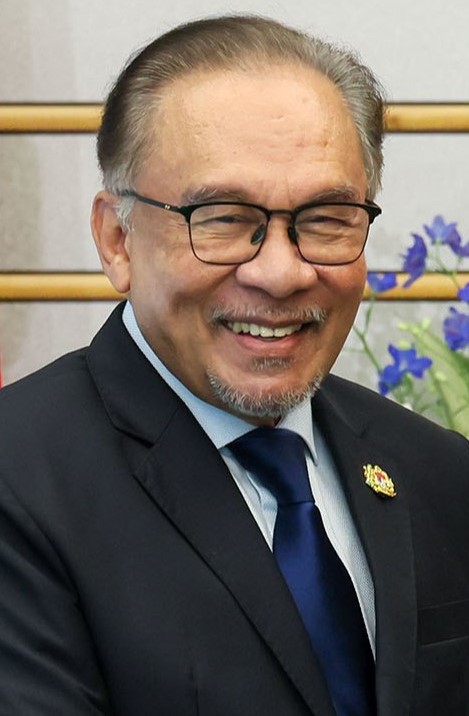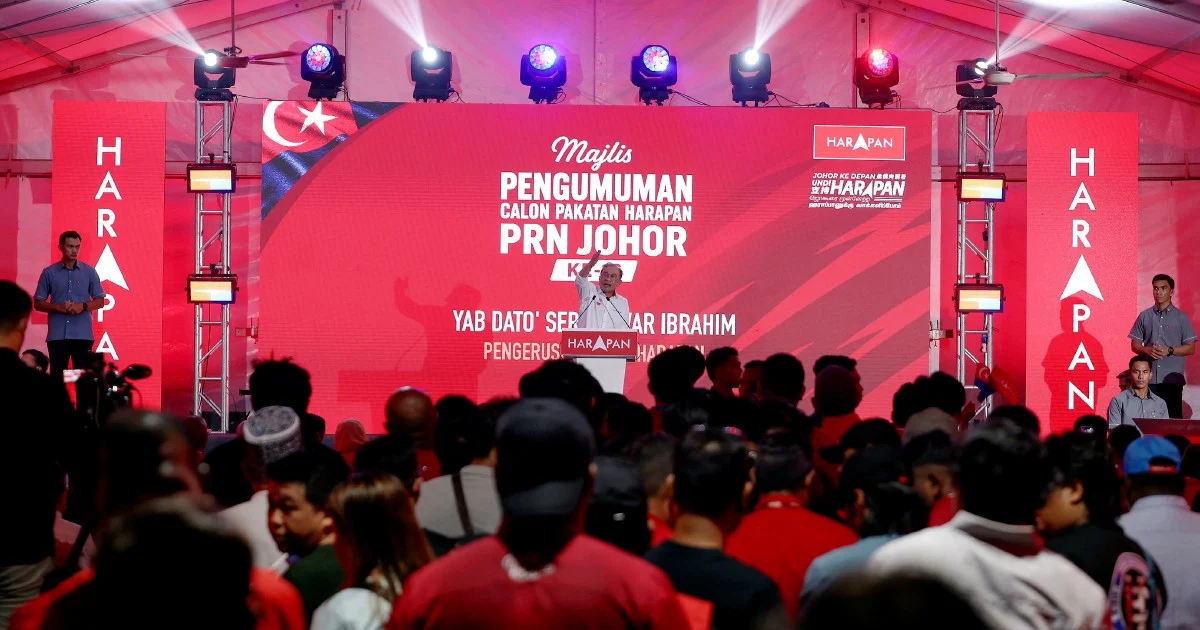
Pakatan Harapan chairman Datuk Seri Anwar Ibrahim has drawn a firm distinction between electoral competition and the constitutional role of Malaysia's Malay Rulers, arguing that the forthcoming Johor state election should be settled entirely within the realm of democratic politics. Speaking in Tangkak, Anwar cautioned against permitting any royal institutions to become entangled in what he characterised as a fundamentally political matter that ought to be resolved through transparent democratic processes.
The warning signals growing sensitivity within the opposition coalition regarding the intersection of constitutional monarchy, state governance, and electoral legitimacy in one of Malaysia's most strategically important states. Johor, the southernmost peninsular state and home to the Sultan of Johor, has historically maintained considerable economic and political influence within the federal framework. Any election held there carries implications not only for state-level administration but also for the balance of power in national politics and the precedent it sets for managing constitutional relationships during electoral contests.
Anwar's statement reflects broader concerns within PH about maintaining institutional integrity during campaigns. Malaysia's constitutional framework grants significant ceremonial and formal powers to the rulers, including their involvement in government formation, appointment of state executives, and various constitutional processes. However, Anwar's intervention suggests there is anxiety that these institutional prerogatives might inadvertently or deliberately blur into electoral processes, potentially compromising the clarity and fairness of democratic contests. The line between constitutional duty and electoral involvement remains historically contentious in Malaysian politics.
The context surrounding this election appears particularly sensitive given Malaysia's recent political volatility. State-level elections frequently serve as testing grounds for national sentiment and coalition viability. A Johor contest could significantly influence perceptions of both the current federal government's stability and the opposition's electoral prospects. Such high stakes may heighten the temptation for all parties to leverage every available institutional advantage, making Anwar's plea for restraint a preventive measure against potential constitutional complications.
Anwar's intervention also addresses the specific constitutional position of the Sultan of Johor within state politics. Unlike other sultans who serve as constitutional monarchs with largely ceremonial authority, Johor's ruler historically maintained closer involvement in state administration. This distinctive arrangement, while constitutional, can create ambiguity about where ceremonial roles end and political ones begin, particularly during election campaigns when the boundaries between institutional and partisan activities become blurred.
The PH leader's statement arrives amid broader discussions within Malaysian political circles about strengthening democratic norms and clarifying the boundaries between different institutional spheres. Recent years have witnessed intense debate about whether Malaysia's constitutional architecture has been applied in ways that inadvertently undermine democratic principles. Anwar's comments contribute to this ongoing conversation by specifically addressing how electoral processes should operate independently of royal prerogatives, even where those prerogatives are constitutionally legitimate.
For Southeast Asian observers, Anwar's position illustrates the complex challenge facing democracies with constitutional monarchies—balancing respect for traditional institutions with commitment to democratic principle. Malaysia's particular arrangement, where sultans retain significant formal powers while operating within a democratic framework, requires carefully negotiated understanding about appropriate institutional behaviour. Elections represent moments when these boundaries face particular pressure, as various actors seek advantage through institutional channels.
The implications of Anwar's statement extend beyond Johor's immediate electoral calendar. His call for maintaining clear separation between royal institutions and electoral politics sets a benchmark against which future state and federal campaigns might be measured. Should the Johor election proceed without controversial royal involvement, it could establish a positive precedent for institutionalising this boundary. Conversely, any perceived breach of this principle could provoke significant constitutional debate.
Anwar's remarks also resonate with PH's broader political narrative regarding institutional reform and democratic strengthening. Throughout its period in government and opposition, the coalition has positioned itself as a guardian of constitutional propriety and democratic practice against what it characterises as institutional abuse. Calls for maintaining clear institutional boundaries align with this broader platform and reinforce the opposition's legitimacy claim to represent democratic governance.
The statement carries implicit messaging to other political actors, including the ruling coalition and relevant state authorities, that Anwar expects institutional restraint during the election period. It functions simultaneously as a public commitment by PH to respecting constitutional boundaries and a gentle warning against others crossing them. This dual messaging reflects sophisticated political communication about institutional expectations during sensitive electoral moments.
Looking forward, the Johor election will test whether Malaysia's various political actors can indeed maintain the separation Anwar advocates. Success in this regard would strengthen public confidence in institutional integrity and democratic fairness. The extent to which royal institutions remain visibly neutral during the campaign will likely shape both immediate perceptions of electoral legitimacy and longer-term institutional relationships between monarchical and democratic elements of Malaysia's constitutional system.