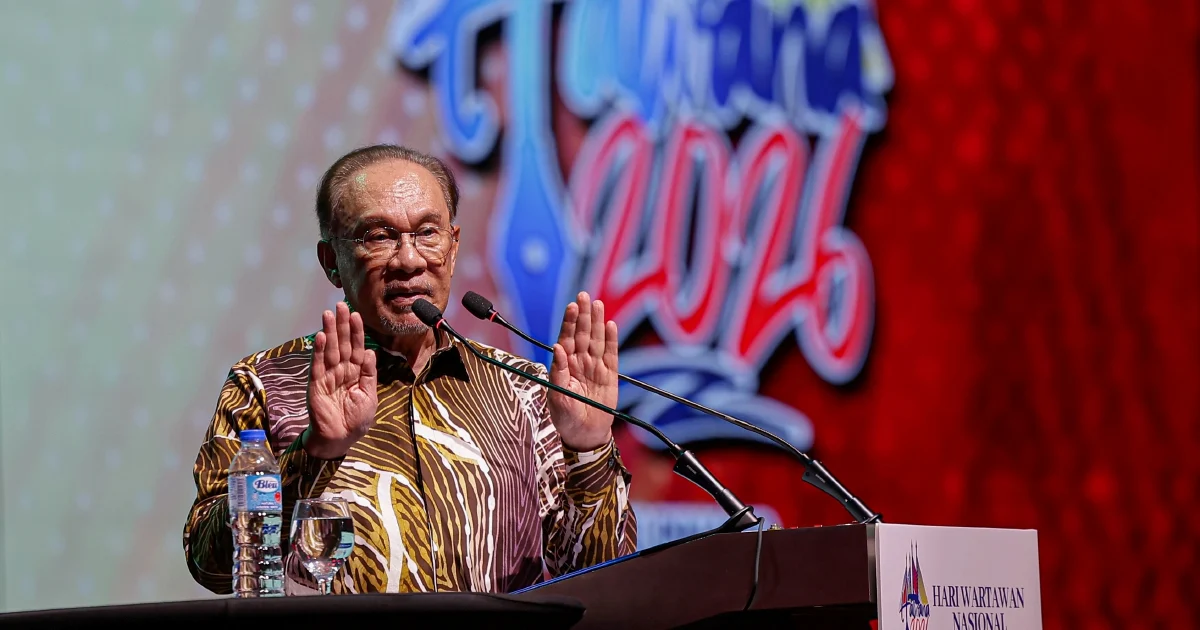
Prime Minister Datuk Seri Anwar Ibrahim has signalled strong support for the appointment of Tan Sri Nallini Pathmanathan as the new chairman of the Malaysian Media Council, viewing the move as pivotal to restoring public confidence in an institution that has faced scrutiny over its independence and effectiveness in recent years.
The decision to elevate the former Federal Court judge to lead the MMC represents a significant vote of confidence from the government in Nallini's credentials and judicial background. Her extensive experience on the bench, combined with her understanding of constitutional law and governance principles, positions her as an authority figure capable of navigating the complex intersection of media freedom, public interest, and institutional accountability that defines the council's mandate.
In making his remarks at Butterworth, Anwar underscored his belief that Nallini's appointment would meaningfully enhance the council's public image. The MMC operates within a challenging landscape where media organisations, journalists, and the broader public scrutinise its decisions on press complaints, journalistic conduct, and editorial standards. A leadership change, particularly one involving a respected judicial figure, can signal institutional renewal and a commitment to impartiality—qualities that have been questioned by industry observers and civil society groups over the past decade.
The timing of this appointment carries significance in Malaysia's broader governance narrative. The government has been working to rebuild institutions and strengthen democratic safeguards in the aftermath of major political upheavals. The media landscape remains heavily contested, with competing narratives about press freedom, responsible journalism, and the role of self-regulation versus statutory oversight. By bringing in a figure with Nallini's stature, the administration appears to be attempting to position the MMC as a credible arbiter capable of earning buy-in from diverse stakeholders.
Nallini's judicial background offers tangible advantages for the council's operations. Judges are trained in impartiality, evidence-based reasoning, and the careful interpretation of rules and guidelines. These competencies translate directly to the council's work in adjudicating complaints against media outlets and assessing compliance with the Malaysian Code of Journalistic Ethics. Her presence may also elevate the perceived legitimacy of council rulings, which have occasionally drawn criticism from both media organisations and civil society for inconsistency or perceived political influence.
The appointment comes at a moment when media institutions globally are grappling with trust deficits. In Malaysia, surveys and informal assessments have often revealed low public confidence in both news organisations and media regulators. The public frequently questions whether independent bodies like the MMC operate free from government pressure or commercial interference. Bringing an esteemed judicial figure into the chairman's role sends a symbolic but important message about institutional independence and professional standards.
For Southeast Asian media observers and analysts, Malaysia's approach to media self-regulation offers a comparative case study. Unlike some neighbouring countries that rely heavily on statutory regulation or government control of broadcasting, Malaysia has attempted to preserve a space for industry self-regulation through bodies like the MMC. This model requires public trust to function effectively. When confidence erodes, the entire regulatory framework weakens, and pressures mount for more heavy-handed government intervention. Nallini's appointment can be read as an effort to stabilise this middle ground.
However, the success of this appointment will ultimately depend on tangible outcomes rather than symbolic gestures. The MMC faces ongoing challenges, including complaints that its processes lack transparency, that its decisions sometimes reflect implicit political pressures, and that it struggles to keep pace with rapid changes in media consumption and digital journalism. Nallini will need to demonstrate that judicial experience translates into concrete reforms: clearer complaint procedures, faster resolution timelines, more detailed reasoning in decisions, and stronger safeguards against external interference.
Industry insiders will also be watching closely to see whether Nallini champions broader reforms to the council's governance structure. The MMC comprises representatives from media organisations, journalists, publishers, and public interest groups, but sceptics have long questioned whether this composition adequately insulates the council from commercial or political pressure. A forward-thinking chairman might push for structural enhancements that strengthen independence and public accountability.
The appointment also reflects Malaysia's wider investment in judicial independence and the rule of law. By placing a respected former judge in a high-profile regulatory role outside the court system, the government signals confidence in the judiciary as a source of institutional credibility. This has broader implications for how Malaysians perceive governance and accountability across different sectors.
For media organisations themselves, Nallini's leadership presents both opportunity and challenge. Publishers and broadcasters may welcome a chairman committed to procedural fairness and evidence-based regulation rather than arbitrary or politically motivated decisions. Simultaneously, they may feel additional pressure to maintain higher editorial standards under more rigorous oversight. The calculus will depend on whether they perceive her role as a defender of press freedom or a more neutral arbiter focused primarily on standards and accountability.
Anwar's endorsement of Nallini carries weight as a signal of government intent. As a leader who has himself been a critic of media performance and bias, his backing of an independent judiciary figure to oversee media regulation suggests a pragmatic approach: strengthening institutions rather than politicising them. Whether this translates into the sustained public confidence that both he and the council ultimately seek will emerge only through Nallini's performance in the role and her ability to navigate the competing interests that define media governance in Malaysia.
%22%2F%3E%3C%2Fpattern%3E%3C%2Fdefs%3E%3Crect%20width%3D%22100%25%22%20height%3D%22100%25%22%20fill%3D%22url(%23ph5u67tg)%22%2F%3E%3Crect%20width%3D%22100%25%22%20height%3D%22100%25%22%20fill%3D%22url(%23ph5u67tp)%22%2F%3E%3Ctext%20x%3D%2250%25%22%20y%3D%2250%25%22%20text-anchor%3D%22middle%22%20dominant-baseline%3D%22central%22%20fill%3D%22rgba(255%2C255%2C255%2C0.95)%22%20font-family%3D%22Georgia%2C%20'Times%20New%20Roman'%2C%20serif%22%20font-weight%3D%22700%22%20font-size%3D%22226%22%20letter-spacing%3D%22-0.02em%22%3EFormer%3C%2Ftext%3E%3C%2Fsvg%3E)
%22%2F%3E%3C%2Fpattern%3E%3C%2Fdefs%3E%3Crect%20width%3D%22100%25%22%20height%3D%22100%25%22%20fill%3D%22url(%23phkek7g)%22%2F%3E%3Crect%20width%3D%22100%25%22%20height%3D%22100%25%22%20fill%3D%22url(%23phkek7p)%22%2F%3E%3Ctext%20x%3D%2250%25%22%20y%3D%2250%25%22%20text-anchor%3D%22middle%22%20dominant-baseline%3D%22central%22%20fill%3D%22rgba(255%2C255%2C255%2C0.95)%22%20font-family%3D%22Georgia%2C%20'Times%20New%20Roman'%2C%20serif%22%20font-weight%3D%22700%22%20font-size%3D%22320%22%20letter-spacing%3D%22-0.02em%22%3ERare%3C%2Ftext%3E%3C%2Fsvg%3E)
%22%2F%3E%3C%2Fpattern%3E%3C%2Fdefs%3E%3Crect%20width%3D%22100%25%22%20height%3D%22100%25%22%20fill%3D%22url(%23ph1no3ng)%22%2F%3E%3Crect%20width%3D%22100%25%22%20height%3D%22100%25%22%20fill%3D%22url(%23ph1no3np)%22%2F%3E%3Ctext%20x%3D%2250%25%22%20y%3D%2250%25%22%20text-anchor%3D%22middle%22%20dominant-baseline%3D%22central%22%20fill%3D%22rgba(255%2C255%2C255%2C0.95)%22%20font-family%3D%22Georgia%2C%20'Times%20New%20Roman'%2C%20serif%22%20font-weight%3D%22700%22%20font-size%3D%22194%22%20letter-spacing%3D%22-0.02em%22%3ENallini%3C%2Ftext%3E%3C%2Fsvg%3E)