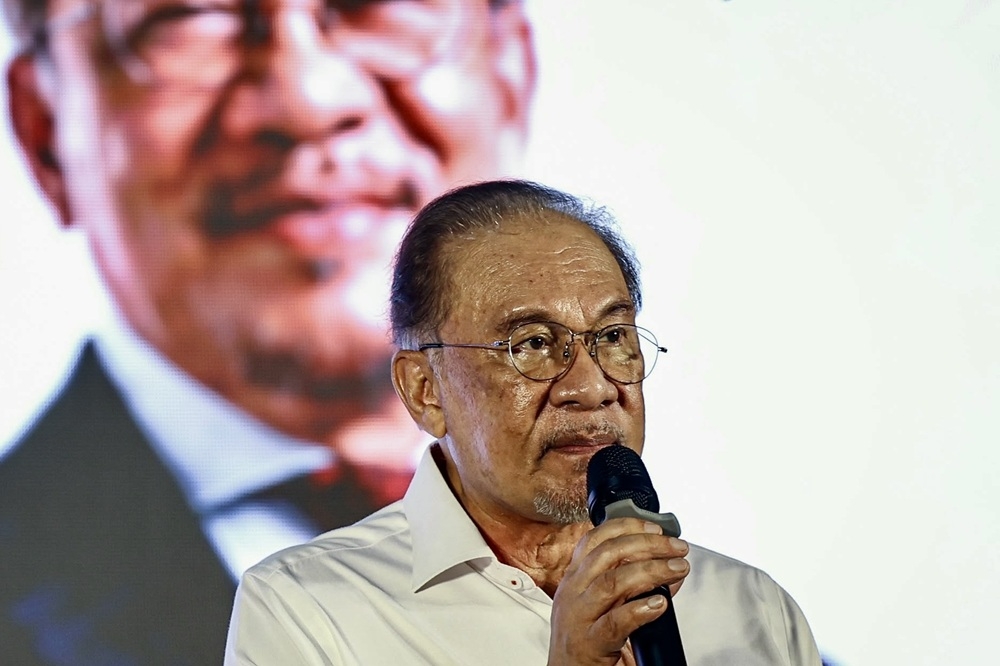
Prime Minister Datuk Seri Anwar Ibrahim said Wednesday that he is still awaiting a comprehensive briefing on the recent factional tensions that have erupted within the Democratic Action Party's Melaka branch, though he assured that the broader Pakatan Harapan coalition leadership is positioned to take decisive action once the situation is fully understood. Speaking at his official residence, Anwar indicated that despite the dispute having drawn public attention, he personally has not yet received the detailed information necessary to make an informed assessment of the underlying causes and severity of the rift.
The comment represents a measured response from the prime minister to what has become an increasingly visible problem within one of Pakatan's core component parties in a strategically important state. Melaka has long been considered a critical electoral and administrative stronghold for the coalition, making internal stability within the DAP's local machinery a matter of broader coalition concern. The timing of such internal discord is particularly delicate given the ongoing dynamics of Malaysian politics and the need for Pakatan to present a unified front to voters and party members alike.
Anwar's statement signals that while he has not yet engaged directly with the details of the Melaka situation, he is conscious of the need for senior leadership to step in if internal party mechanisms fail to resolve the matter independently. This approach respects the autonomy of individual coalition partners while preserving the coalition's right to intervene in matters that threaten collective stability. It also suggests a deliberate administrative preference for allowing the DAP's own internal structures to attempt resolution before coalition-level intervention becomes necessary.
The Melaka DAP tensions point to deeper challenges that Malaysian opposition and coalition parties face in managing diverse membership bases, competing personal ambitions, and differing visions for party direction. Internal disputes in state branches, while seemingly localised, can have cascading effects across the broader party structure and may signal unresolved tensions at senior levels. For a coalition relying on cooperation between parties with distinct constituencies and ideological emphases, such frictions require careful management to prevent cumulative damage.
Pakatan Harapan's leadership structure includes mechanisms for addressing inter-party and intra-party disputes, though their effectiveness depends on the willingness of affected parties to engage constructively and the coalition's senior figures to invest political capital in resolution efforts. The fact that Anwar has publicly acknowledged the situation, even while claiming incomplete information, suggests the matter has become significant enough to require acknowledgment at the highest level of government. This transparency, while limited, contrasts with historical patterns where internal coalition disputes were sometimes managed entirely behind closed doors.
The Melaka state political environment adds particular complexity to the situation. As a coalition-ruled state with specific electoral calculations and local power dynamics distinct from federal politics, Melaka presents unique challenges for managing party unity. State-level factions may pursue objectives that differ from federal coalition strategy, creating potential for misalignment between senior leadership priorities and local grassroots interests. The DAP's role in Melaka governance means that internal party stability directly affects administrative performance and public service delivery in the state.
Anwar's assurance that Pakatan Harapan leadership will act represents a commitment to preventing the situation from festering indefinitely, even if immediate intervention is not yet planned. Coalition leadership typically becomes more actively engaged when internal disputes threaten to spill into public recriminations or when party members begin departing to rival organisations. The window for preventive action narrows as conflicts become more entrenched, making early intervention strategically preferable despite requiring diplomatic sensitivity.
The broader context of Malaysian political competition means that any visible weakness within Pakatan Harapan parties is swiftly exploited by opposition groups seeking to portray the coalition as unstable or fractious. Internal party disputes in Melaka may therefore attract scrutiny and commentary from political rivals, potentially complicating resolution efforts by introducing external pressure and public positioning. This dynamic incentivises swift, coordinated action by coalition leadership to contain the narrative and prevent escalation.
For Malaysian voters and observers of coalition politics, the way Pakatan Harapan handles internal disputes within member parties carries significance beyond the immediate situation. It speaks to the coalition's maturity as a political entity, its capacity for self-regulation, and its ability to maintain coherence among diverse components. Successful resolution of the Melaka DAP tensions could strengthen confidence in the coalition's institutional health, while prolonged disputes might fuel doubts about sustainability and solidarity among member parties.
The situation also reflects broader tensions within Malaysian political parties between democratic participation and hierarchical decision-making. Younger members and emerging leaders often challenge established power structures, creating generational friction that manifests in state-level disputes. These tensions are not unique to the DAP or to opposition politics, but they become more visible when they erupt into public view rather than being managed discreetly through internal party mechanisms.
Moving forward, the role of the DAP's national leadership in mediating the Melaka dispute will be crucial. The party's senior figures must balance affirmation of local autonomy with insistence on coalition discipline and party unity. Similarly, Pakatan Harapan's leadership, with Anwar at the helm, must remain available to provide arbitration if DAP internal processes prove insufficient. The ultimate resolution will likely depend on whether the underlying causes of tension—whether personal, ideological, or structural—can be addressed through dialogue and compromise or whether more formal interventions prove necessary.

