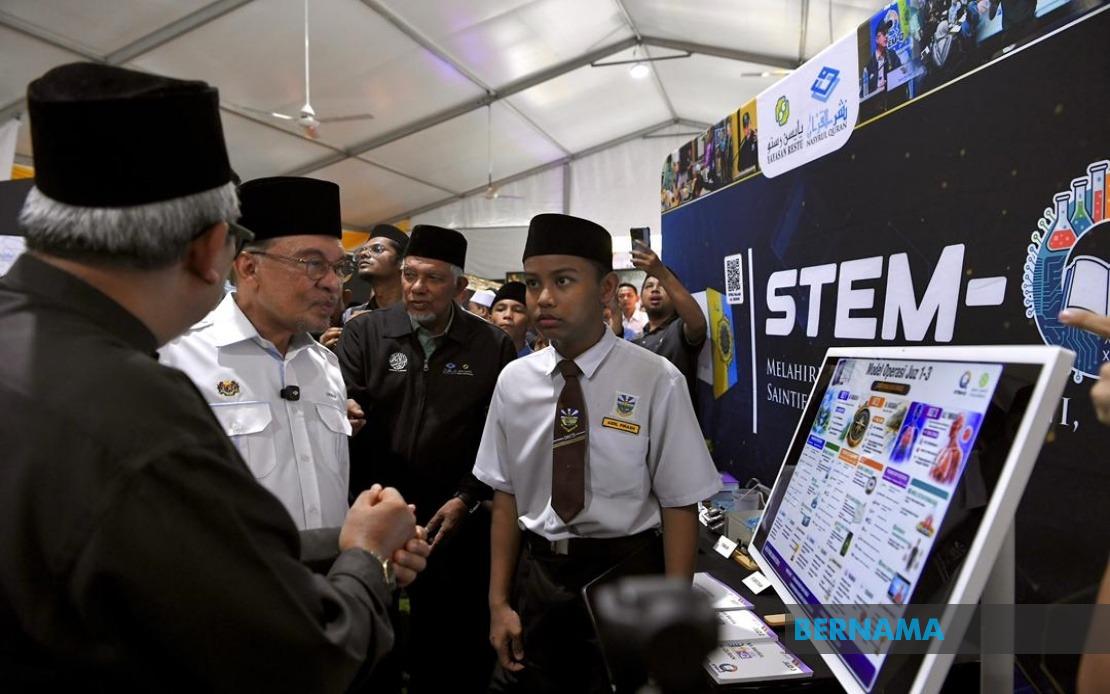
Prime Minister Datuk Seri Anwar Ibrahim has greenlit a RM4.6 million allocation to enhance basic infrastructure across 27 Islamic educational institutions throughout Penang, signalling the federal government's deepening commitment to religious education facilities in the state. The announcement, made during the National Tadabbur Perdana and Maidah Wanita MADANI Permatang Pauh programmes at Masjid Muhajirin in Butterworth, represents a substantial increase from the RM2.11 million invested in upgrading 11 such institutions during the previous year, reflecting accelerating momentum in the sector.
The fresh funding will support various infrastructure enhancement projects at these religious institutions, ranging from structural repairs to facility expansions. Anwar, who doubles as Finance Minister, outlined the scope of the works as encompassing boundary wall and fence improvements, madrasah upgrades, school enhancements, construction of new kindergarten facilities, and development of tahfiz academies dedicated to Quranic memorisation programmes. This broad-based approach suggests a strategic effort to modernise the physical learning environments where Islamic education takes place across the northern state.
The doubling of annual allocations within a single year underscores a policy shift toward prioritising religious education infrastructure at the federal level. For Malaysian policymakers and education administrators, the trajectory indicates that Islamic educational facilities are receiving heightened attention within broader government spending priorities. The expansion from supporting 11 institutions to 27 demonstrates either a significant identification of unmet infrastructure needs or a deliberate expansion of the programme's reach. Either interpretation suggests that the sector has moved into sharper focus within federal budgetary deliberations.
Beyond brick-and-mortar improvements, Anwar emphasised that religious education must evolve alongside technological advancement. He specifically highlighted artificial intelligence as a frontier that Islamic educators should engage with, particularly in the context of Quranic and Islamic studies. This technological dimension reflects growing recognition that religious education institutions must not become isolated from broader digital transformation affecting Malaysian society. The reference to AI suggests potential applications in teaching methodologies, student assessment, and content delivery within Islamic schools and academies.
However, the Prime Minister issued a significant caveat regarding technology adoption in religious contexts. He stressed that artificial intelligence and other tools must be embedded within moral and ethical frameworks rather than deployed merely for instrumental purposes. This caution reflects a broader tension within Muslim-majority societies balancing technological modernisation with the preservation of values-based education. Anwar's insistence that AI must possess values and maintain rootedness in morality speaks to concerns that wholesale technology adoption without ethical guardrails could undermine the foundational purpose of religious education institutions.
For Southeast Asian observers, Anwar's statements reveal Malaysia's approach to a challenge facing Islamic educators across the region: how to equip students with contemporary skills and knowledge while maintaining distinctive religious and moral identity. The government's positioning suggests it views technology not as inherently threatening to religious education but as a tool requiring careful stewardship. This framing may influence how other regional governments approach similar questions about religious schooling in an increasingly digital environment.
Beyond infrastructure investment, Anwar called for intensified community-led religious programming to deepen public engagement with Islamic teachings. He specifically advocated for sustained Quran classes, tadabbur reflection sessions, and religious lectures as mechanisms for strengthening collective understanding of Islam's authentic principles. This emphasis on grassroots religious engagement complements the top-down infrastructure investment, suggesting a holistic approach spanning both institutional capacity and community participation.
The government's continued focus on religious education facilities reflects the political significance of this sector within Malaysian governance. Islamic schools and institutions constitute important social infrastructure affecting millions of students and their families. For the ruling coalition, visible investment in this sector serves both policy and political objectives: modernising facilities addresses genuine infrastructure gaps while demonstrating responsiveness to constituencies that value religious education provision.
Penang, as one of Malaysia's most developed states with a mixed religious and ethnic demographic, presents particular considerations for religious education policy. The state's substantial Islamic institutional network serves not only Muslim residents but also anchors broader communal identity and social welfare functions. Federal funding therefore carries implications beyond education narrowly defined, touching on state-federal dynamics and the integration of religious institutions within Malaysia's plural society.
For Islamic educational administrators throughout Malaysia, the RM4.6 million Penang allocation suggests an expanded pipeline of potential federal support for infrastructure projects. The substantial year-on-year increase may signal to other states and institutions that demonstrating genuine infrastructure needs could unlock additional funding. This could catalyse a broader wave of improvement projects across the country's Islamic educational landscape, though success would depend on sustained budgetary prioritisation and effective project implementation.
The intersection of infrastructure investment and technological guidance reflects sophisticated thinking about religious education's contemporary challenges. Rather than positioning technology and tradition as opposing forces, Anwar's framework acknowledges that Islamic institutions must function within modern contexts whilst maintaining distinctive identities. Whether this approach effectively navigates the genuine tensions between rapid technological change and the preservation of values-based education will likely become apparent as these institutions integrate tools like artificial intelligence into their operations.
Looking forward, the implications extend beyond Penang to influence national discourse on religious education's role in Malaysia's development trajectory. As the country navigates questions about skills development, modernisation, and social cohesion, the quality and capacity of Islamic educational institutions become increasingly central. The federal government's signal through these funding increases suggests recognition that religious education infrastructure warrants parity with secular education investment, a position that carries significance for Malaysia's diverse religious communities and educational ecosystem.

