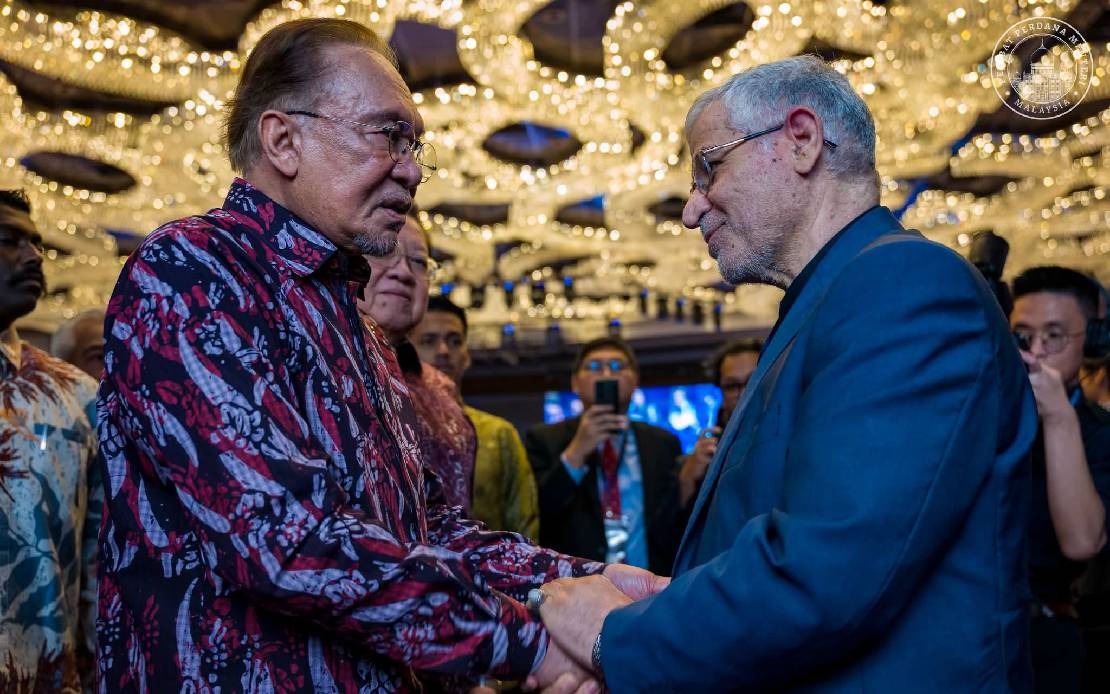
Prime Minister Datuk Seri Anwar Ibrahim has conveyed his apologies to Iran for his inability to attend the state funeral and farewell ceremonies of the country's Supreme Leader, the late Ayatollah Ali Khamenei. The apology was delivered during a meeting with Iranian Ambassador to Malaysia Valiollah Mohammadi at the 39th Asia-Pacific Roundtable conference in Kuala Lumpur on July 2, with Anwar later announcing the gesture through a Facebook post.
Anwar explained that unavoidable official commitments in Malaysia prevented him from travelling to Iran for the significant state occasion. The decision to remain in Malaysia underscores the domestic priorities and pressing governmental matters that required the Prime Minister's personal attention during this period. Nevertheless, Malaysia sought to maintain diplomatic respect by ensuring high-level representation at the funeral proceedings.
To address the diplomatic requirement of Malaysia's presence, Anwar delegated Agriculture and Food Security Minister Mohamad Sabu to represent the nation at the funeral and farewell ceremonies. This arrangement allowed Malaysia to pay formal respects to the Iranian leadership and demonstrate the country's commitment to bilateral relations during a period of significant national mourning in Tehran.
Ayatollah Ali Khamenei, aged 86, passed away on February 28 at his residence in central Tehran. According to reports, his death followed a joint military operation involving the United States and Israel, an incident that had significant geopolitical ramifications across the Middle East and drew international attention to regional tensions.
The Iranian government organised an extensive funeral programme spanning six days, reflecting the prominence and religious significance of Khamenei's position as the nation's highest authority. The ceremonial schedule began on July 4 with funeral processions planned in Tehran and Qom, the two major centres of Iran's religious and political establishment.
The final phase of the funeral proceedings culminated on July 9 with Khamenei's burial at the Imam Reza Shrine in Mashhad, one of the most sacred sites in Shia Islam. The choice of burial location underscored Khamenei's standing within Islamic tradition and signified the respect accorded to his leadership across Iran's religious communities.
For Malaysia, attending or being represented at such high-profile state funerals serves multiple diplomatic functions. It demonstrates respect for Iran as a significant regional player and affirms the bilateral relationship between Kuala Lumpur and Tehran. Malaysia has long maintained diplomatic engagement with Iran despite broader international tensions, and such ceremonial attendance reinforces those ties.
The Asia-Pacific Roundtable conference, during which Anwar met with Ambassador Mohammadi, provided an appropriate diplomatic channel for conveying Malaysia's sentiments. This multilateral gathering offered a structured environment for the Prime Minister to communicate condolences and explanations regarding Malaysia's representation at the funeral, ensuring the message was delivered through proper diplomatic protocols.
Anwar's explicit statement of condolences to both the Iranian government and Iranian people reflected Malaysia's acknowledgment of the broader impact of Khamenei's death on Iran as a nation. Losing a supreme leader represents a transformative moment in any country, and the gesture of sympathy extended beyond formal diplomatic courtesy to recognise the human dimension of national loss.
The timing of Malaysia's formal apology and representation demonstrates the country's sophisticated approach to diplomatic relations in a complex geopolitical landscape. By ensuring ministerial-level attendance while the Prime Minister attended to domestic responsibilities, Malaysia achieved a balance that respects Iran's significance while acknowledging Malaysia's internal governance requirements.
For Malaysian observers, the incident illustrates how international diplomatic protocols function in practice and the importance Asian nations place on formal state ceremonies. The careful choreography of who attends which international events carries symbolic weight that extends far beyond mere ceremonial participation, influencing bilateral perceptions and long-term relationship trajectories.

