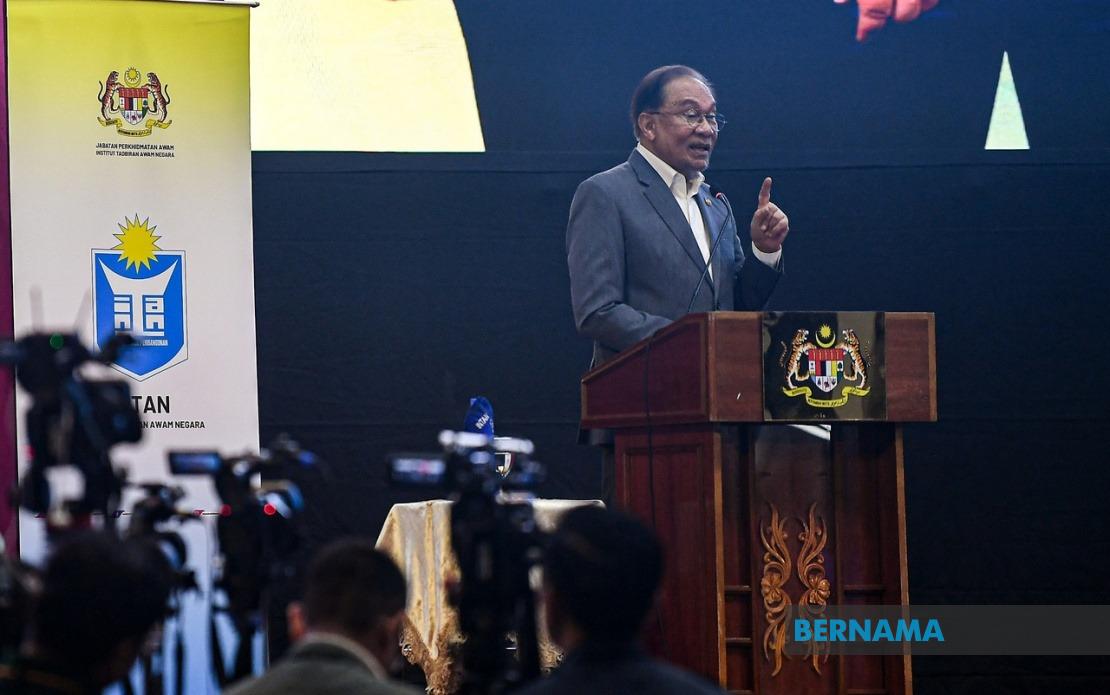
Prime Minister Datuk Seri Anwar Ibrahim has offered an apology to those who may have interpreted his forthright manner of speaking with civil servants as excessively stern, acknowledging feedback from those who have counselled him on the expectations of his office. In a video address shared on Facebook following an engagement with Central Zone civil servants at Universiti Islam Selangor, Anwar reflected on criticism regarding his communication style, noting that numerous individuals had advised him to modulate his vocal delivery and adopt a gentler demeanour befitting the Prime Minister's position.
The video, captured during his address alongside Chief Secretary to the Government Tan Sri Shamsul Azri Abu Bakar, shows Anwar attempting to balance accountability with accessibility. He acknowledged the counsel he has received, stating that many have suggested he should refrain from raising his voice and instead engage with audiences in a measured and courteous manner. Yet he simultaneously defended his instinctive reactions, particularly when government priorities and national interests are at stake, recognising that suppressing genuine emotion may undermine the authenticity of his message.
Anwar's willingness to issue an apology reflects a broader tension between the traditional expectations of prime ministerial decorum and the increasingly populist demands for leaders to demonstrate visible passion for their work. His clarification that he is "trying" to adjust his approach suggests an ongoing negotiation between his natural temperament and the institutional requirements of high office. This candid acknowledgment of his shortcomings, rather than defensive deflection, offers a different political posture from many regional leaders who rarely admit to communication missteps.
The Prime Minister articulated that his firm tone when communicating with the civil service stems directly from his conviction about their pivotal role in translating government policy into tangible outcomes. By emphasising the importance of the bureaucracy's function in advancing national development, Anwar framed his intensity not as personal criticism but as an expression of the gravity with which he regards their responsibilities. This distinction between harsh tone and sincere conviction is crucial for understanding his position—he is essentially arguing that passion, even when forcefully expressed, should not be conflated with inappropriate conduct.
Civil servants in Malaysia occupy a unique position in the nation's governance structure, serving as the implementing machinery across federal and state levels. Any perception that the Prime Minister views them with contempt or frustration could have downstream effects on morale and execution of policies. Anwar's public apology, therefore, serves a diplomatic function beyond the personal—it reassures the bureaucracy that his intensity reflects his commitment to national success rather than disdain for their profession. For a government heavily reliant on administrative capacity to deliver on its manifesto, maintaining goodwill within the civil service is strategically essential.
The episode also reflects the broader challenge facing Anwar as he consolidates his leadership following his assumption of office. His political journey has been marked by passionate advocacy and confrontational rhetoric during his years in opposition, a communication style that resonated with his base. Transitioning to the Prime Minister's office requires calibrating that approach without abandoning the authenticity that defines his political brand. The feedback he references suggests that his existing manner may be jarring to those accustomed to more reserved executive communication, or that some within government circles feel his directness, while well-intentioned, carries unintended consequences.
From a governance perspective, Anwar's defence of his emotional investment in policy outcomes reflects a philosophy that leadership effectiveness depends on demonstrable commitment. He poses a rhetorical question about who else should receive the full force of his convictions if not the government machinery itself, suggesting that his intensity is reserved for internal accountability rather than external grandstanding. This framing positions his firm tone as a tool for raising standards within the bureaucracy rather than a personality flaw requiring suppression.
The acknowledgment of misstep, genuine or strategic, carries significance in the Malaysian political context, where respect for hierarchy and decorum traditionally shapes institutional relationships. By publicly conceding that his tone may have been excessive, even while defending the substance of his concerns, Anwar demonstrates a flexibility that could strengthen rather than weaken his position with civil servants. It signals that he views them as partners in governance deserving of consideration, not subordinates to be lectured without regard for their dignity.
Looking forward, this incident illuminates the ongoing adjustment required as Anwar navigates the presidency after years of insurgent politics. His supporters may view his passion as refreshingly authentic in an often sterile political environment, while critics may regard it as unbecoming of an office that demands restraint. His willingness to engage with this criticism rather than dismiss it suggests an evolving approach to leadership that seeks to maintain conviction while respecting the preferences of those he leads. Whether this represents a genuine recalibration of his communication strategy or a temporary concession to pressure remains to be seen, but the message to the civil service—that their role matters enough to warrant his passionate engagement—appears to be the underlying intent.

